
Iceland in 8 days with a campervan – everything you need to know for a successful road trip

Are you planning a trip to Iceland and don't know where to start? You're in the right place! In this article, I'll give you some details about flights, renting a campervan, a map of everything I visited, and lots of useful tips for a complete experience. You'll also find an article with important things to know before venturing to Iceland in the summer. In addition, I have also prepared a detailed list with the right clothes for Iceland in August, when temperatures range between 4°C and 12°C.
Organizational details
How did we travel to Iceland?
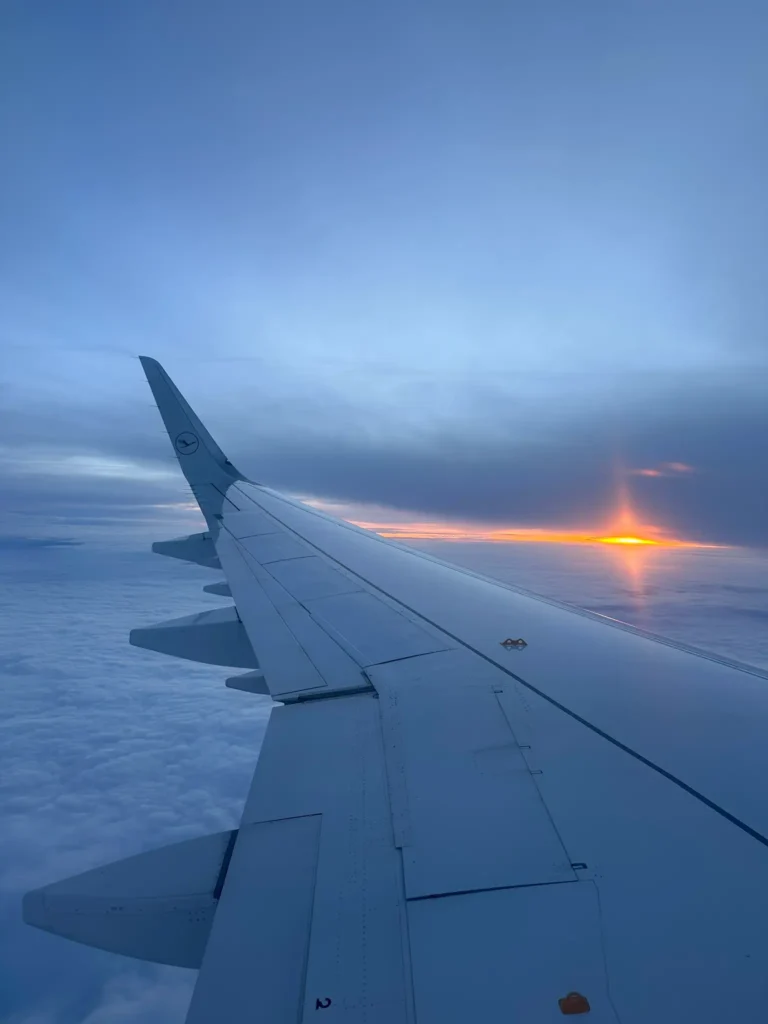
There are no direct flights from Romania to Iceland, so you have to find an alternative that involves at least one stopover. We chose the easier option: we flew with Lufthansa on the Bucharest-Vienna-Reykjavik route on August 10 and Reykjavik-Munich-Bucharest on the return trip on August 19. I landed in Iceland on a Friday night close to midnight local time, and I got back home the following Sunday around noon, so I stayed for a total of 8 full days.
This option is a little more expensive, but less hassle and more comfortable, as it involves a scheduled flight where you buy the entire segment without having to worry about stopovers or going through security again. The lower-cost option is with Wizz Air via Budapest or Bergamo and from there to Reykjavik. At the time (I bought the tickets 8 months before the holiday), the prices and times were similar, so I chose the comfort of Lufthansa.
Accommodation for one night in Keflavik
Because we arrived very late in the evening, we had to spend the night at a hotel in Keflavik (the town where the airport is located and where the campervan rental center was). We didn't have many options, so we chose a studio in a guesthouse, Blue Viking Studios, for which we paid approximately 158 euros/night/room with breakfast included. We took a taxi from the airport to the guesthouse (it was the only option in the middle of the night) and paid approximately 25 euros for a 5-minute ride. The guesthouse was very acceptable, but the breakfast left something to be desired. At least we walked 30 minutes from the accommodation to the rental center and saved some money.
E-sim card
When we went, in 2024, we needed to get an e-SIM for data, and our partner for travel outside the European Union is Airalo. It seems that from 2025, the country has entered into a program called „Roam Like at Home” where calls, texts, and data in Iceland are billed at home rates, with no extra charges unless you go over the limit.
Renting the campervan
We monitored the prices of several companies for 6 months, such as: GoCampers, Indie Campers, Campervan Iceland, Happy Campers and KukuCampers. Drawing a line at the end and noticing that they had roughly the same cars and facilities, the winner was, of course, the one with a budget campervan, i.e. GoCampers. (The first time in Iceland is on a budget, the second time the amount allocated for more comfortable accommodation increases – compromises 😂)
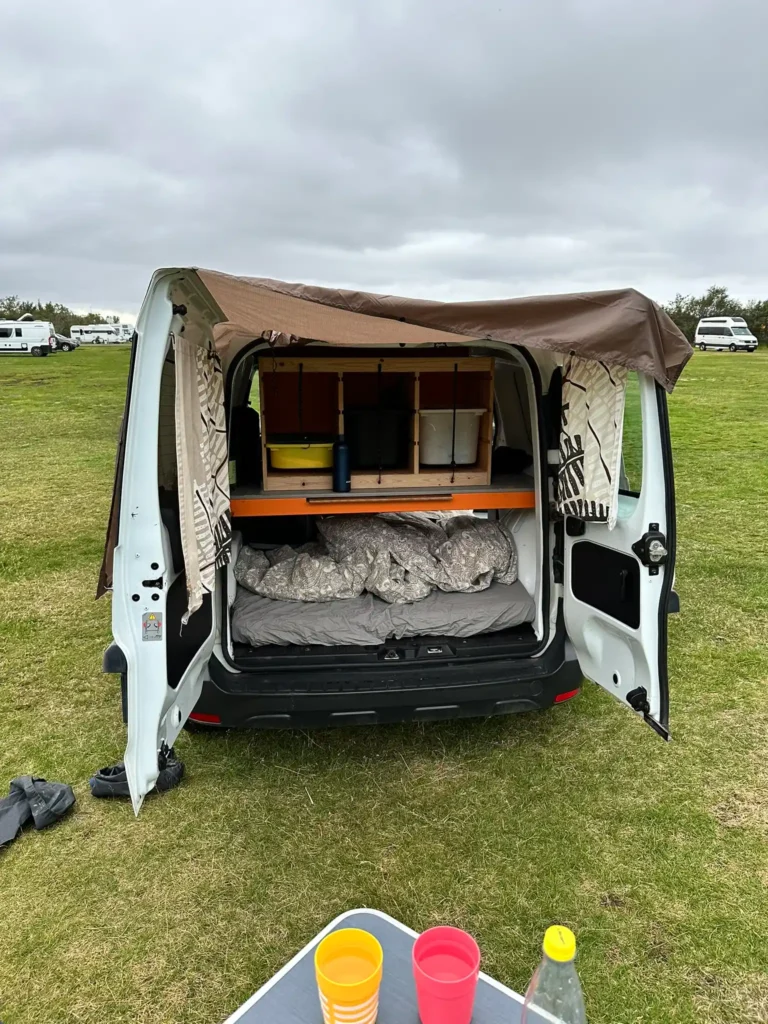
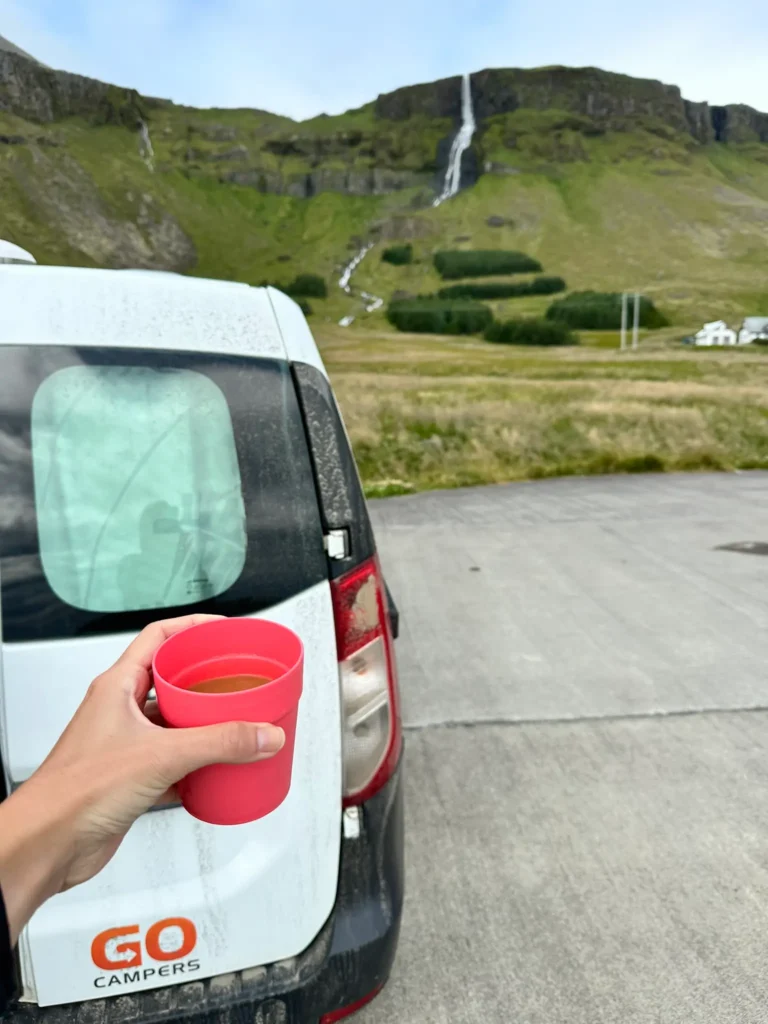
We did not regret choosing GoCampers at all, because it seemed just right for our needs, as two adults accustomed to camping with only the bare essentials. We chose a Go Smart Budget Camper – Dacia Docker, with a mattress with two sleeping places, all kitchen utensils included, especially two gas bottles and a burner for cooking food, two chairs and a camping table, a 10L water container, two sleeping bags, two pillows, two duvets, but no heating source.
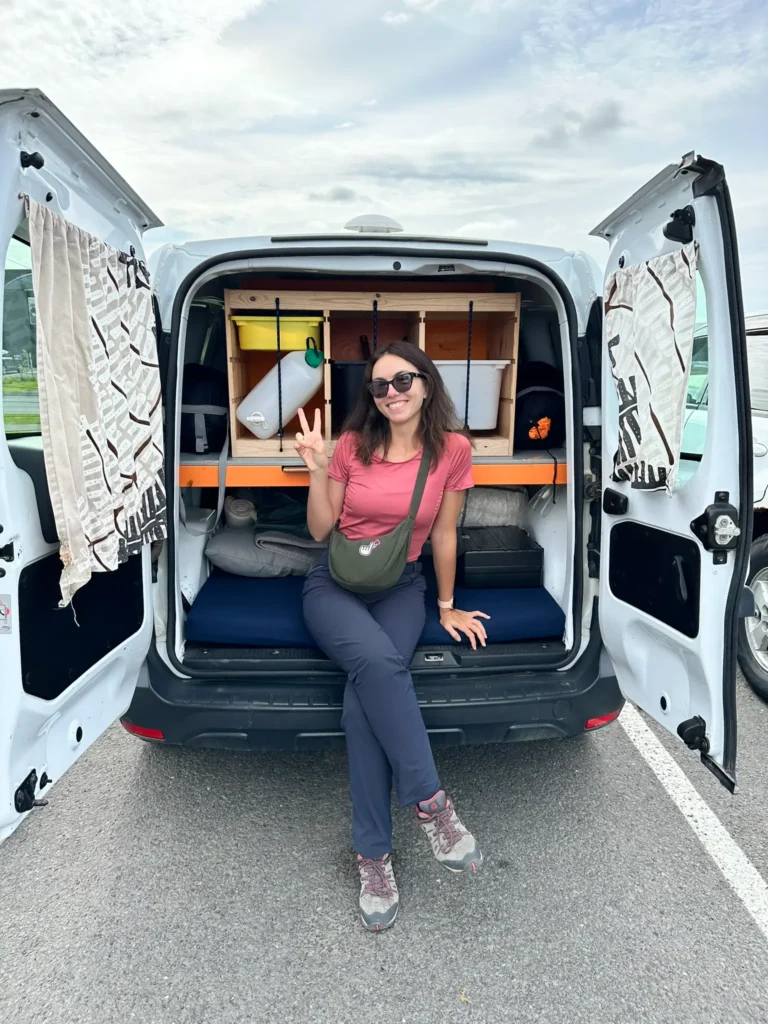
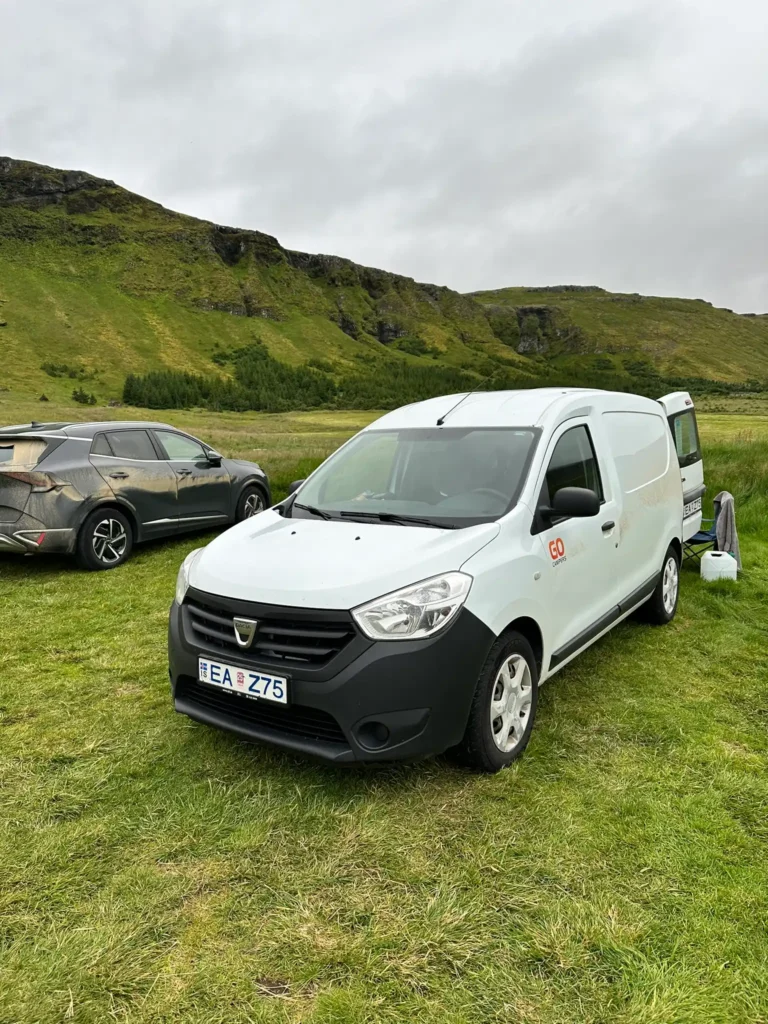
What was really cool was that, at the rental center, people who had vans left behind non-perishable items they didn't use so that others who were about to enjoy Iceland in a van could take them. It's a kind of Sharing is Caring and you also reduce costs; for example, we took coffee, pasta, granola, a bottle of oil, and a jar of peanut butter from there.
We really liked the car, and there was only one night out of the seven when it felt really cold. We have a trick that we used and it worked: we brought bottles from home (the water in Iceland is drinkable anyway) and in the evening we heated water and poured it into the bottles. We put them in our sleeping bags and this warmed up the air in the sleeping bags and it wasn't so cold anymore.
As an idea, I rented it six months before the trip and the price was €1,400 for eight nights with full insurance included. By the way, the wind here is very strong and there is no insurance for damage caused, so hold on tight to the doors. And if you hit a sheep, the fine is very high and there is no insurance for such accidents.
Everything about food
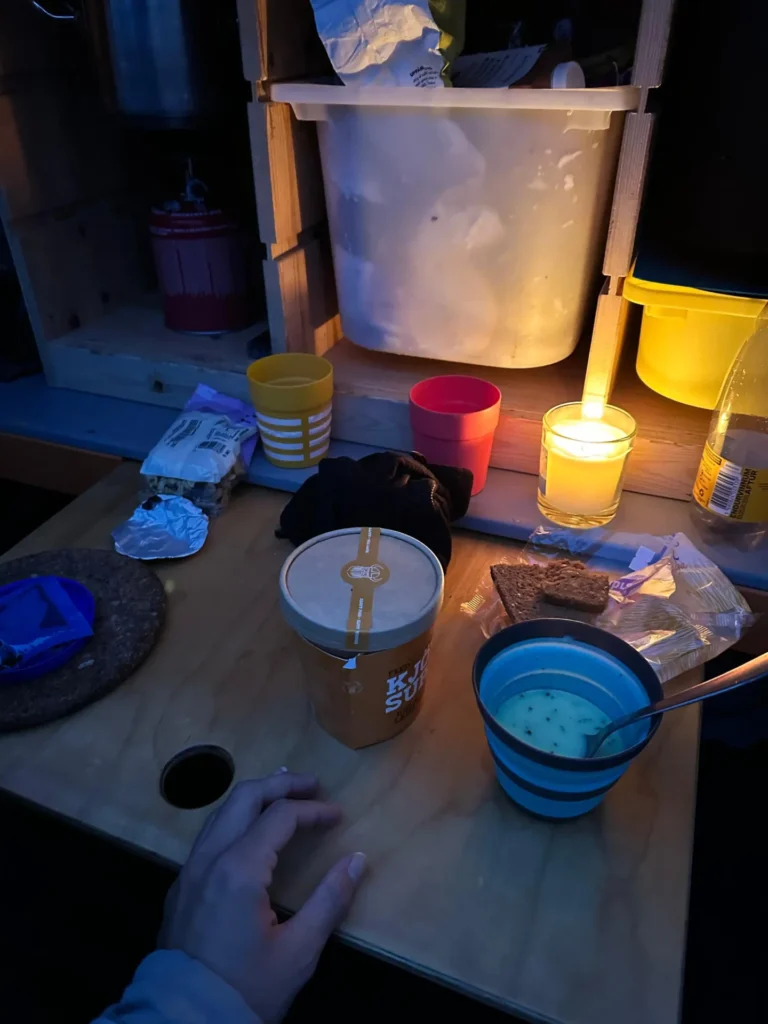
We all know that food in Iceland is extremely expensive, among the most expensive in Europe. This is because everything is imported, the soil is not very friendly to agriculture, and apart from the large number of sheep and wild horses, not much else grows there. So, for us, the only solution was to shop for food very carefully. Most people traveling in campervans ate food from the supermarket that they cooked outside.
As an idea, for the 9 days we spent there, we spent about 260 euros on groceries. And we found the best prices at large supermarkets, such as Krónan and Bónus. I recommend buying as much as you can in Reykjavík because prices are better there and because, if you travel around the island, it will be much harder to find shops. Another option is Akureyri, the largest city in the north of the island.
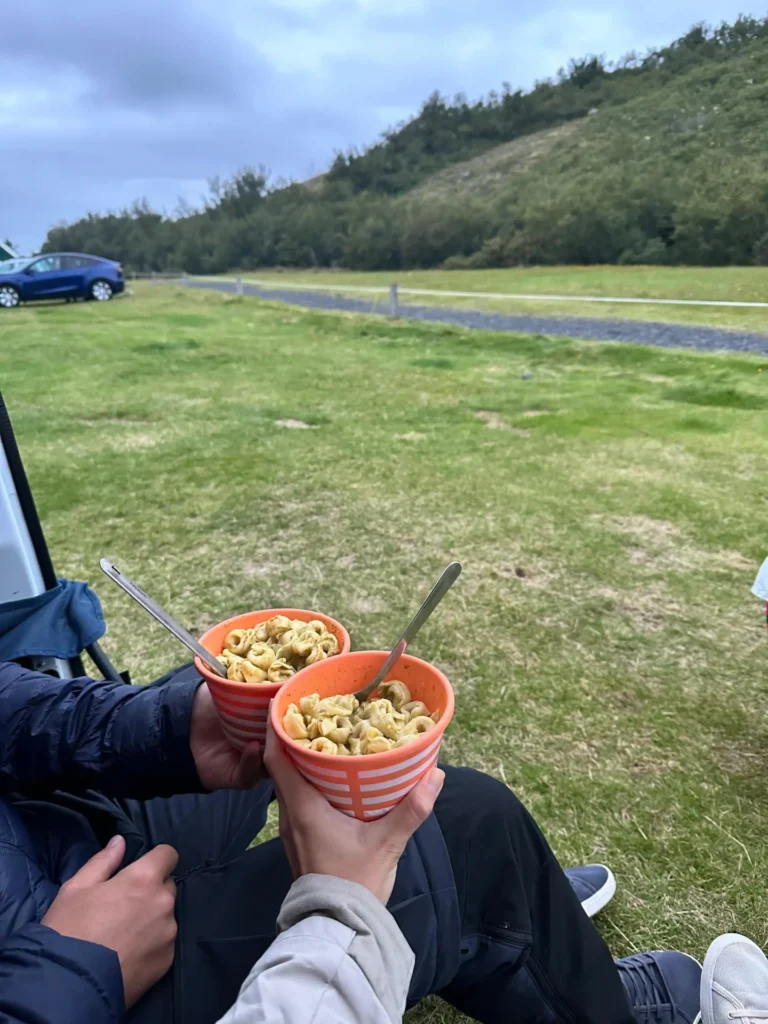
We ate very simply, such as yogurt with oats and bananas, their extremely dense bread with peanut butter and jam, lots of packet soups, lots of semi-prepared noodles or pasta with sauce. But food didn't matter when the view was either of a waterfall or a lagoon with glaciers. As I said above: the first visit to Iceland is on a tight budget, on the second one we might go to a restaurant once. :))
About puffins and seals
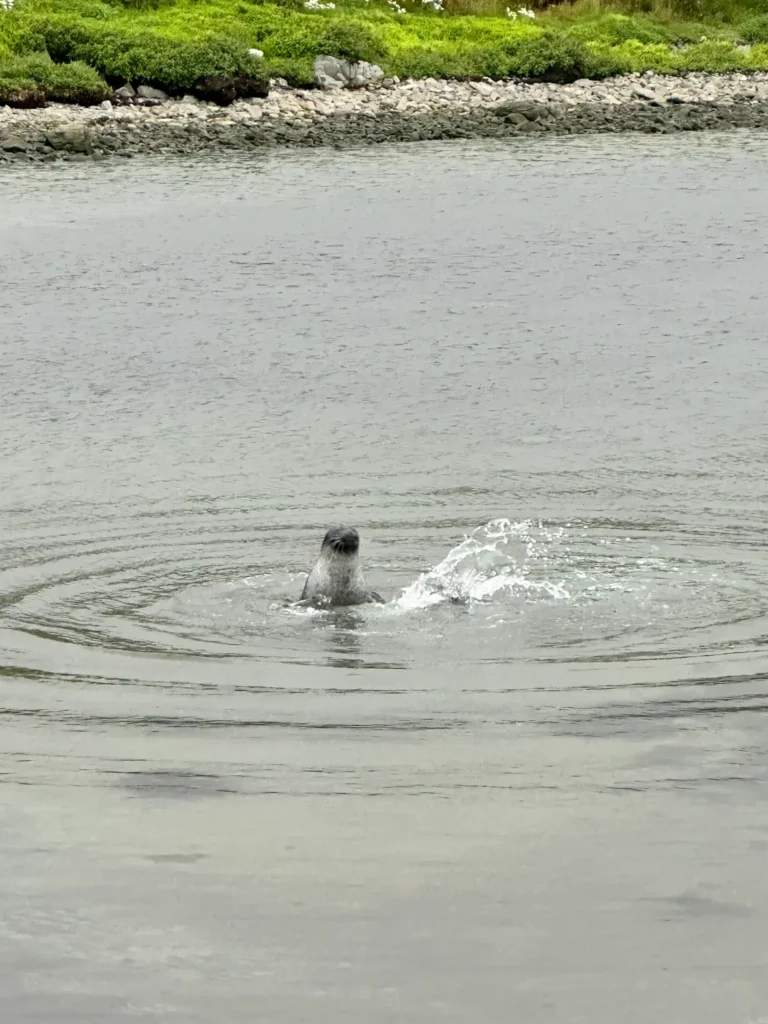
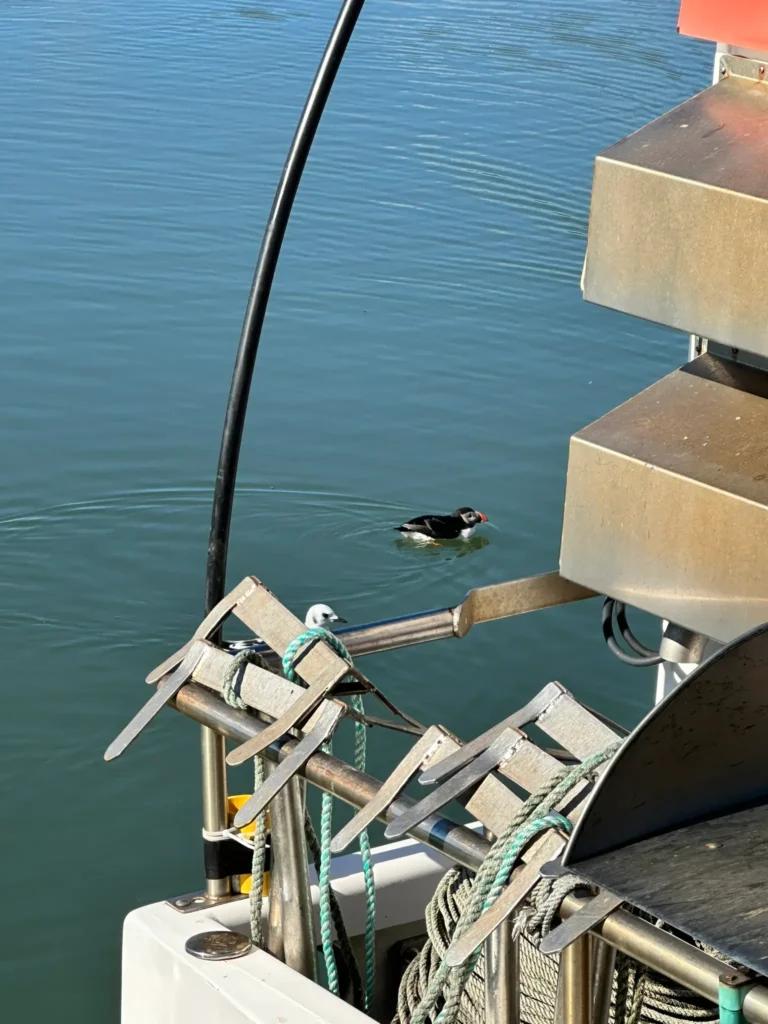
Yes, in Iceland you can see both puffins and seals during the summer, but it's a pretty short season. And if you choose to visit them on your own, you have to be quiet, not get too excited around them, stay at a reasonable distance, and enjoy the opportunity.
The best season to watch the puffins is between may and august, and the peak is between june-july when they lay their eggs and care for their chicks. We arrived in mid-August and they were already gone. The best places to admire them are: Dyrhólaey, Reynisfjara, Borgarfjarðarhöfn, the Látrabjarg Peninsula (western fjords), Heimaey – the Westman Islands.
The seals can be seen all year round, but during the summer, between May and September, they spend more time on beaches or sandbanks. We saw them best in this place – Illugastadir – in the evening, after sunset. The place is not very well known because the access road is not paved and is about 20 minutes from the main road. We also stayed at the campsite there, which is why we were able to stay after 9-10 p.m. without any problems and watch them. But other places to see seals would be: Jökulsárlón Glacier Lagoon, Westfjords, Ytri-Tunga
The map with our itinerary
I thought I would leave the map of our route below, showing the places we visited and the campsites where we stayed, but I invite you to visit this link, where I have detailed each day and each activity we tried in much greater detail. I hope this mini article on how to organize yourself as efficiently as possible for a week in Iceland has helped you and that you will have a memorable trip there. As for me, keep following me because I have a lot to tell! 🙂


 EN
EN  RO
RO
One Comment