What not to miss in Iceland – The land of fire and ice | Complete travel guide
Byioana.ferdoschi
Welcome to the big adventure called Iceland – The land of fire and ice! Here you will find an extremely detailed travel guide for the 8 days we spent on the island with a campervan. We have gathered here every attraction we visited, every activity we experienced, and every campsite we tested in order to make a complete tour of the island.
And because I know that a travel guide isn't all you need to organize your vacation, I have other articles on my blog which are perfect for this research. Click here., , read them and send them on to your friends so they can see how beautiful Iceland is.
Get your passport and good spirits ready, and let's go!
The map with our itinerary
Before setting off each day, I will leave you here a map of our route and the campsites where we stayed overnight to make it easier to follow the tour of the island.
Day 1
After picking up our campervan and doing a lot of shopping, we hit the road. The campsite we were supposed to get to was Skaftafell camping, so it was a journey of almost 370 km. We couldn't stop at many points of interest, but we managed to see the following:
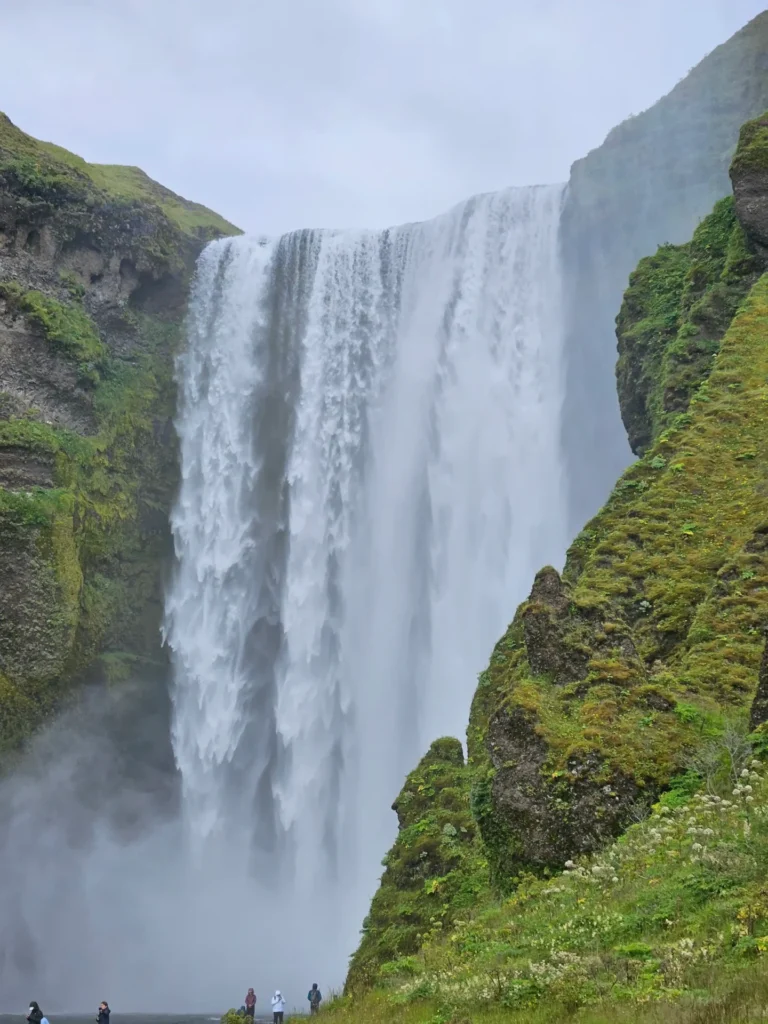
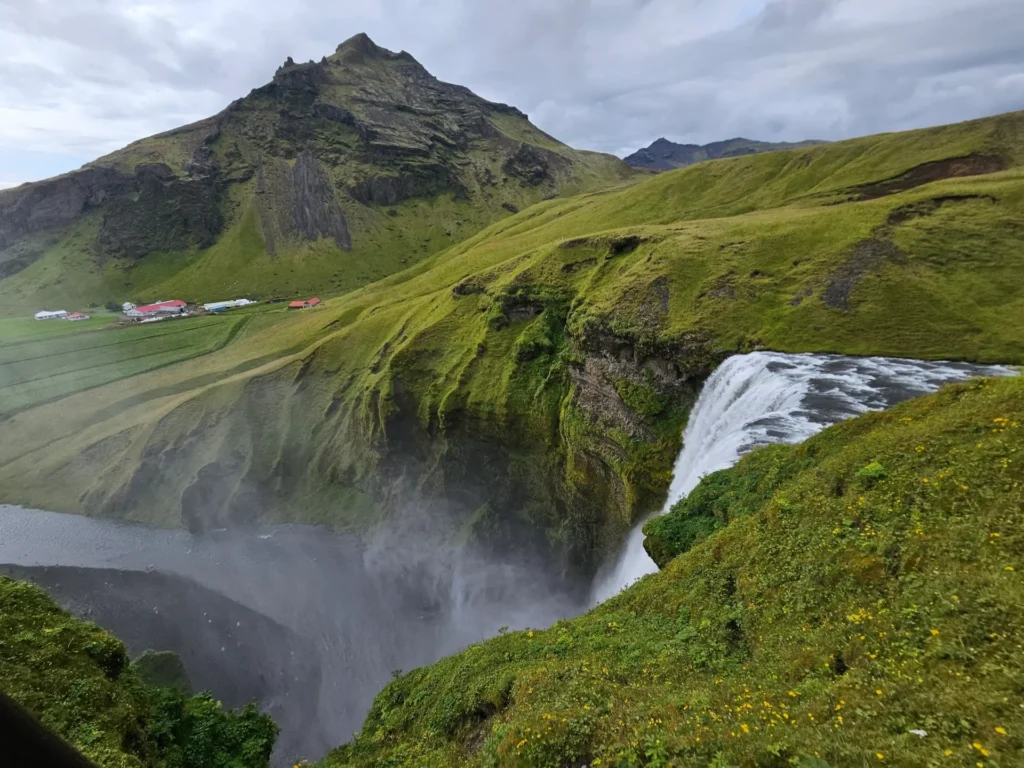
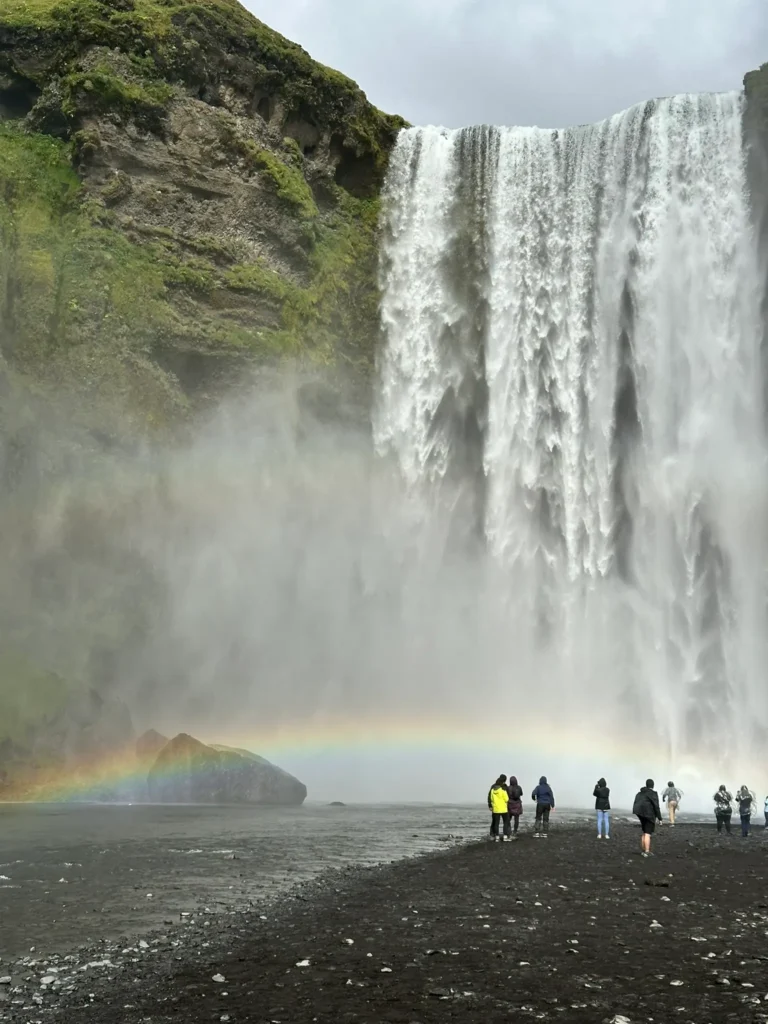
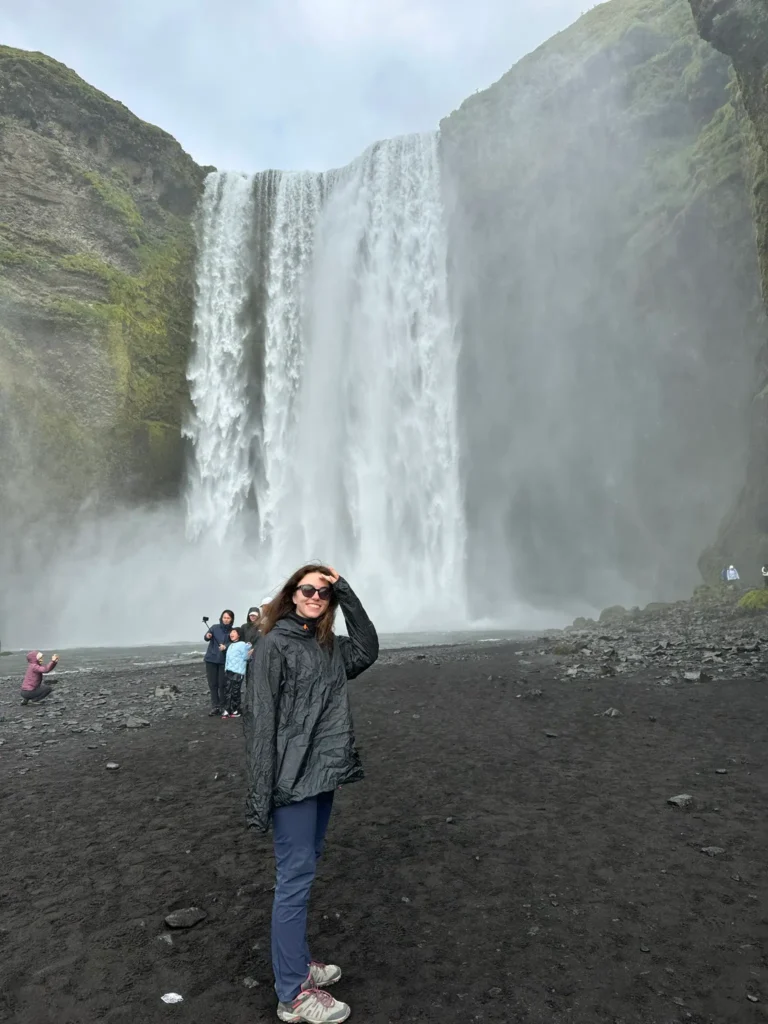
Skógafoss – probably the most impressive waterfall, with a huge flow and a camping area nearby, offering a superb view. You won't leave there wet if you get close to it, and you might even be lucky enough to see a rainbow!
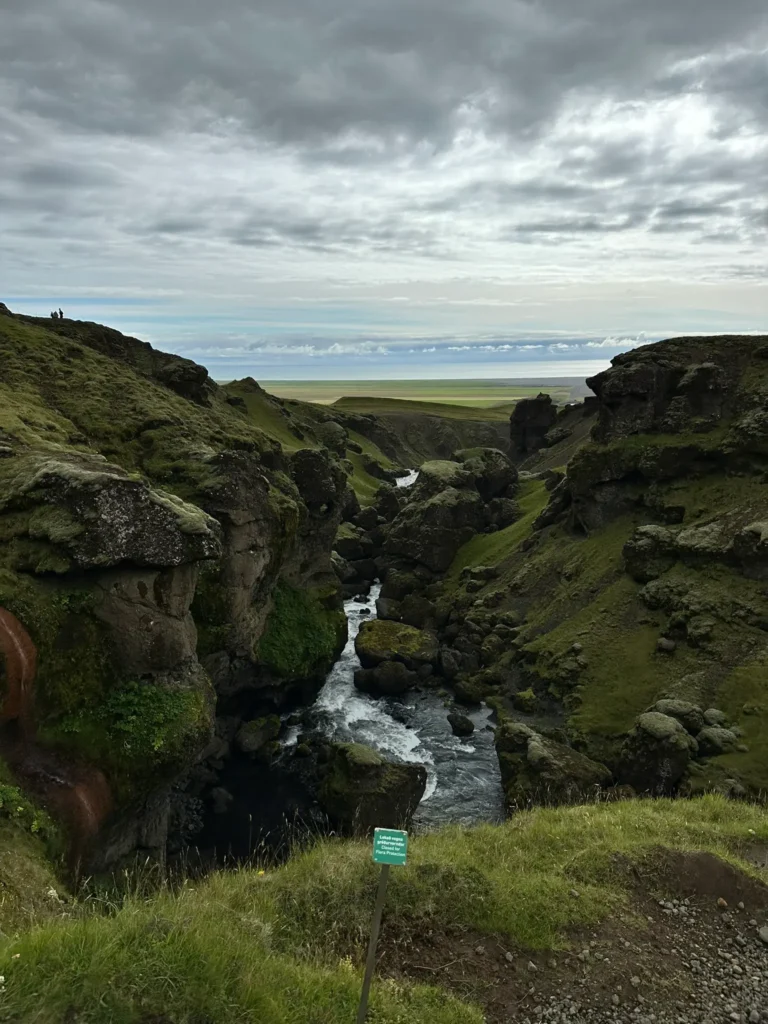
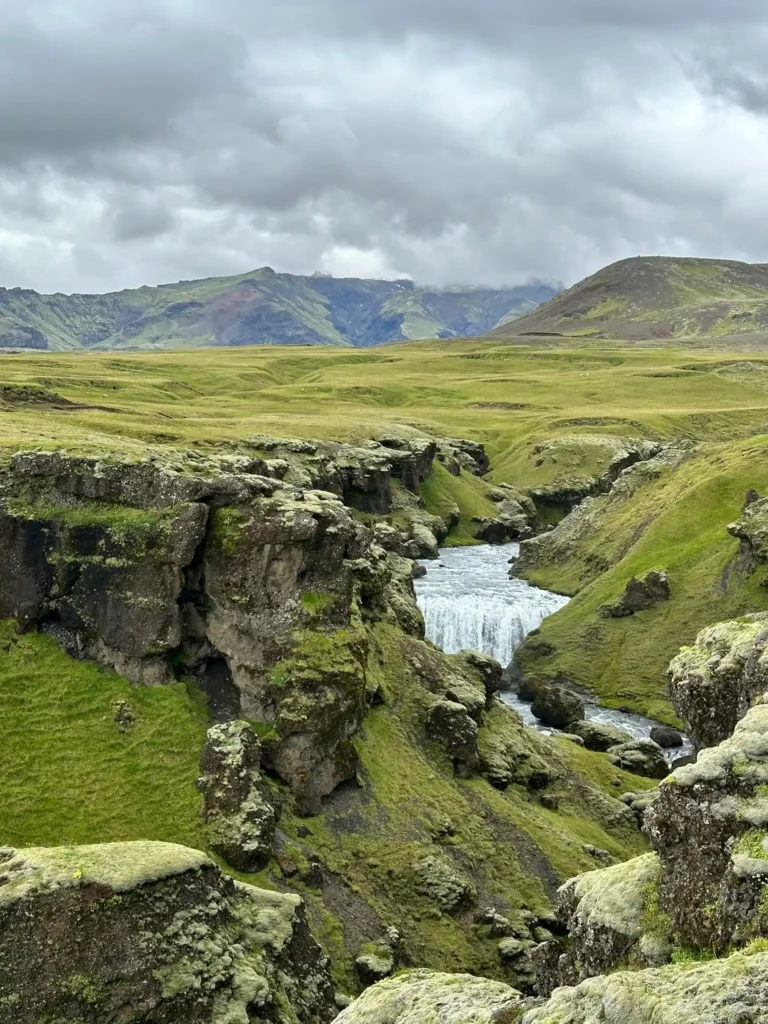
Fimmvorduhals Trailhead – the trail starts right next to the waterfall above, on some steps that take you right above it; we walked for about 30 minutes on the trail to enjoy the spectacular, dramatic scenery.
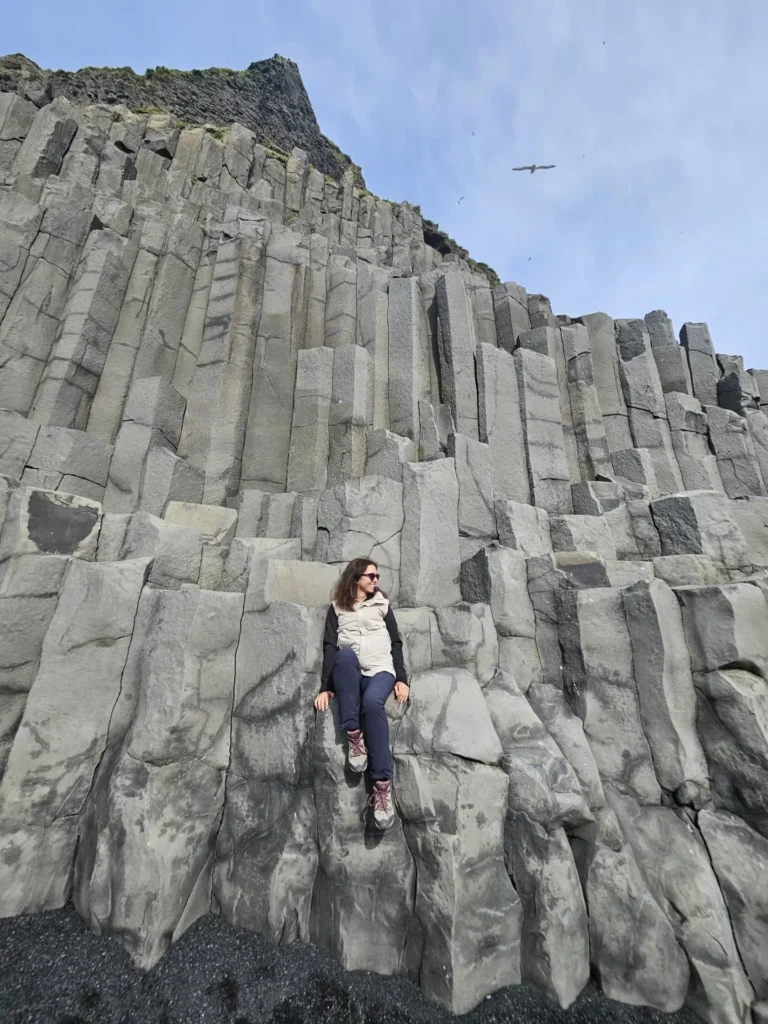
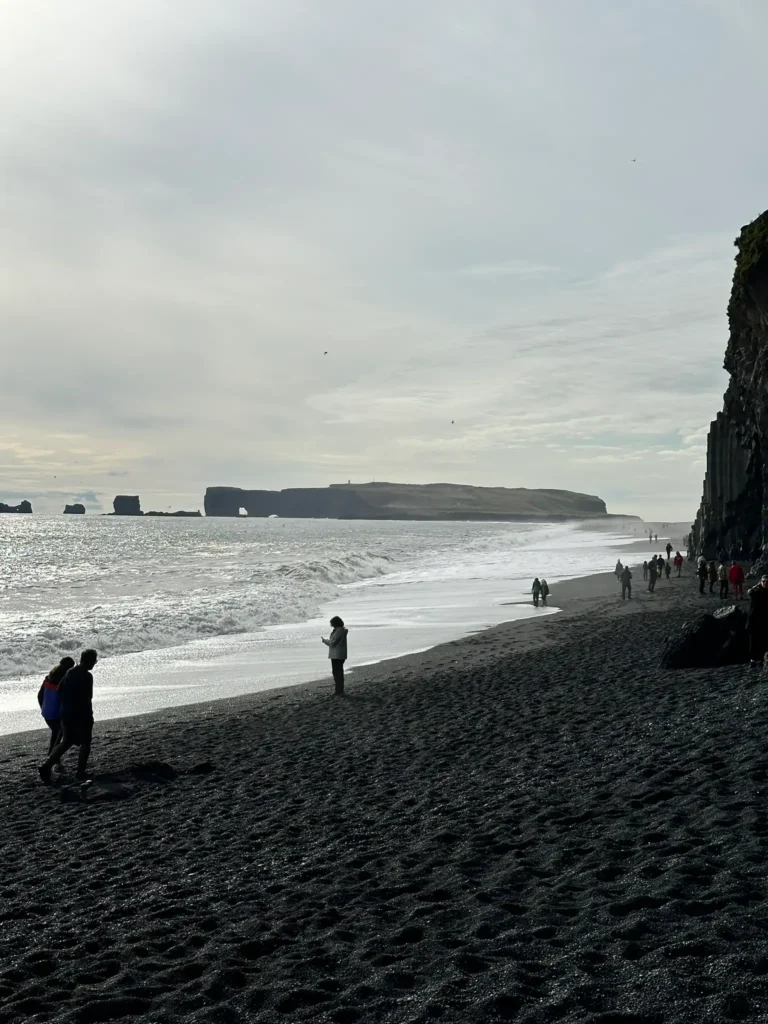
Reynisfjara Beach – the famous black sand beach with very dangerous waves; I do not recommend approaching it unless there are signs indicating that it is safe to do so; we were lucky that the water was low and there were no waves, and we also got to see the basalt columns.
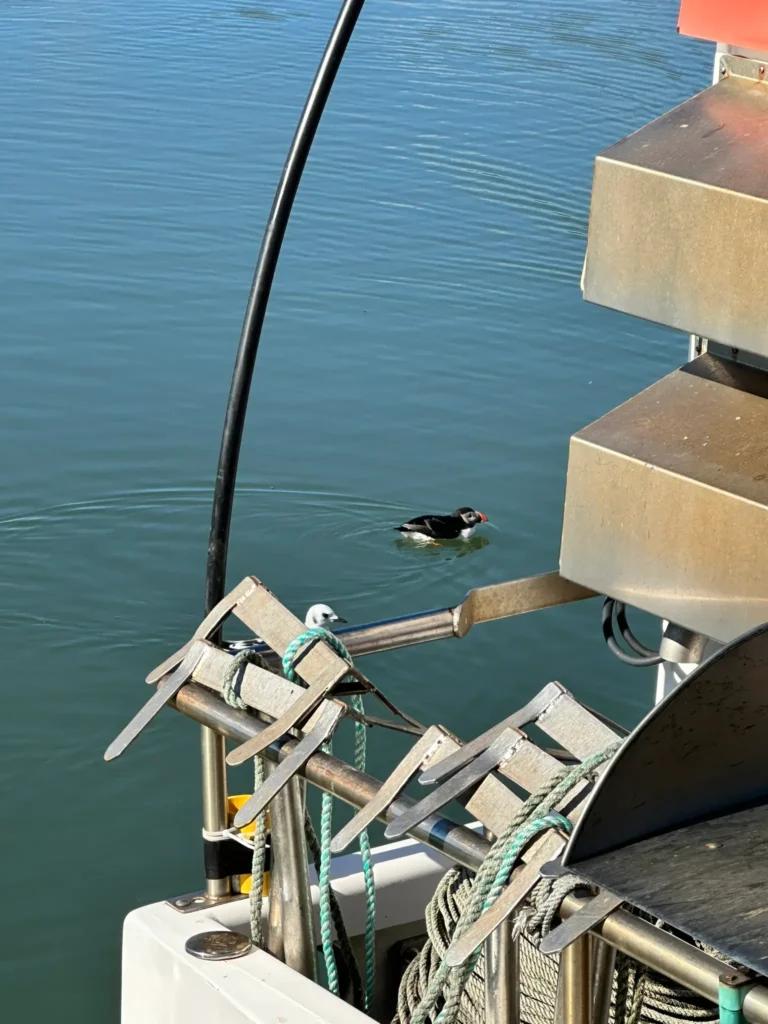
Hálsanefshellir Cave – this is where you end up if the water recedes and you pass those basalt columns; above this cliff, if you're lucky, you can see the puffins.
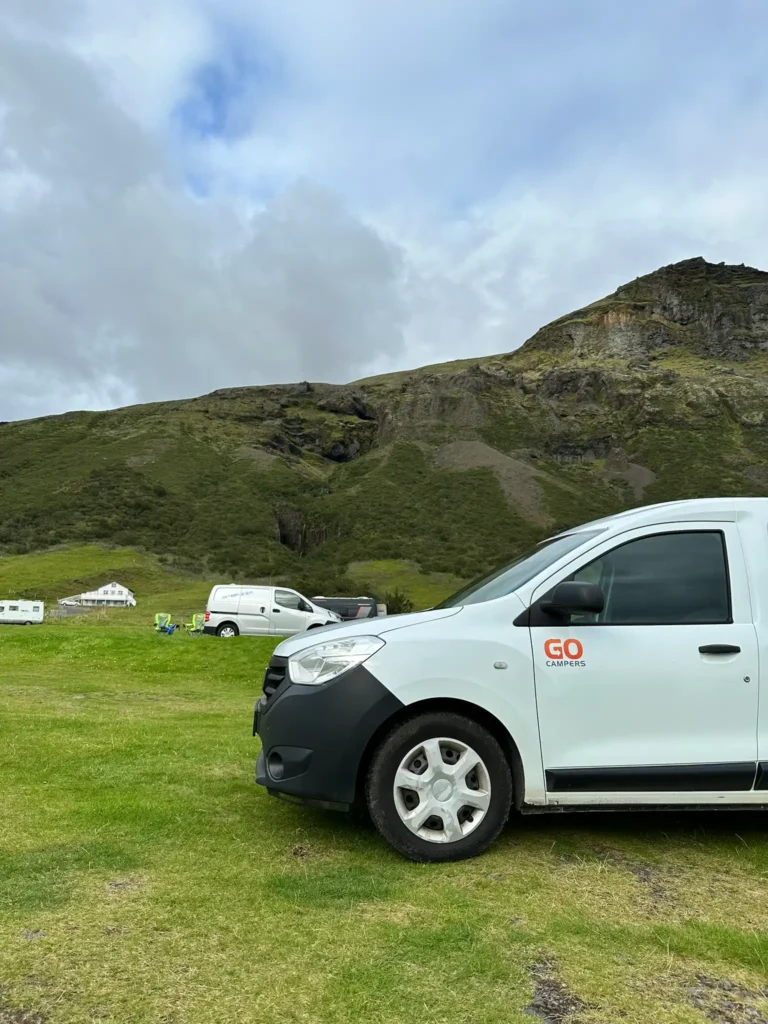
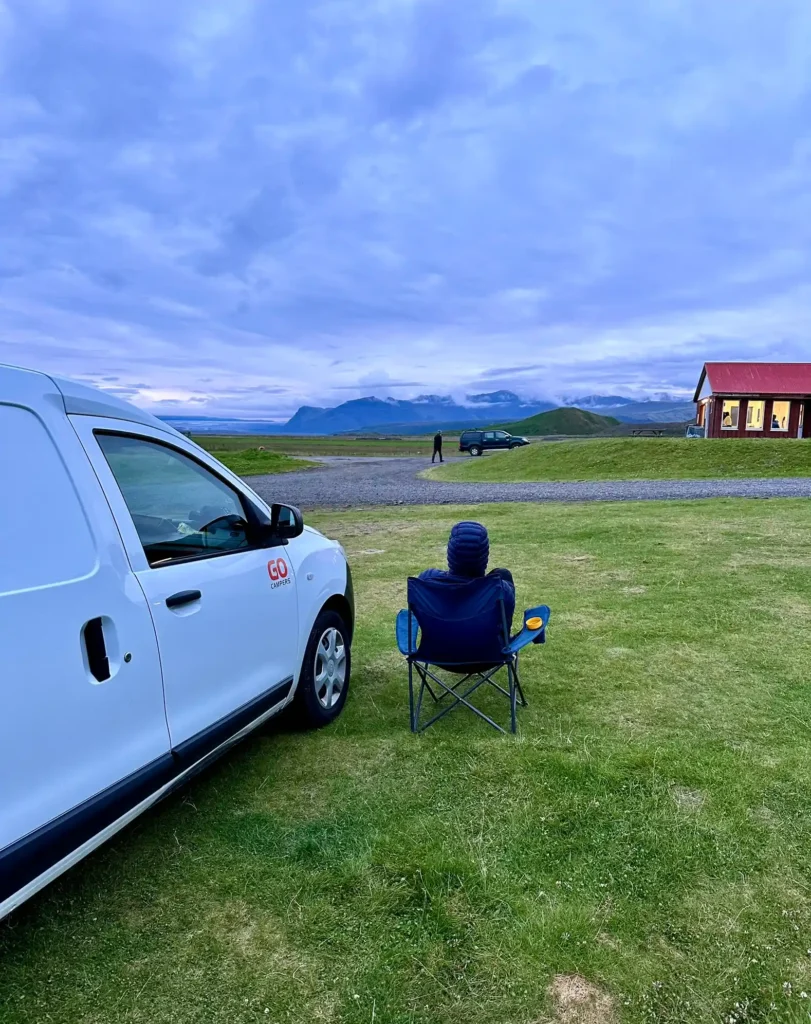
Skafatell camping is the campsite where we stayed on the first night, and we loved it. It is extremely popular because it is just a stone's throw away from the glacier of the same name. It is also very close to the tourist center, where tour buses probably stop.
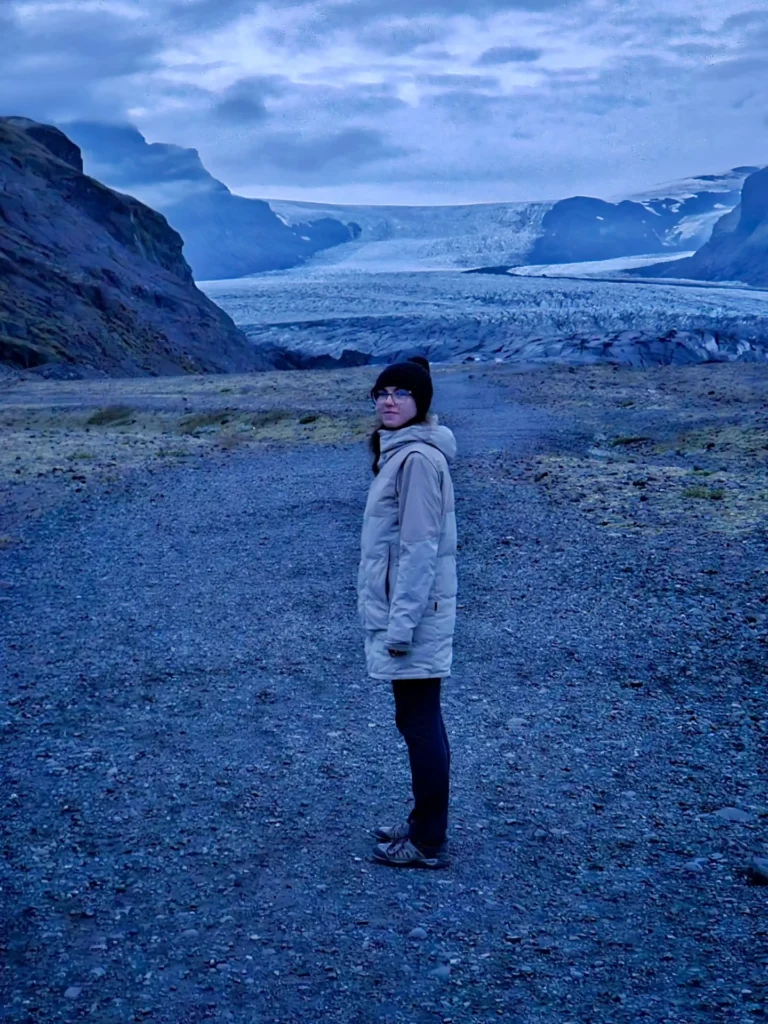
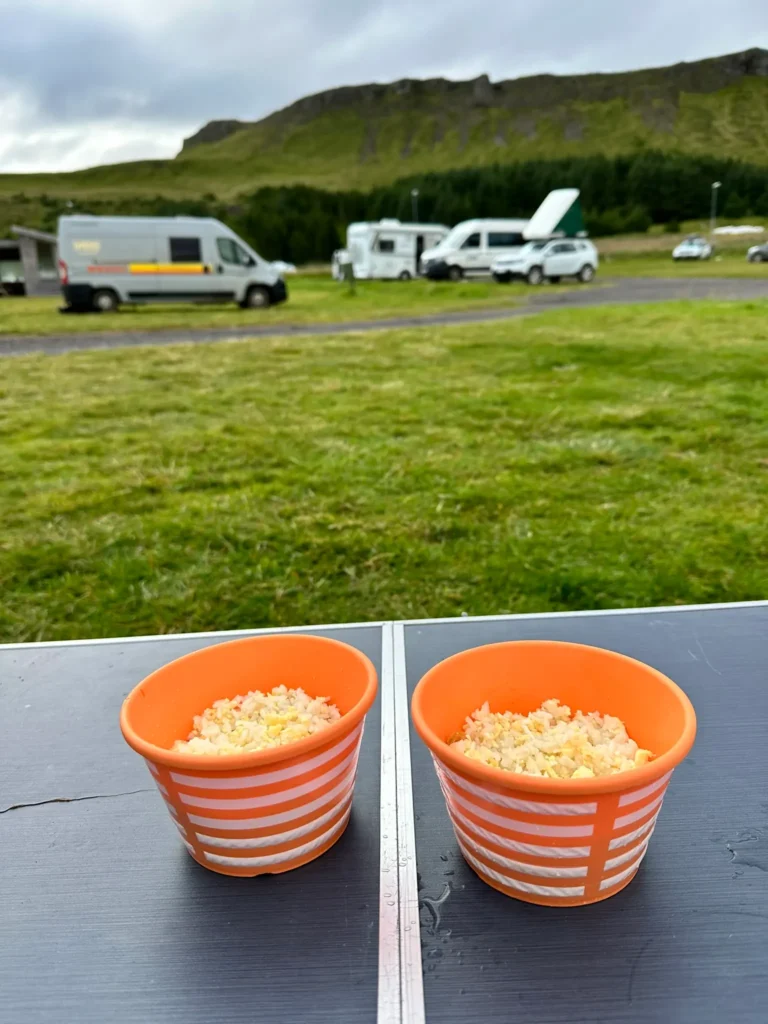
The campsite is very well equipped, with many areas specially designed for motorhomes and smaller vans. There are plenty of toilets and sinks for washing dishes, conveniently located so that they are accessible to everyone. There is also a larger building with showers and washing machines. At around 11:30 p.m., we set off on a walk towards the glacier at sunset. It was just us and complete silence, and all we could hear was the ice breaking off. Oh, and a temperature of 3 degrees Celsius :)) I wholeheartedly recommend the campsite as a starting point for visiting the waterfall Svartifoss.
Day 2
The next day was extremely special! Because we walked on the glacier, and not just any old way, but along a trail! I don't know if you can go on your own, so I'll just tell you what it was like on the organized trip. We choseArctic Adventures which are based at the Skafatell campsite, so bonus points for this camping spot. If you don't have special footwear for crampons, just mention it when you book your trip (which I recommend you do 1-2 months in advance) and you can rent them from them for a small fee.
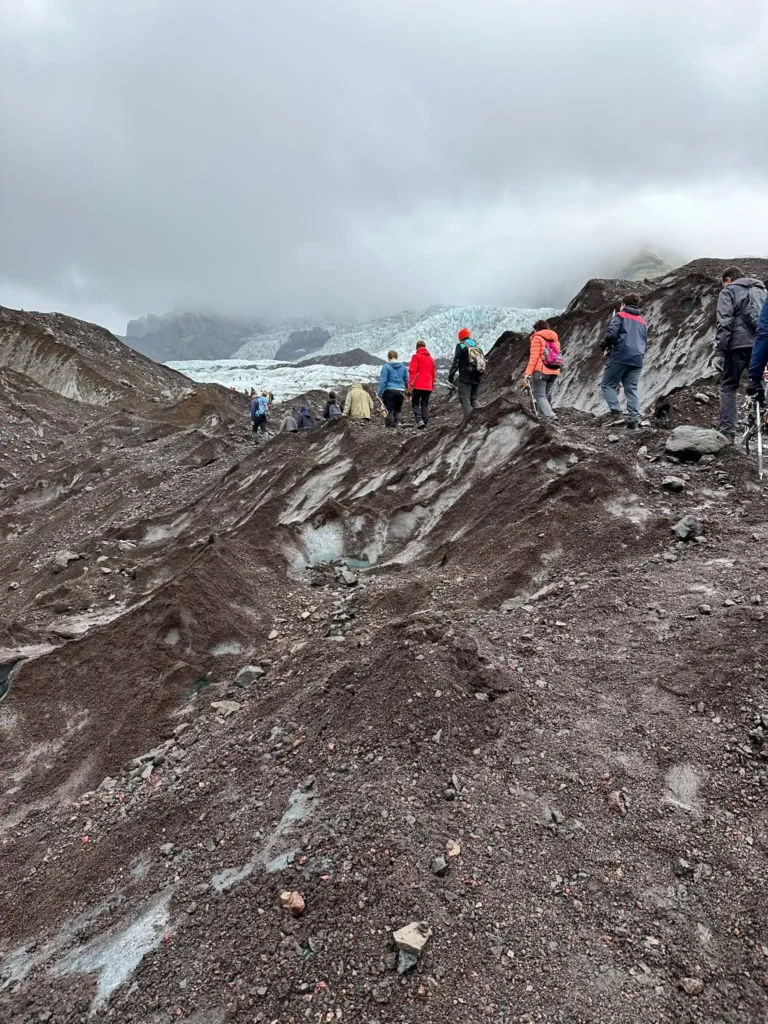
You will depart in a large coach to another starting point on the glacier, which is more easily accessible (this may vary from season to season because the ice melts very quickly and new paths are created). I recommend that you bring water and wear multiple layers, especially a hat, thick gloves, and a woolen collar because it will be quite cold. If you have never used crampons before, don't worry, your guide will show you how.
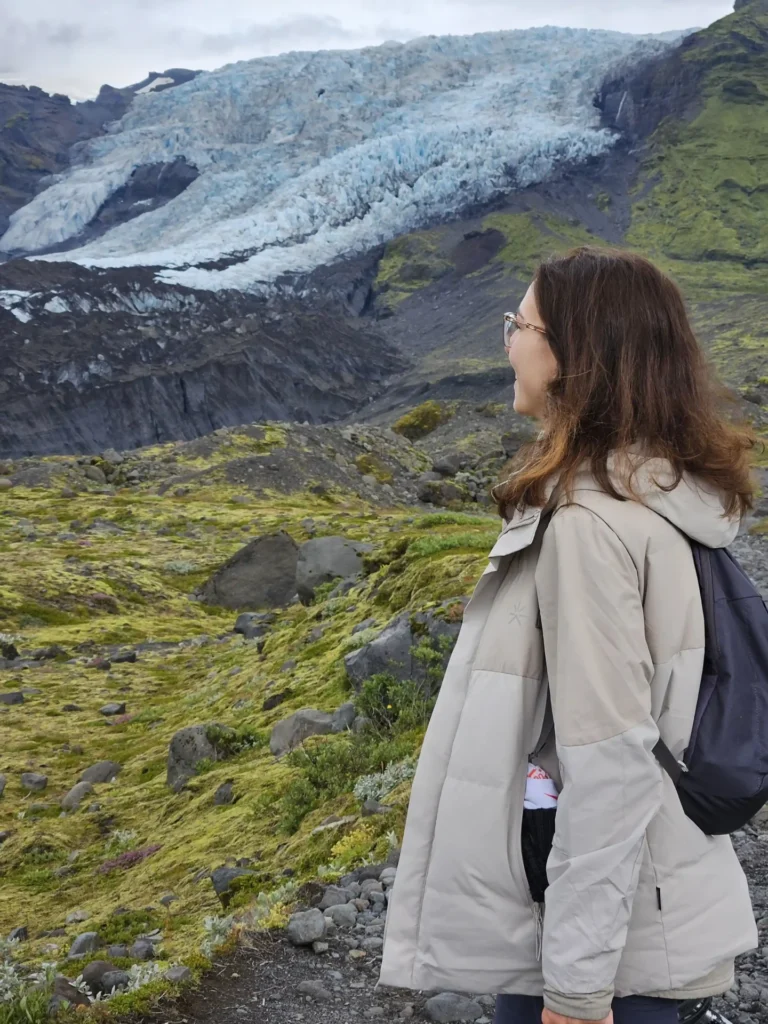
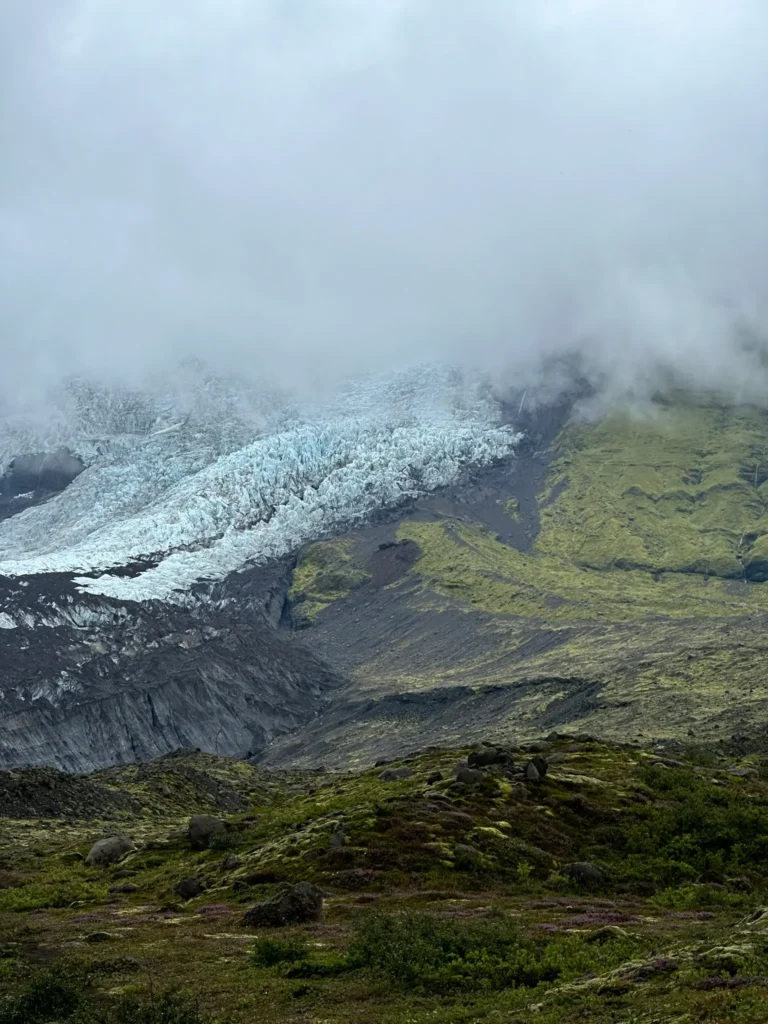
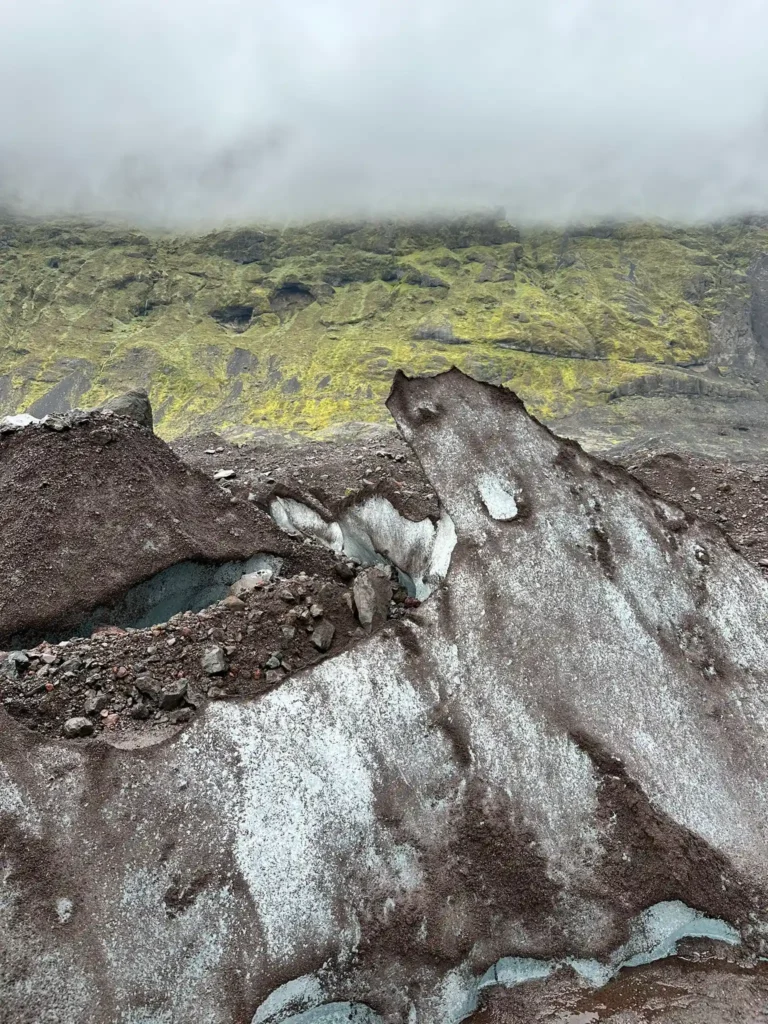
Our first encounter with the glacier was absolutely special! We couldn't wait for this experience and we felt so, so small when we stepped onto the glacier. And the image of the ice at the base covered by a considerable layer of volcanic sand, with the surrounding hills a vivid green and the fog covering the mountain peaks... that was the image we had in mind when we thought of Iceland.
The trip is not complicated at all. The guide took us to a spot where he showed us crevasses and how to drink water directly from the glacier, took us into a semi-cave, we took lots of pictures, and then we returned. The whole experience lasts 4 hours, and on the website you can choose what time to start; we chose to start at 10 a.m. I think it's 100% worth it, even if it's more expensive (expect to pay at least 100 euros/person)!
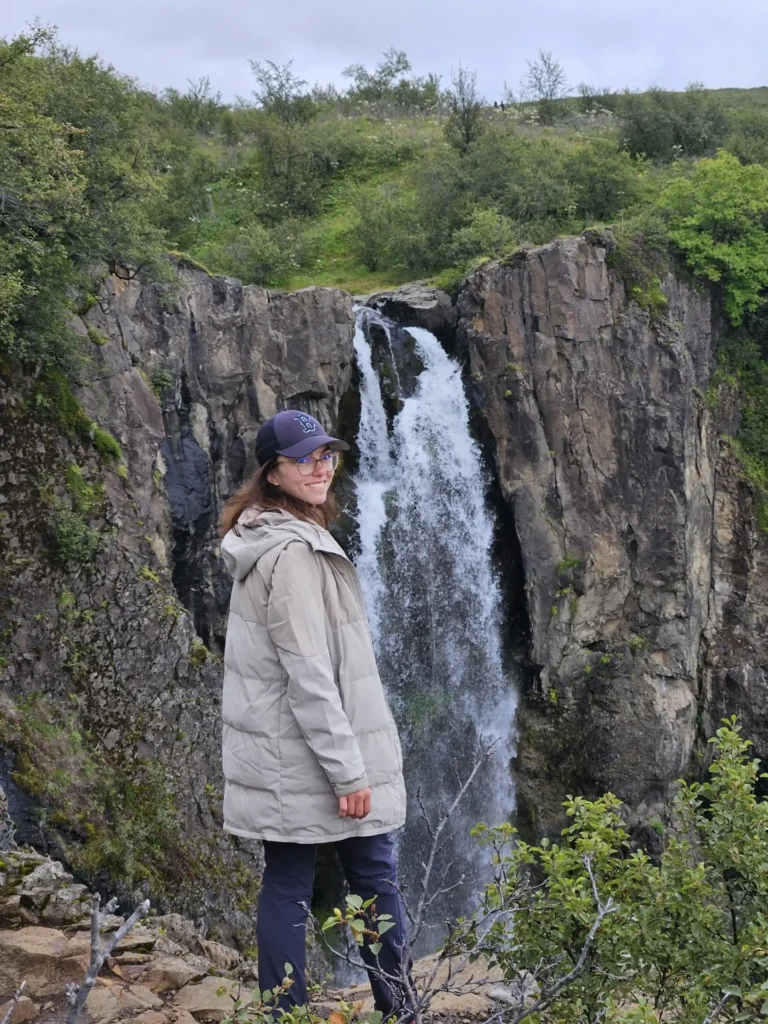
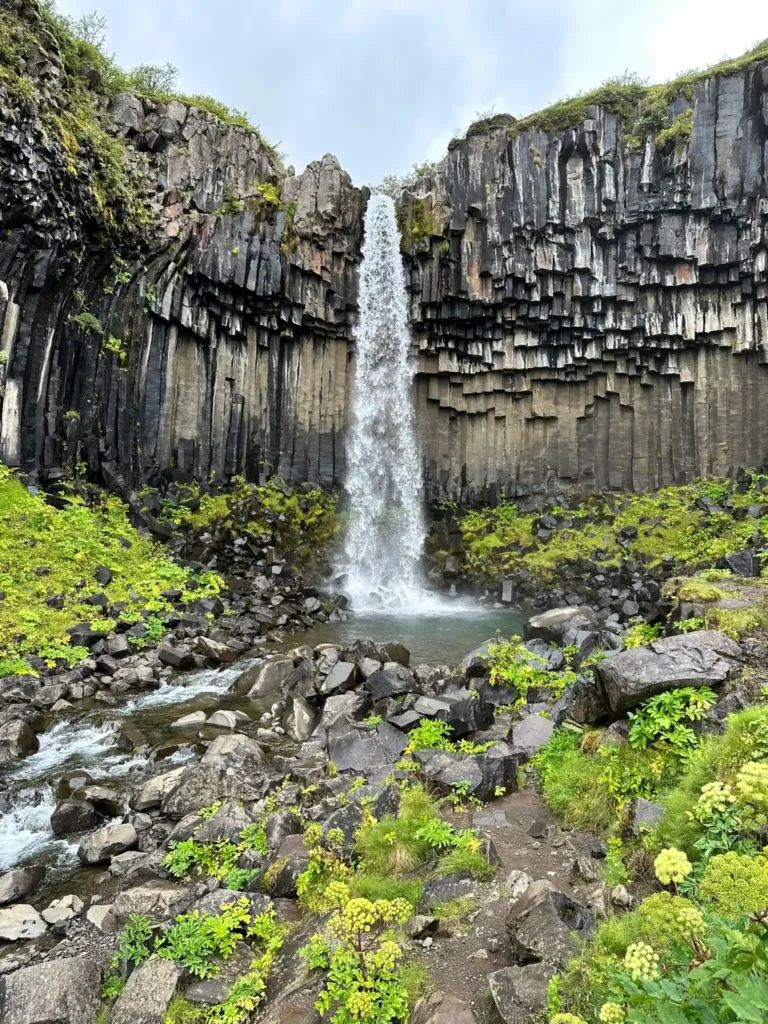
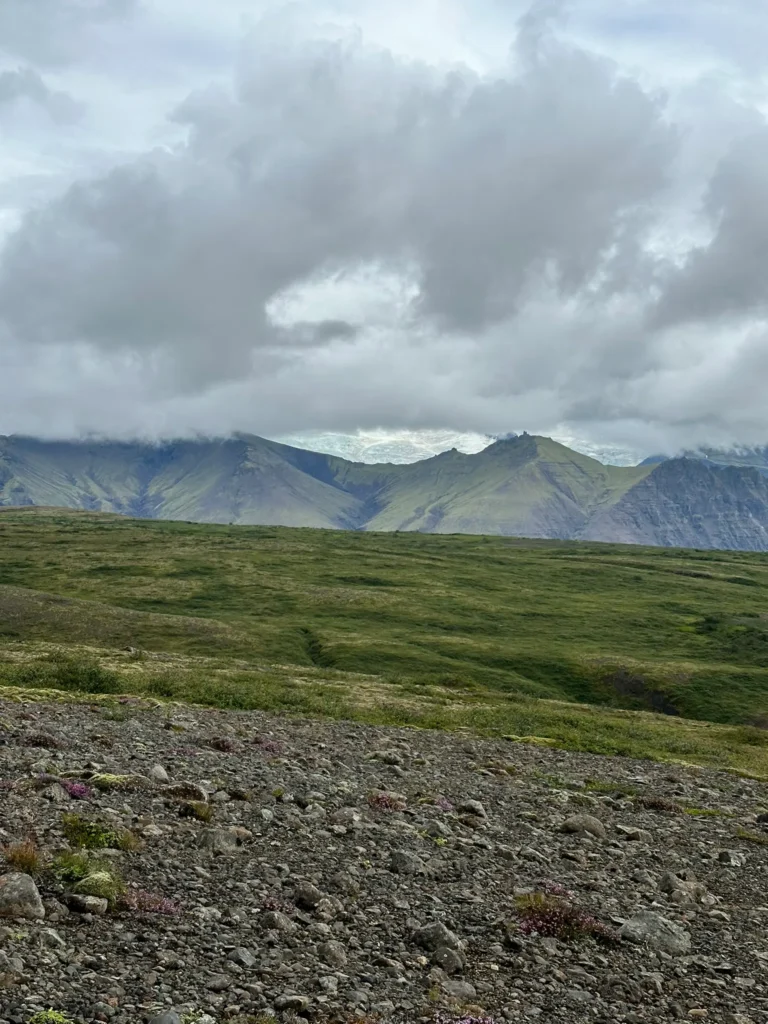
Svartifoss – we returned to the campsite in time for a quick snack and to set off on the route to Svartifoss. We actually did a 3.5 km loop from the campsite to Svartifoss (impressive due to the basalt columns formed by the slow and uniform cooling of the lava), then to Hundafoss and back to the campsite. You can make many detours from the main route; for example, we ended up at a panoramic viewpoint where we could see a little bit of the glacier.
Svinafelli camping – where we slept on the second night. It is 10 minutes away from Skafatell and has a superb view of the glacier. It is not as big as the first one, but it is still very spacious, with a large communal dining area, which was the warmest of all the campsites we tried, and where you can wash your dishes. There are also showers and toilets, which I found to be a bit scarce compared to the number of tourists that evening.
Day 3
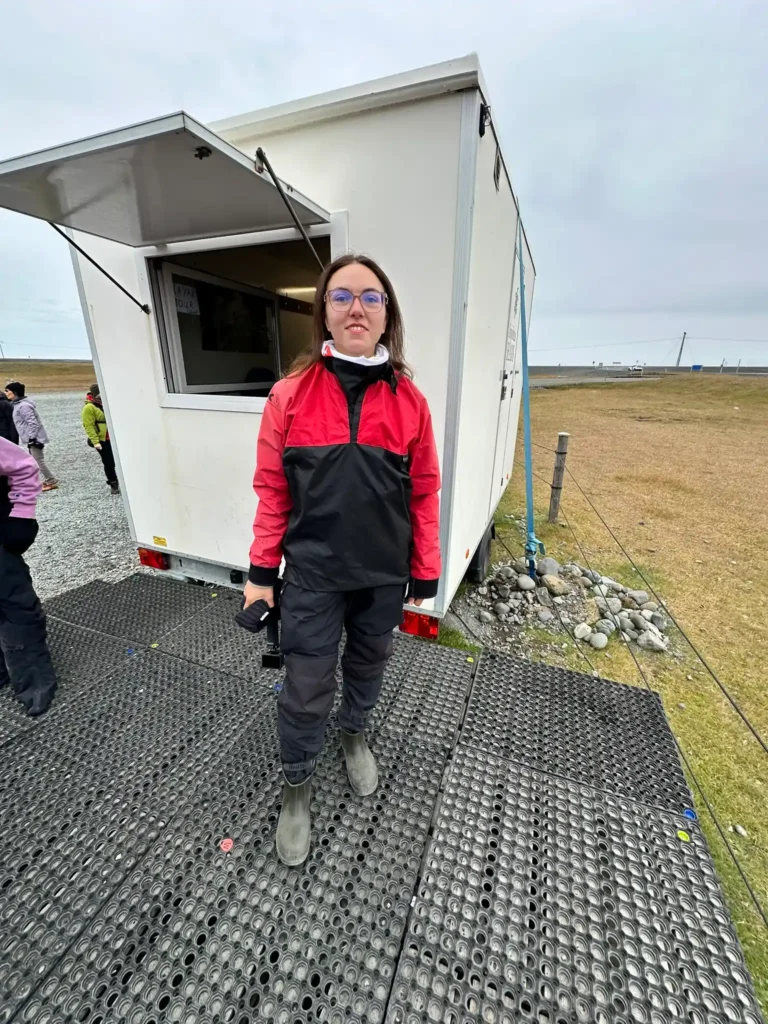
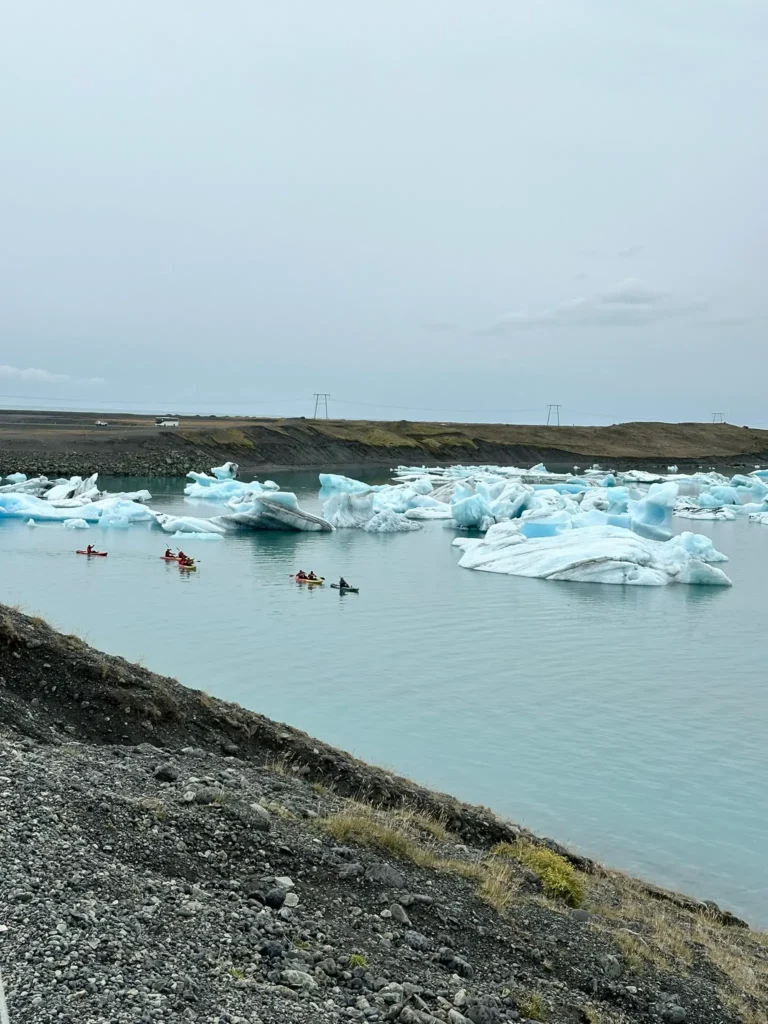
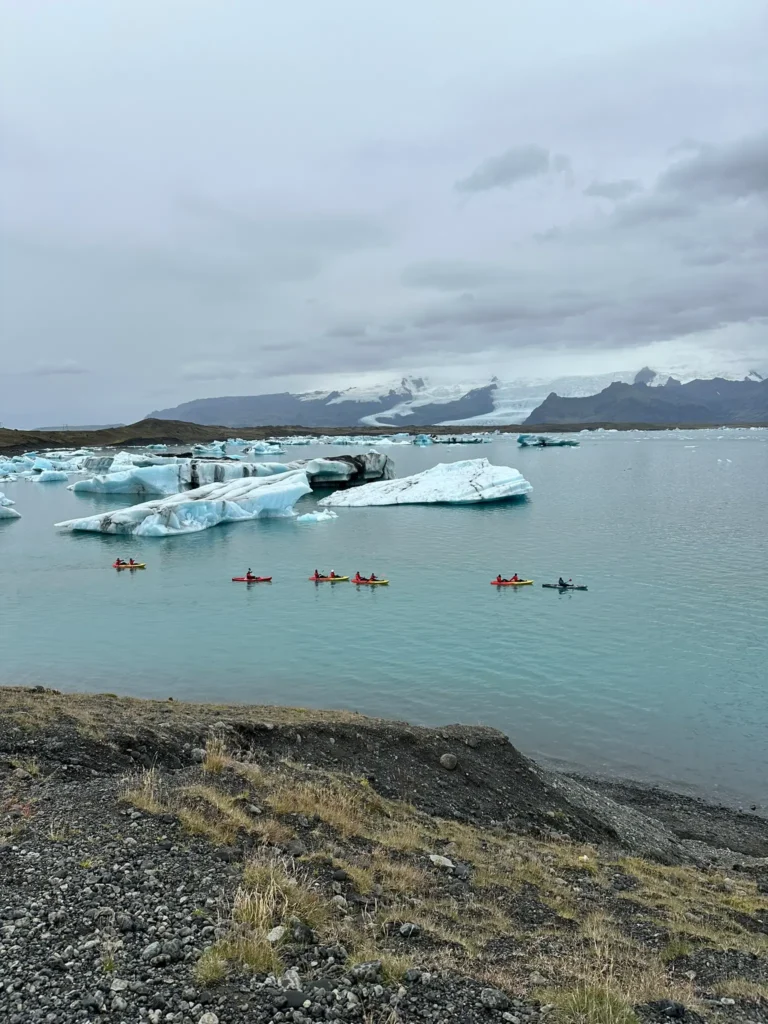
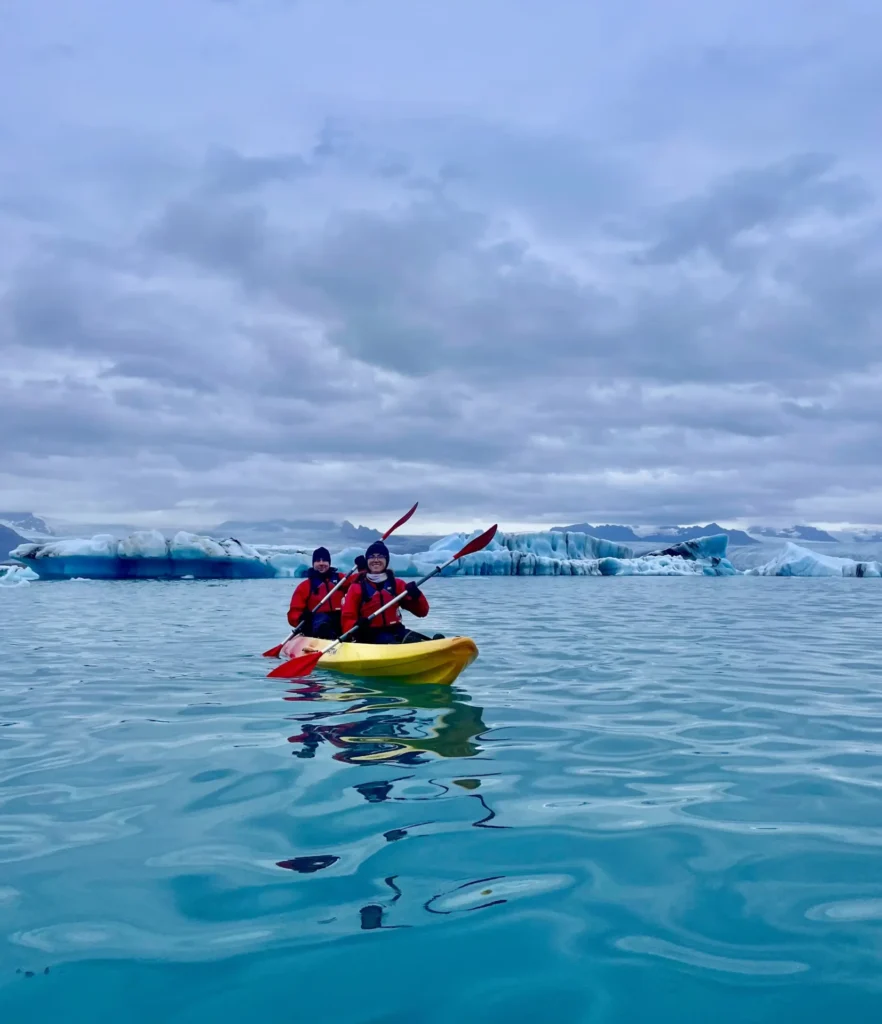
We set off quite early on day 3 for another organized trip and had to drive about 45 minutes to Laguna Jökulsárlón. There, another once-in-a-lifetime experience awaited us: kayaking through the glacier-filled lagoon, which was difficult to describe in words. We booked it through IceGuide.is and it lasted an hour and a half, of which one hour was spent kayaking. You must be at the meeting point 15-20 minutes before departure to the kayaks in order to equip yourself with waterproof clothing and special boots. I also recommend a thick hat and waterproof ski gloves (I had thin ones and within 5 minutes they were wet and my hands were completely frozen the whole time).
If you have never been kayaking before, don't worry, as the guide will spend about 10-15 minutes explaining how to use the paddles. And if you don't feel confident, tell the guide because they will make sure to stay closer to you. Also, during the trip, don't stray too far from the guide's kayak because, although the iceberg is small on the surface, it can be huge in the water. We caught a moment when an iceberg turned in the water and we were quite close to it. Keep an eye out for seals, because there's a good chance they'll be lounging on an iceberg.
When you make your reservation on the website, you can choose the time you want to start the tour. We chose 9:30 because we knew that the parking lot would be free, there wouldn't be many tourists near the lagoon, and there was a good chance that the weather would be nice in the morning. Again, expect this tour to cost at least €125 per person. It's not really possible to take photos with your phone, unless you have a special case for it. Or you can take your GoPro because it's the safest to use even if it gets wet.
Even now, after so much time has passed, I still don't have the words to describe the feelings I had back then. Although it was my first time kayaking, I couldn't stop smiling, without even noticing how much my hands hurt from being so cold. It was a moment when I realized how grateful we are for what we have and why we chose to invest in such experiences, which will remain cherished memories for years to come.
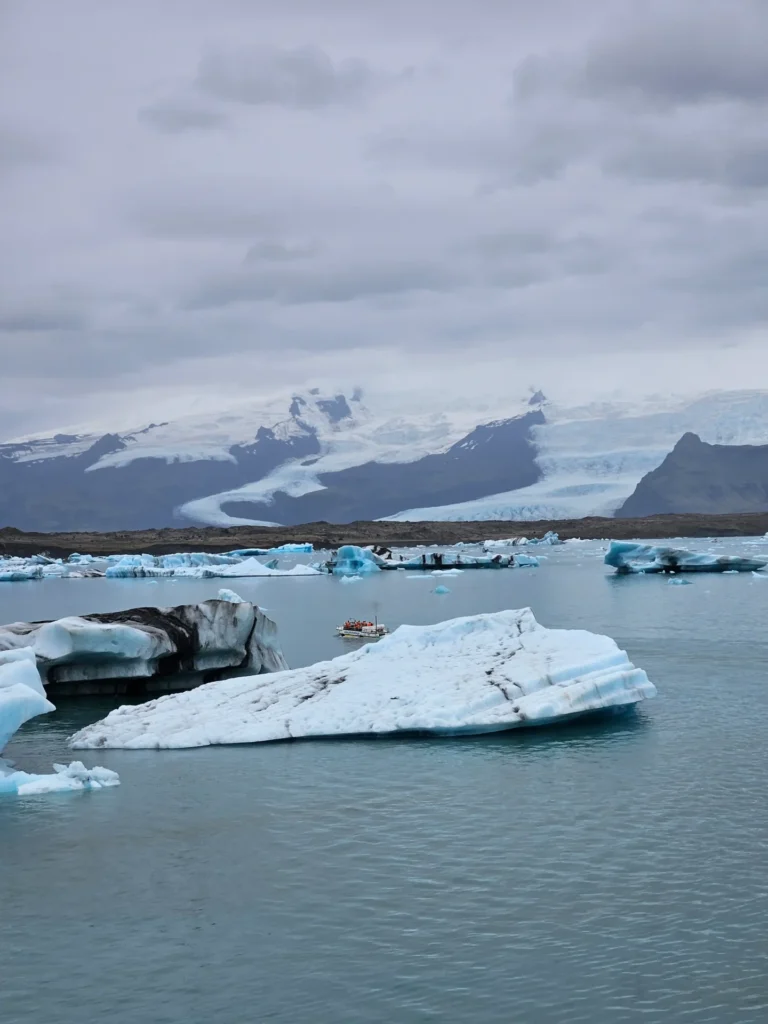
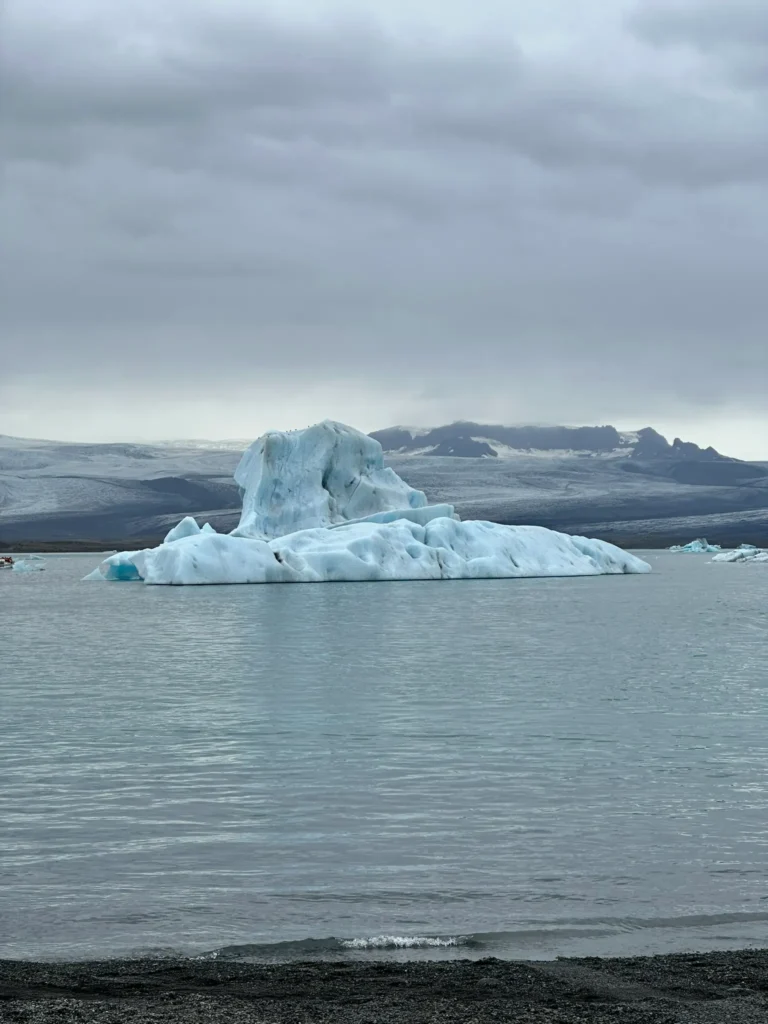
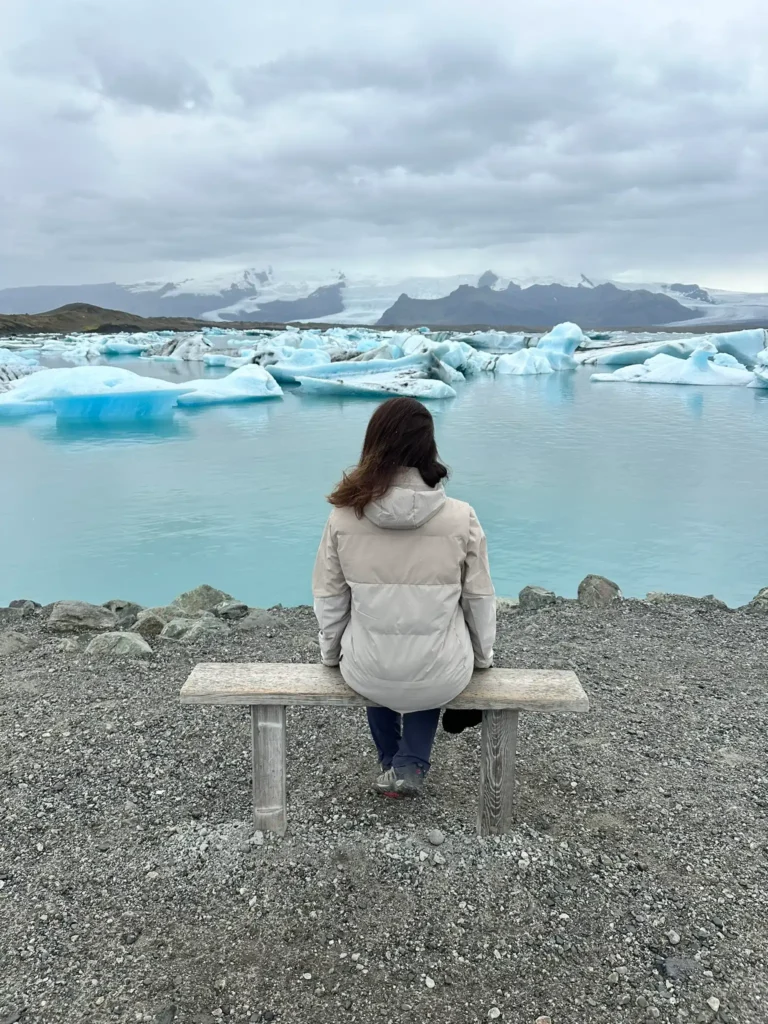
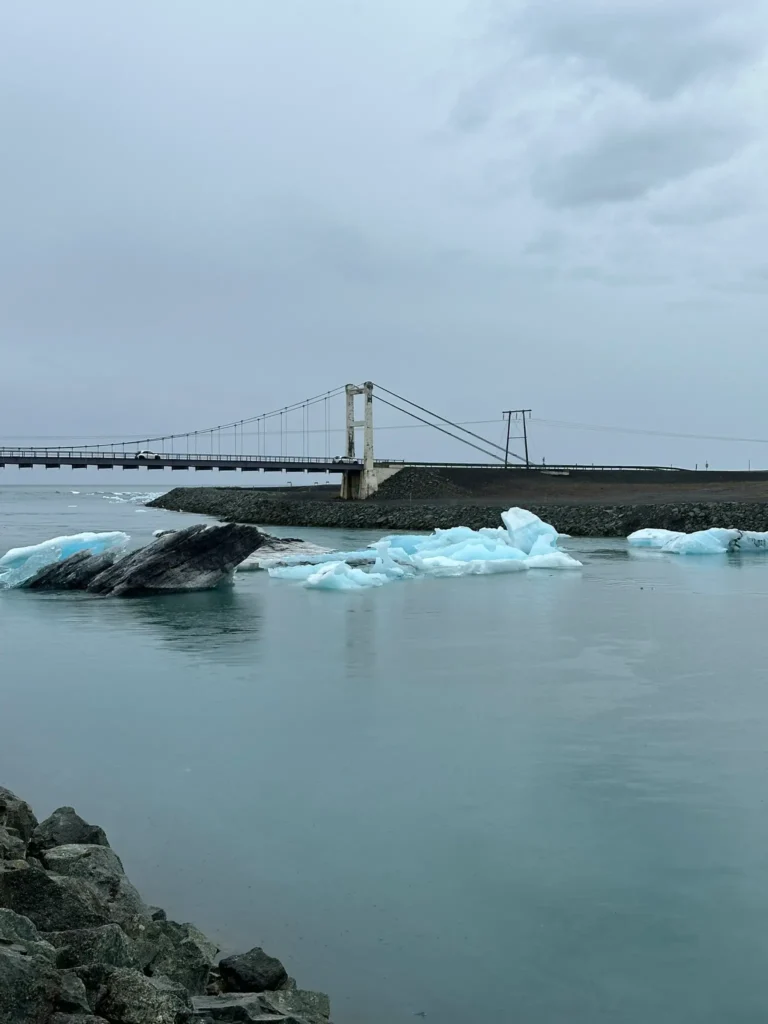
Jökulsárlón Glacier Lagoon – after the walk, we also walked along the lagoon, as far as we could, because you can't go down to the water. It's really impressive to see that huge glacier and how pieces of it break off and float down the river. But, I admit, the view from the kayak was much more beautiful.
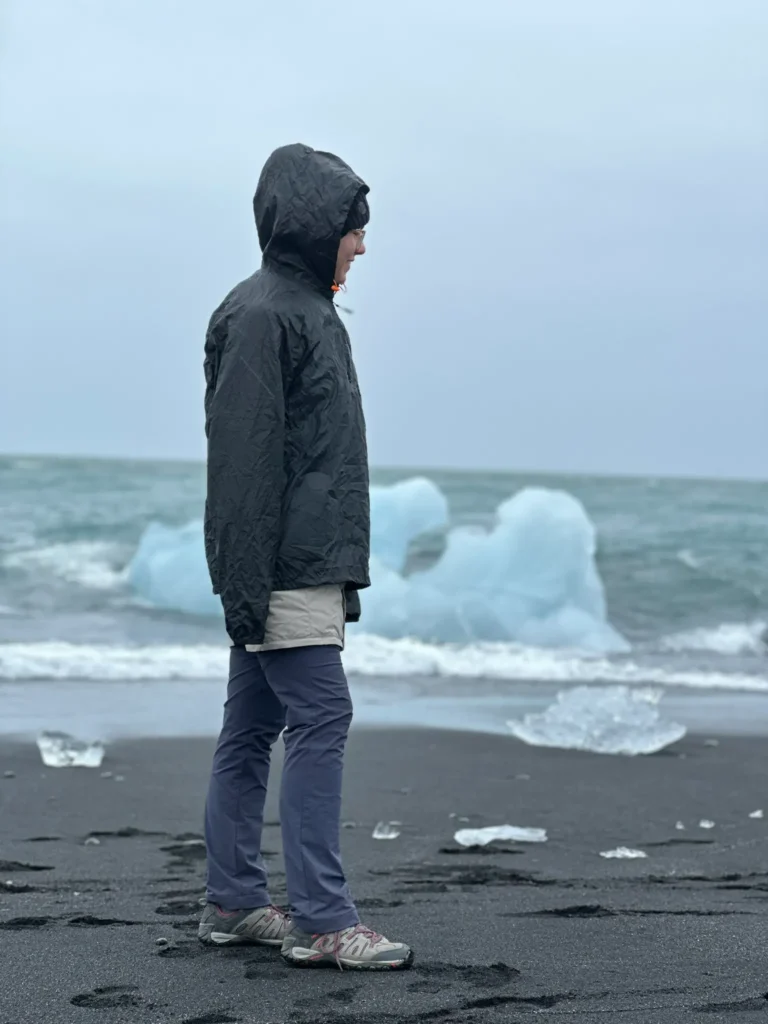
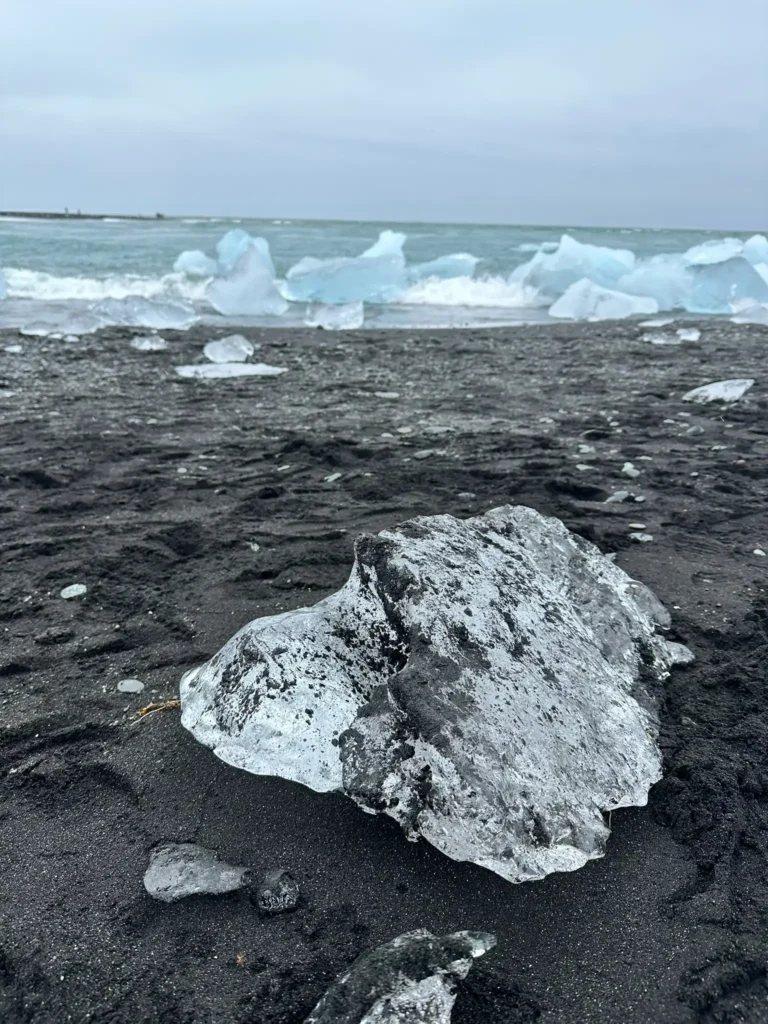
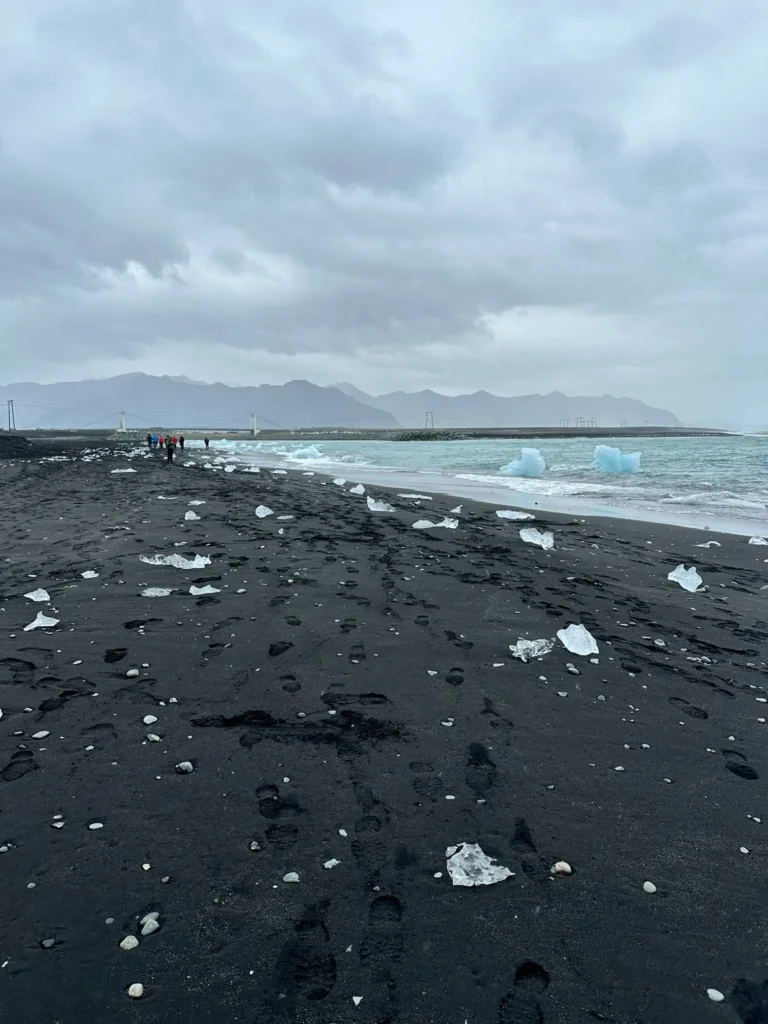
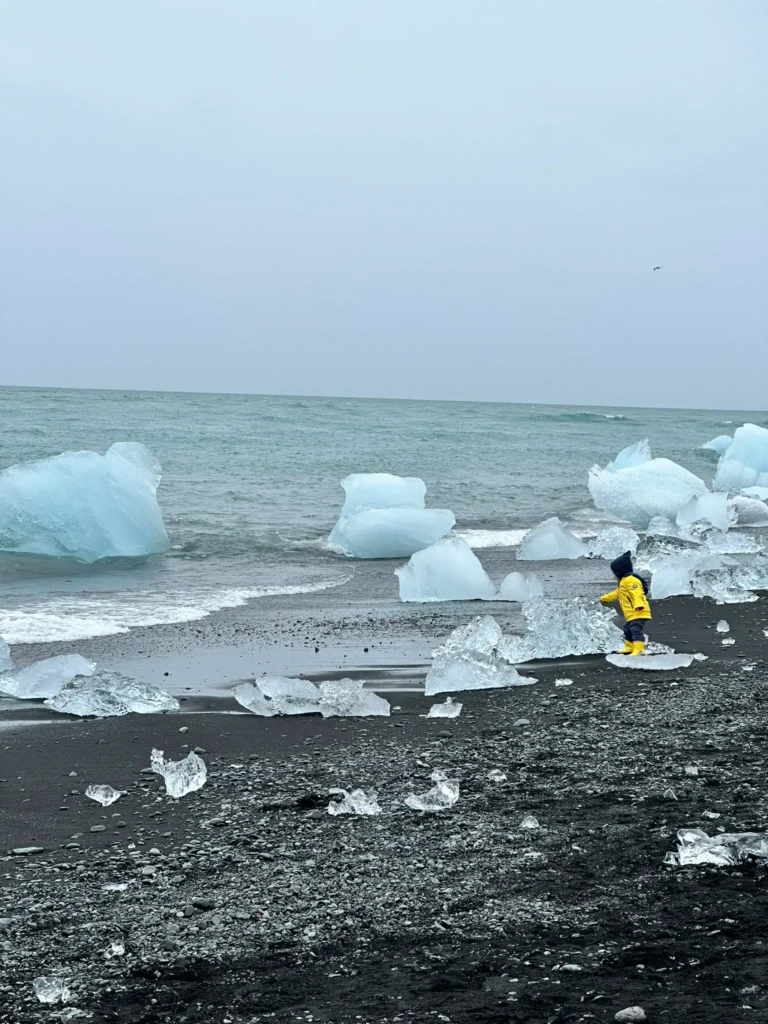
Diamond Beach – is located nearby. It got its name from the pieces of iceberg that break off from the glacier and end up on the black beach due to the currents. What a spectacular place, especially if there is a little fog and it starts to rain! I recommend going past the tourist area and further on, where there will be no one else. But expect the landscape to be different when you go (we were just super lucky that the beach was full of small pieces of ice).
For us, that day at 2 p.m. was completely ruined: it started raining quite heavily, the wind was gusting at 90 km/h, and we couldn't visit the rest of the places, even though we tried, but we wasted more time and didn't see anything because of the fog and volcanic sand that was hitting us from all sides. We still had the following on our list: Mulagljufur Canyon, Vestrahorn Mountain + Stokksnes și Folaldafoss.
Camp Egilsstadir – was the campsite where we had to spend the night. We wanted to go somewhere else, somewhere much nicer. But due to the extremely bad weather and the fact that we arrived at the campsite at 10 p.m. after a 6-hour drive, we stopped here. It was full of tourists, probably in the same situation as us, and it was very crowded. We got the last plot of land. The campsite is well laid out, even with a small bistro, but there are very few toilets and only two showers for the large number of people, and it is next to a warehouse on the outskirts of a small town.
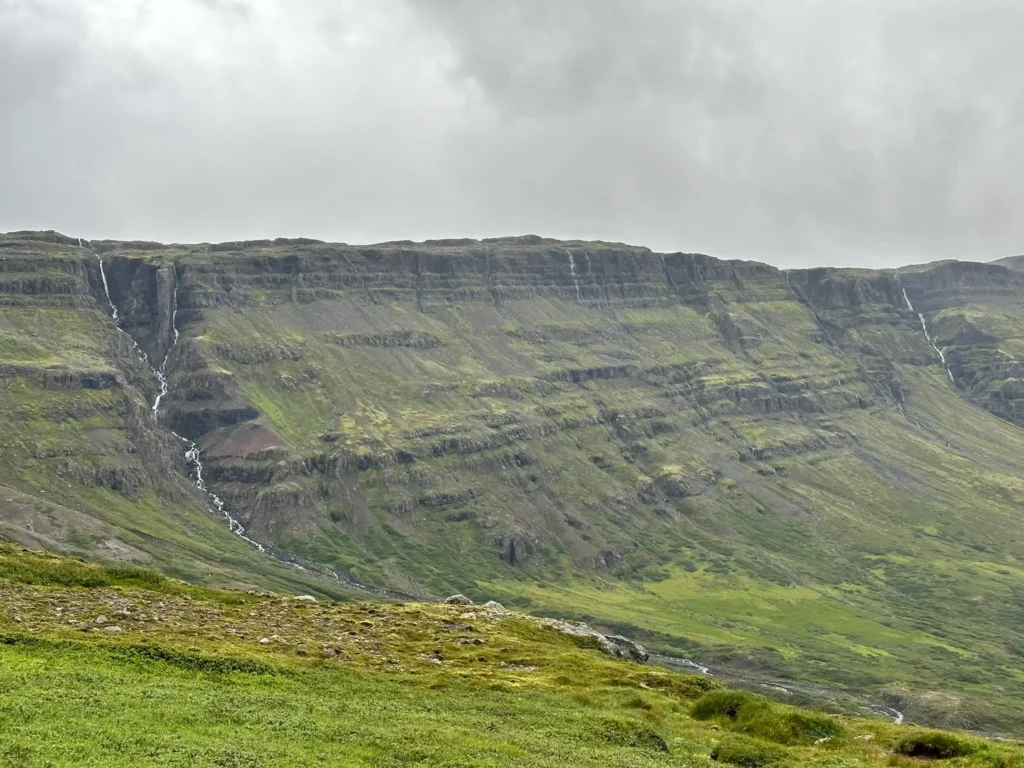
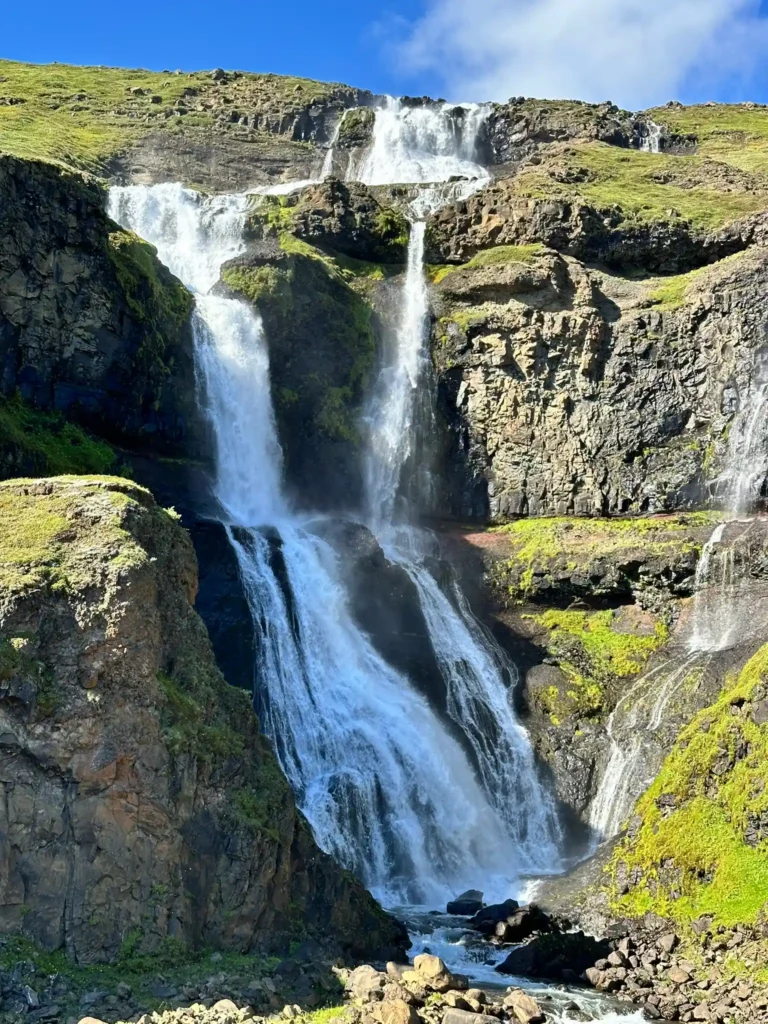
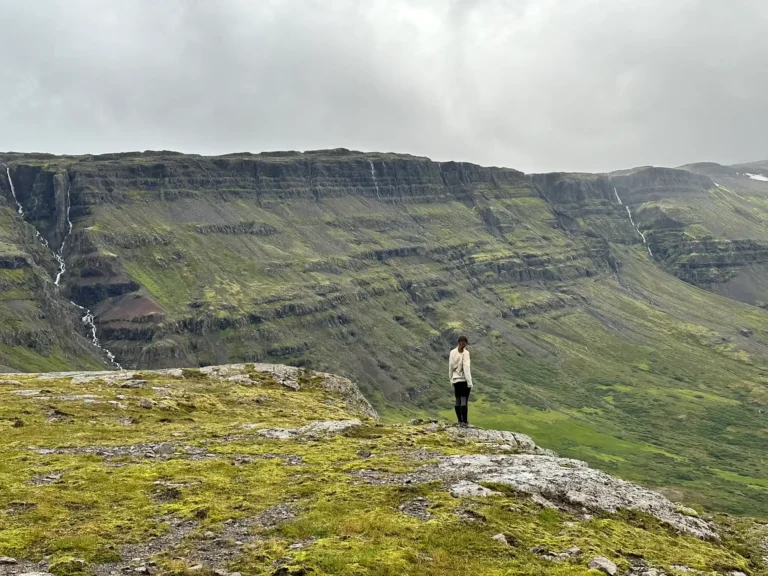
Unfortunately, I don't have any pictures from there, so I don't necessarily recommend it unless the situation requires it or you want to be close to the city the next day. Instead, we would have liked to camp here: Borgarfjörður eystra Campground i because it has a splendid view and because it is close to the puffins. Even with the crappy weather, we found a very dramatic valley with waterfalls coming out of the green mountains and had to stop to admire it.
Day 4
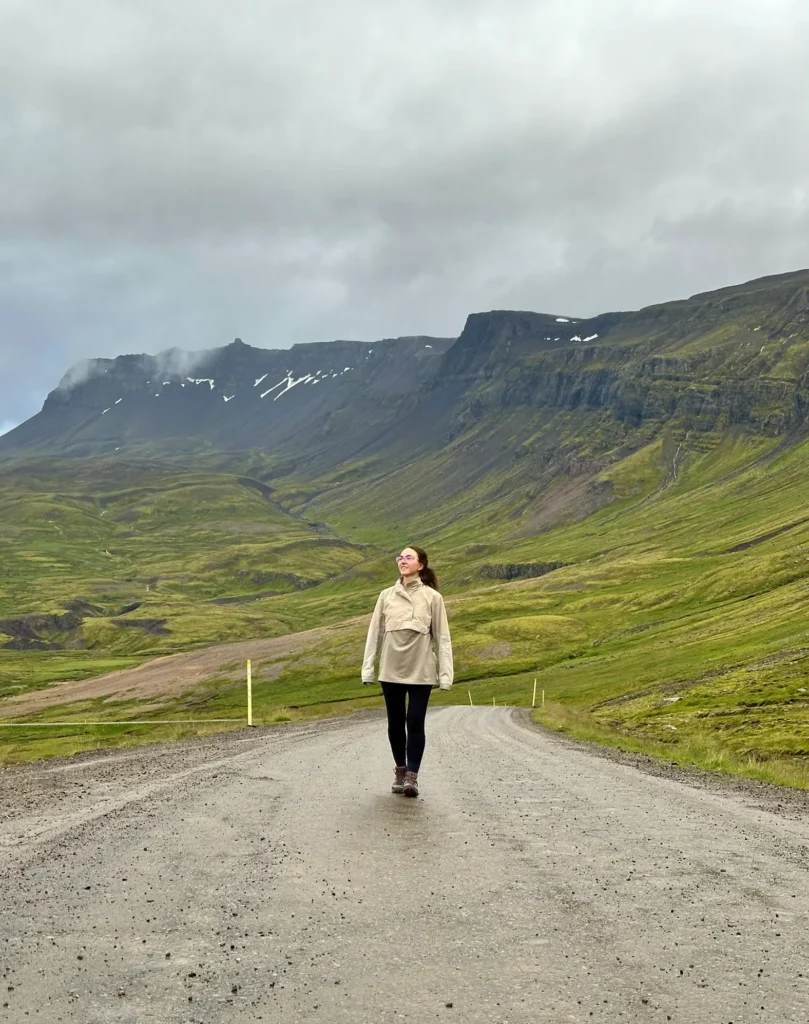
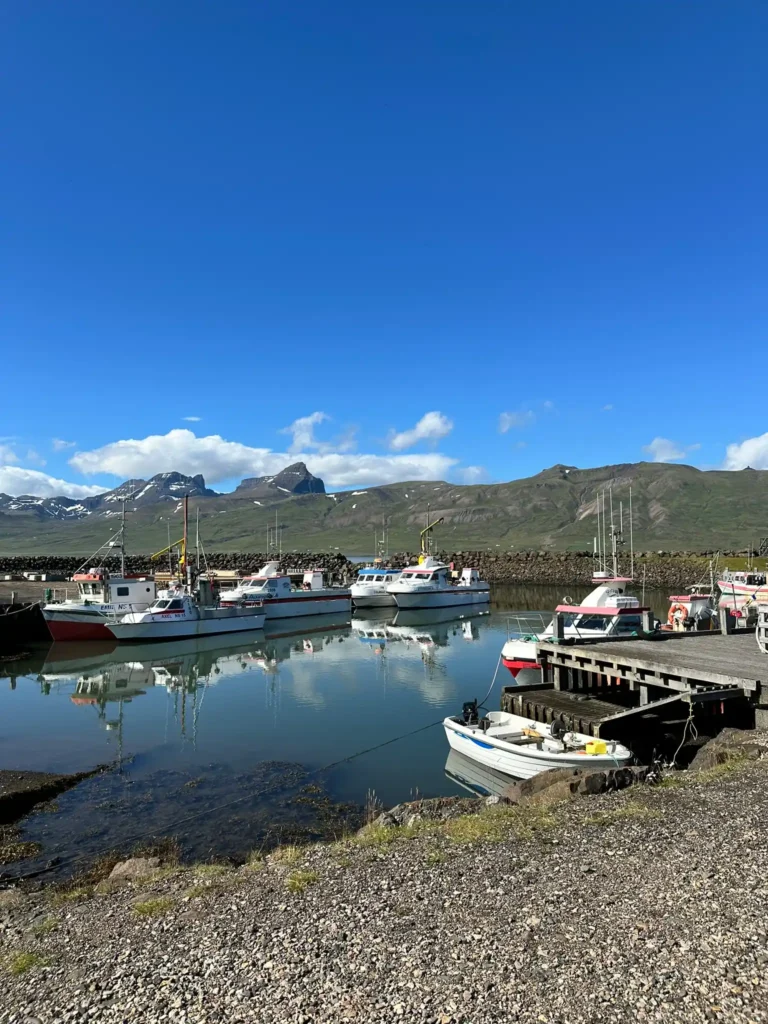
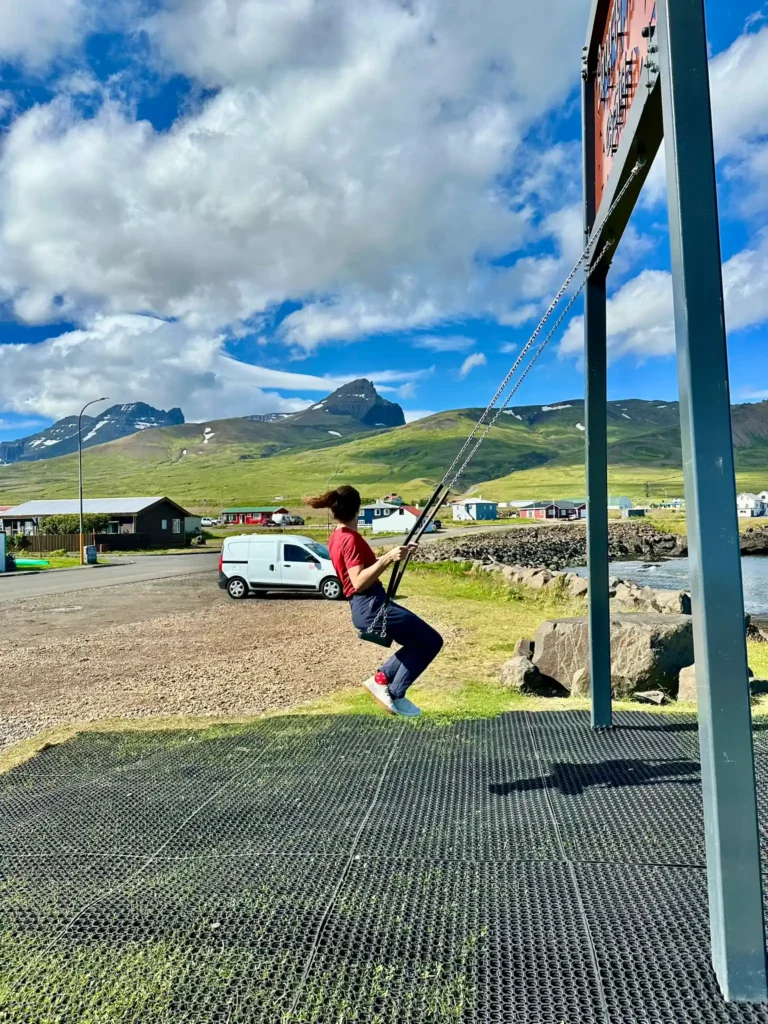
Borgarfjarðarhöfn – although we had very little chance of seeing the puffins, we still ended up in this small town and we did well. We had splendid weather, with temperatures of 15 degrees, and the road here was superb: the opening to the fjord with the high mountains that still had traces of snow. We enjoyed it very much and decided that we would definitely return because the cliff where the puffins can be found was full of nests that had been built and abandoned, and the small harbor area is charming.
Rjúkandi Waterfall – that was a surprise waterfall because we hadn't planned to stop here, but it came our way, we saw that it wasn't popular, and we stopped. It really is impressive!
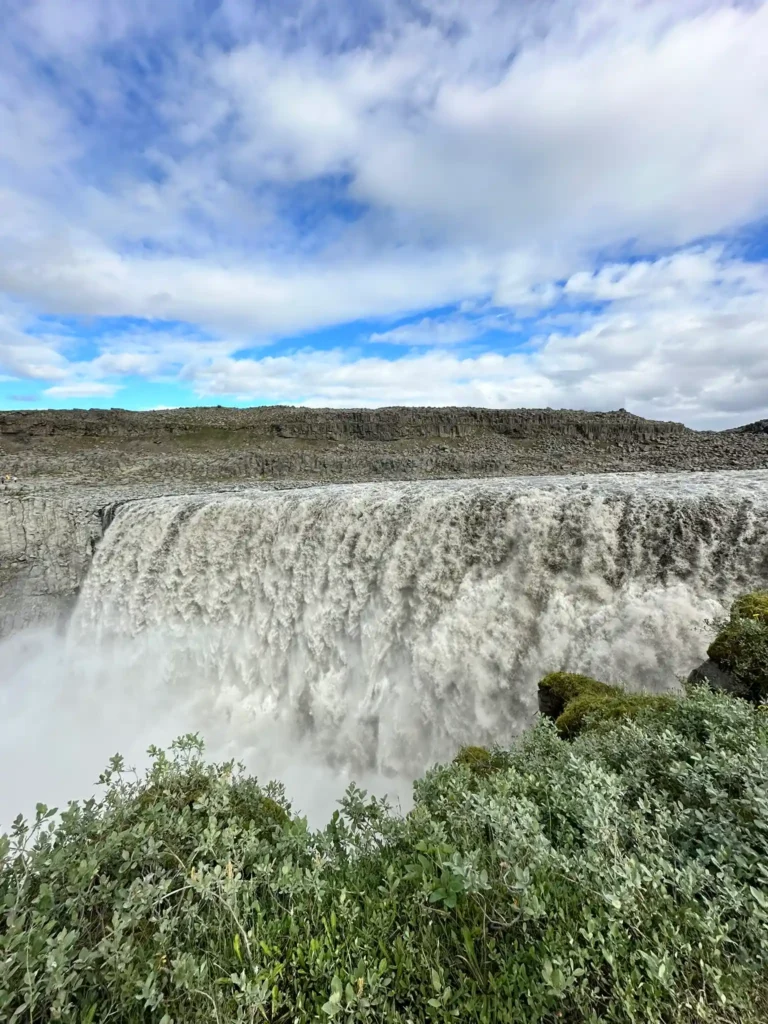
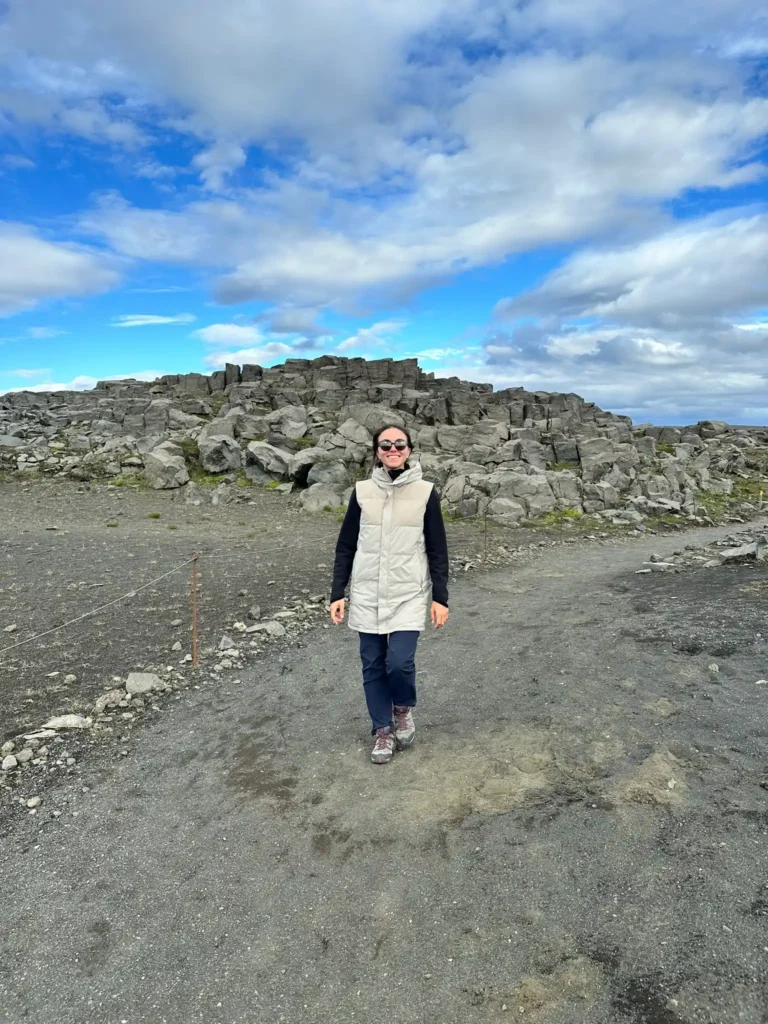
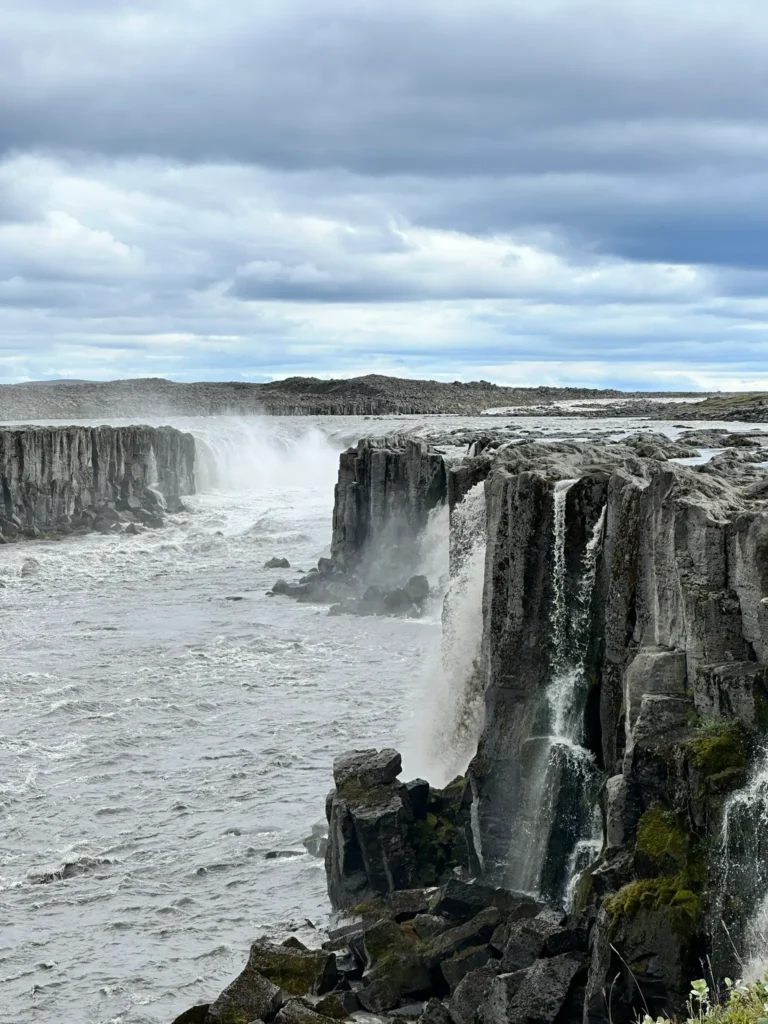
Dettifoss (West Side) – personally, I thought it was the most beautiful waterfall in Iceland that I saw (it competes for first place with Skógafoss). It is enormous; I have never seen such a large and powerful flow anywhere else; it seemed unreal. There is a sort of path through volcanic rocks leading to it, and you can see it from above, but you can also reach it somehow. Remember to come from the west (write this exactly on Google Maps) because it's the better and shorter route. (From the tourist area, you can go further and follow the canyon that the river formed before reaching the waterfall).
Earth Lagoon Mývatn – honestly, it wasn't on our list to go here, we didn't even know about this lagoon, but when we saw the nearby geysers and thermal baths in the distance, we decided to relax too. Especially since the landscape is very different from the Blue Lagoon, somehow from the pool you can see the whole valley and enjoy a super sunset. We didn't take any pictures here, but as an idea, the entrance fee was approximately 50-52 euros/person, and we bought the ticket online, 30 minutes in advance. The ticket price included a bathrobe, you choose the time you want to go and you can stay as long as you want, and the sauna is included.
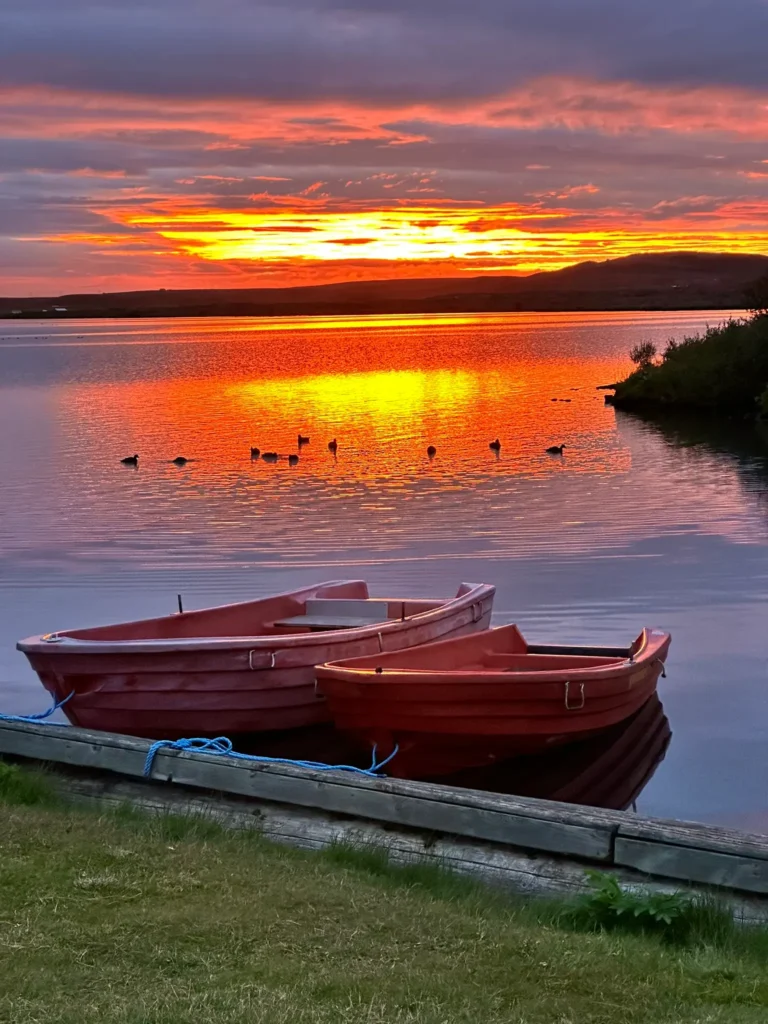
Camping Myvatn – it is very close to the thermal baths mentioned above and to the following tourist attractions on day 5. In terms of size, it didn't seem very big to me, but to be fair, it was full when we arrived, and it was full of annoying little flies, but they went away after sunset. The landscape is beautiful near the lake of the same name, where you can go boating. There were few showers and toilets for the number of cars, but the dishwashing area was the most beautiful.
Day 5
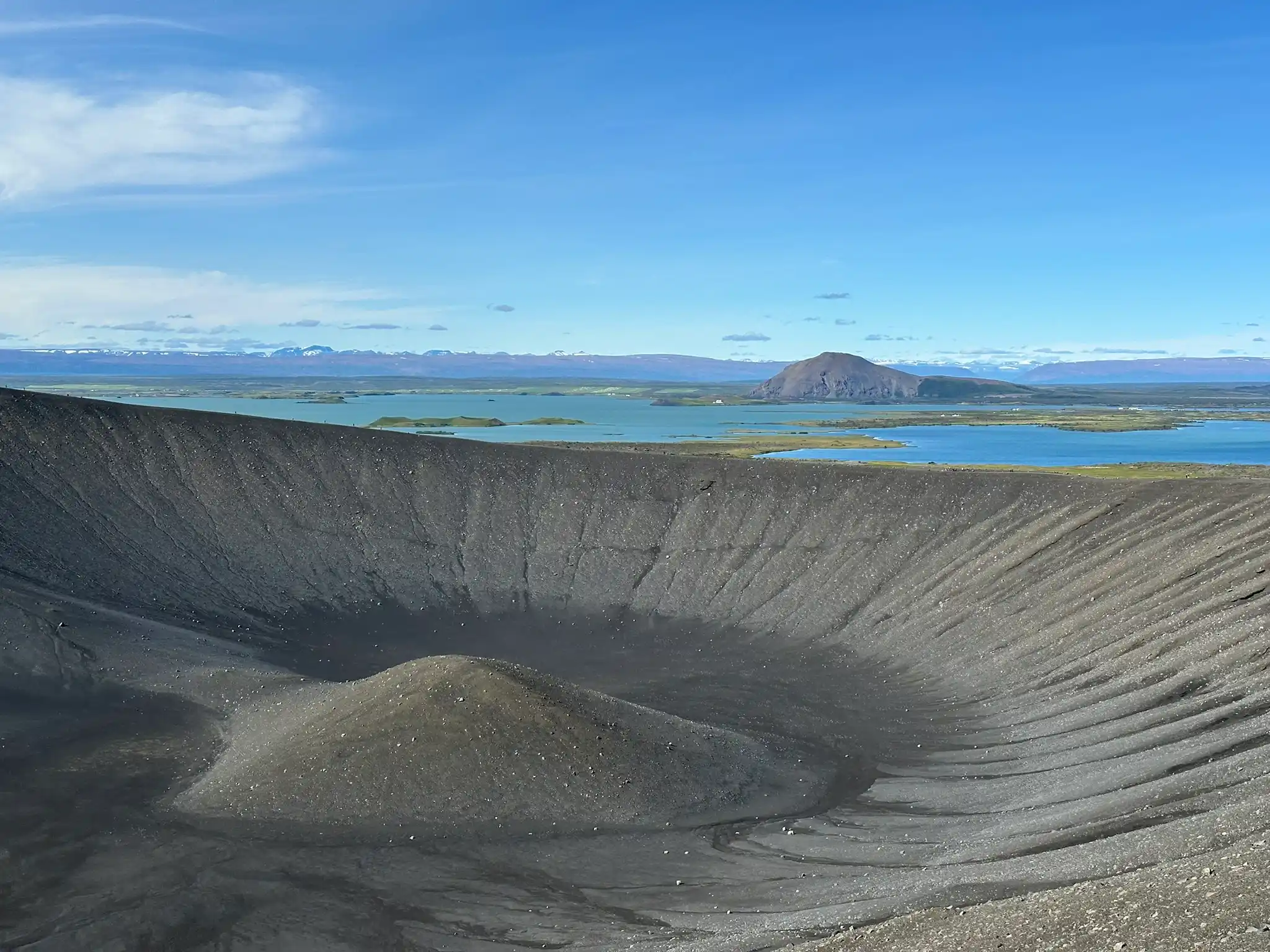
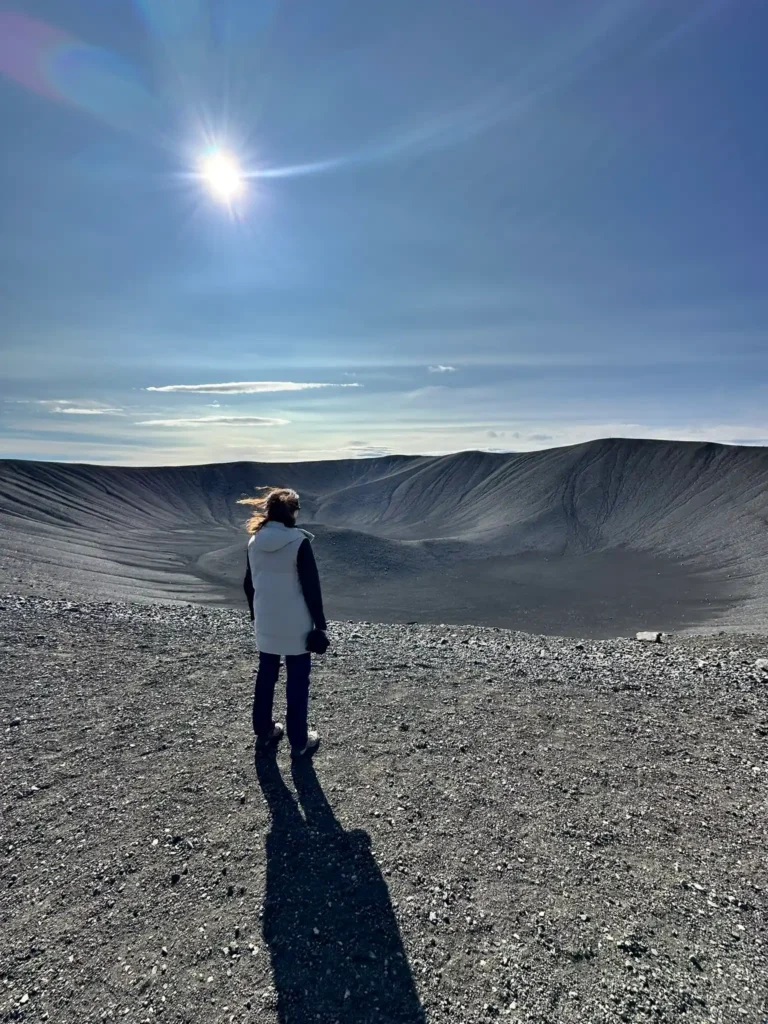
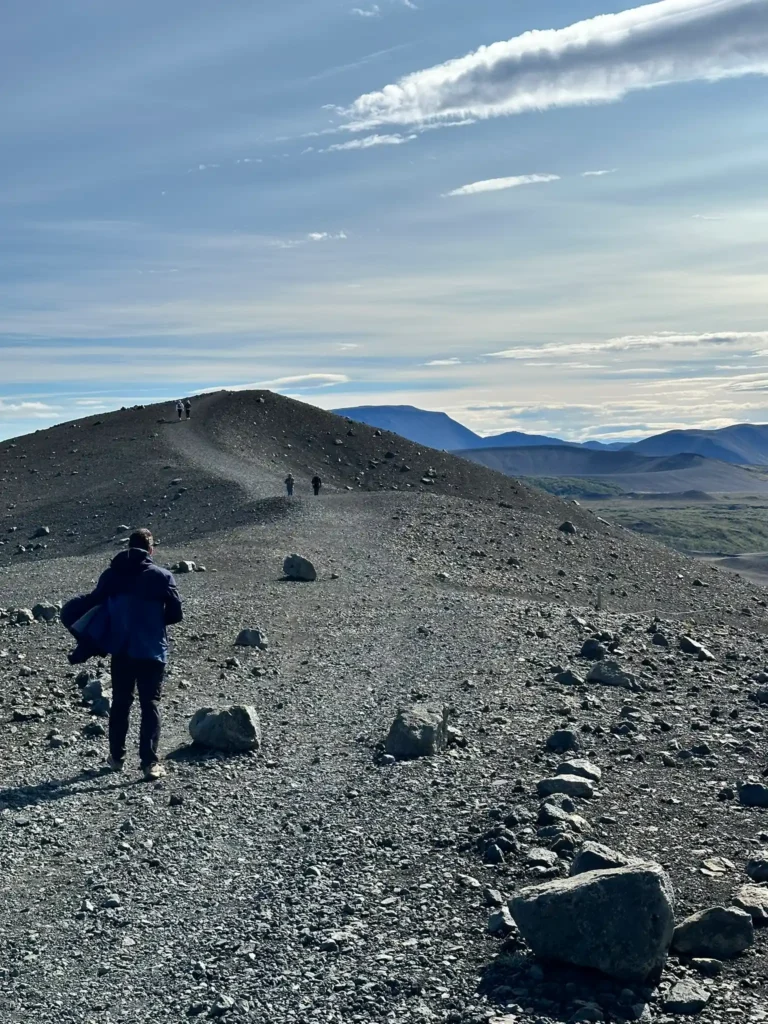
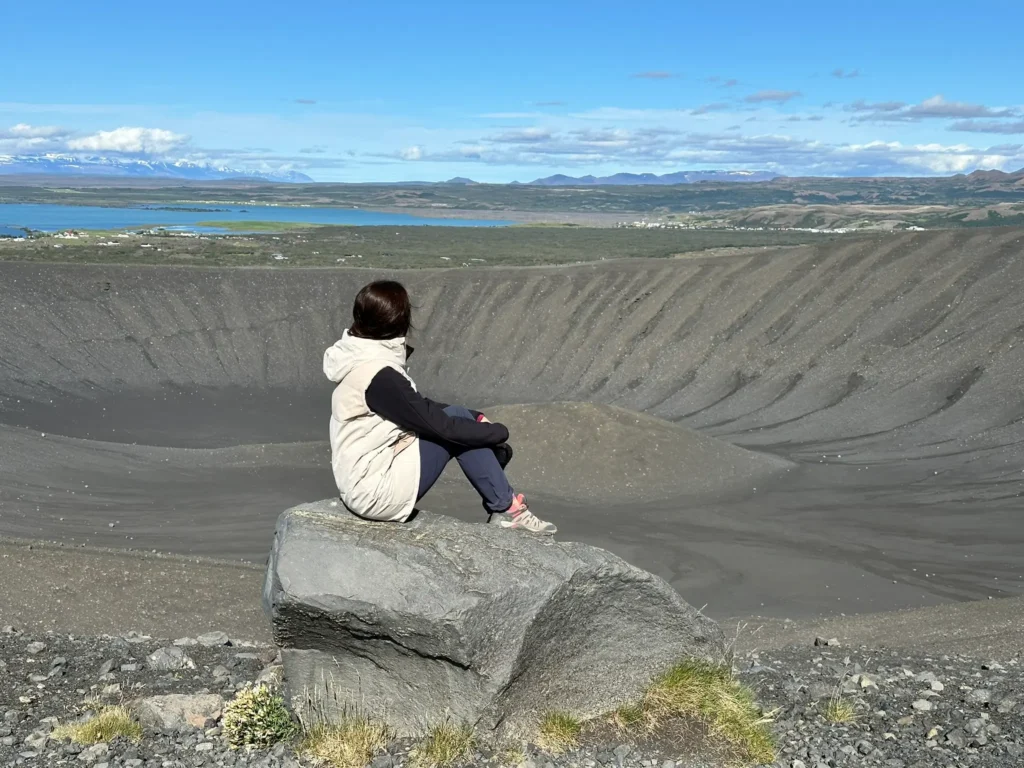
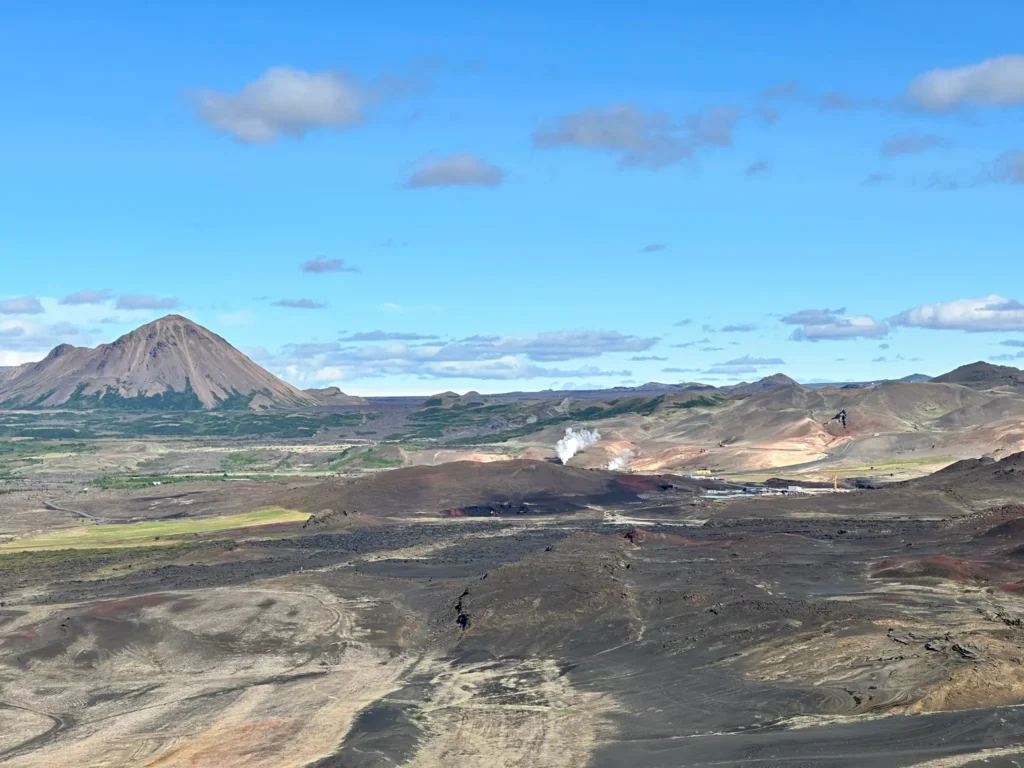
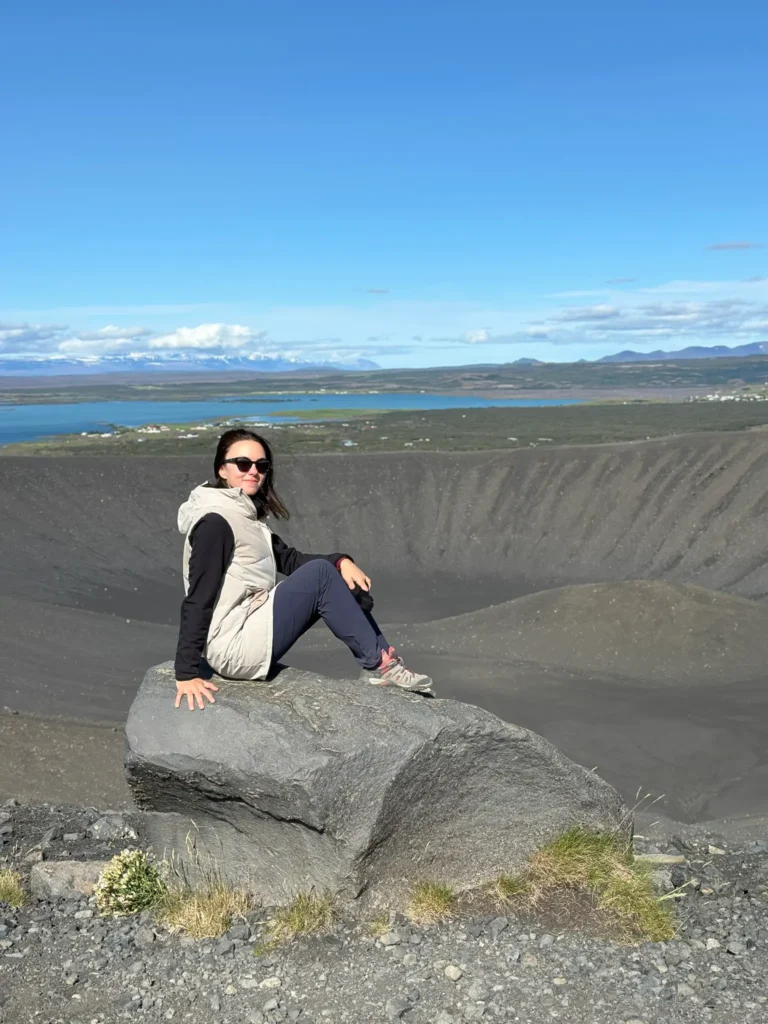
Hverfjall – a volcanic crater formed 2,500 years ago, which can be circumnavigated in about 45 minutes, with a 30-minute climb from the parking lot to the top. It is truly impressive; from above, it seems like another world: in front, you can see Lake Myvatn with green mountain ridges covered in snow, and behind it, there is only volcanic rock and other small craters, with geysers in the distance. It is a contrast worthy of Iceland.
Up on the crater, the wind blows very, very hard. And right next to this volcano, you can take a walk among volcanic rocks on Lava field Dimmuborgir (we didn't take this walk this time).
Santa’s Workshop in Akureyri – It is said that this is the home of Santa Claus in Iceland. We stopped here more out of nostalgia for Lapland.
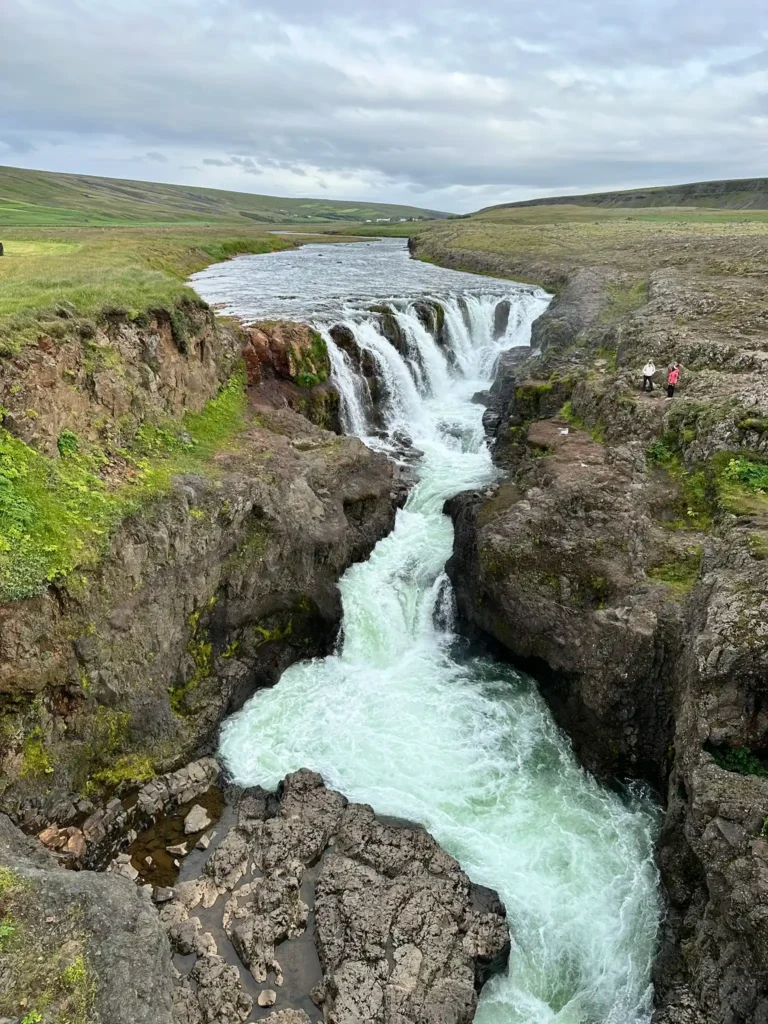
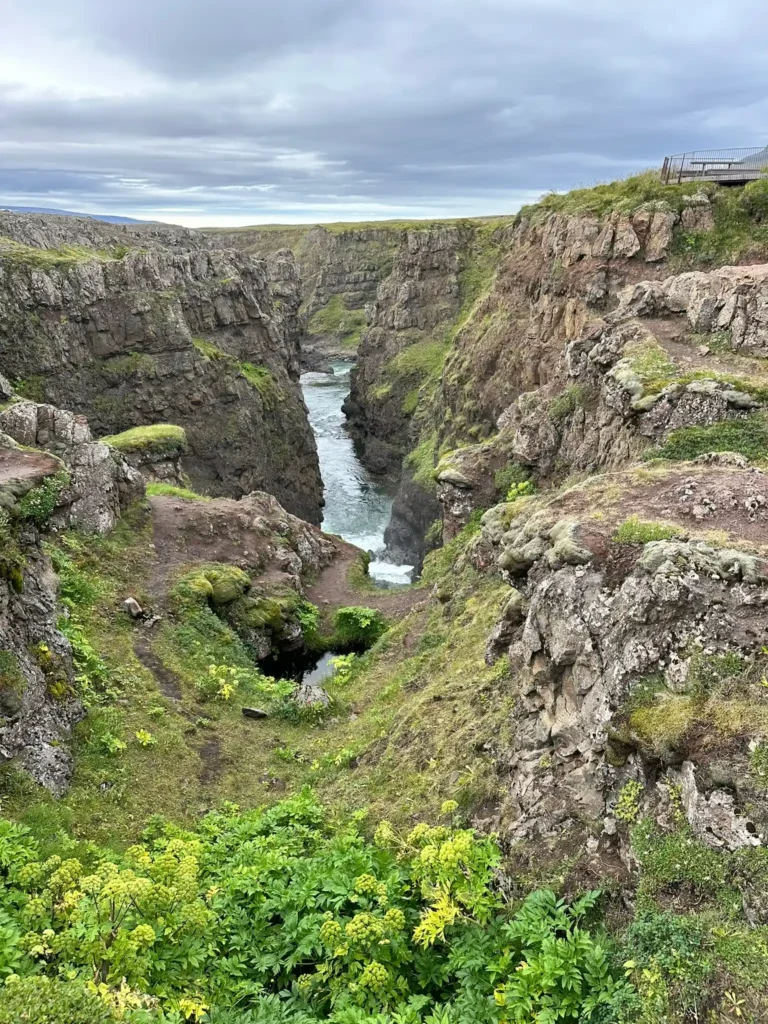
Kolugljúfur Canyon – at the end of the day, we also stopped at this canyon, which is further away from the tourist area and therefore less crowded. It's truly fascinating how nature created something like this!
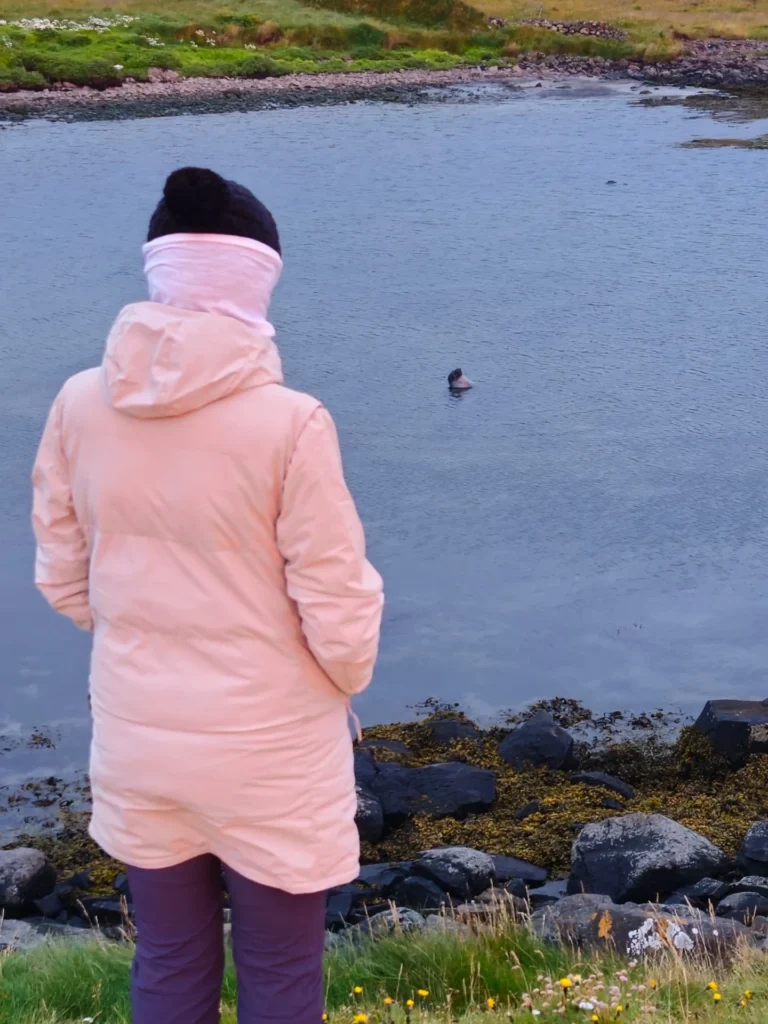
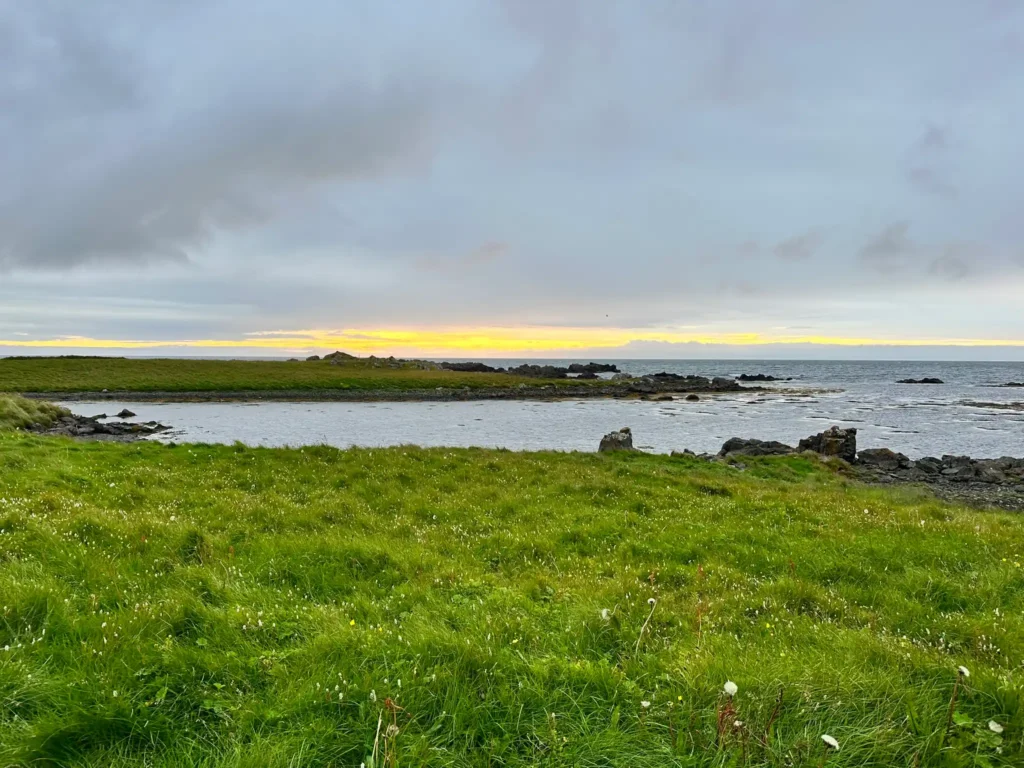
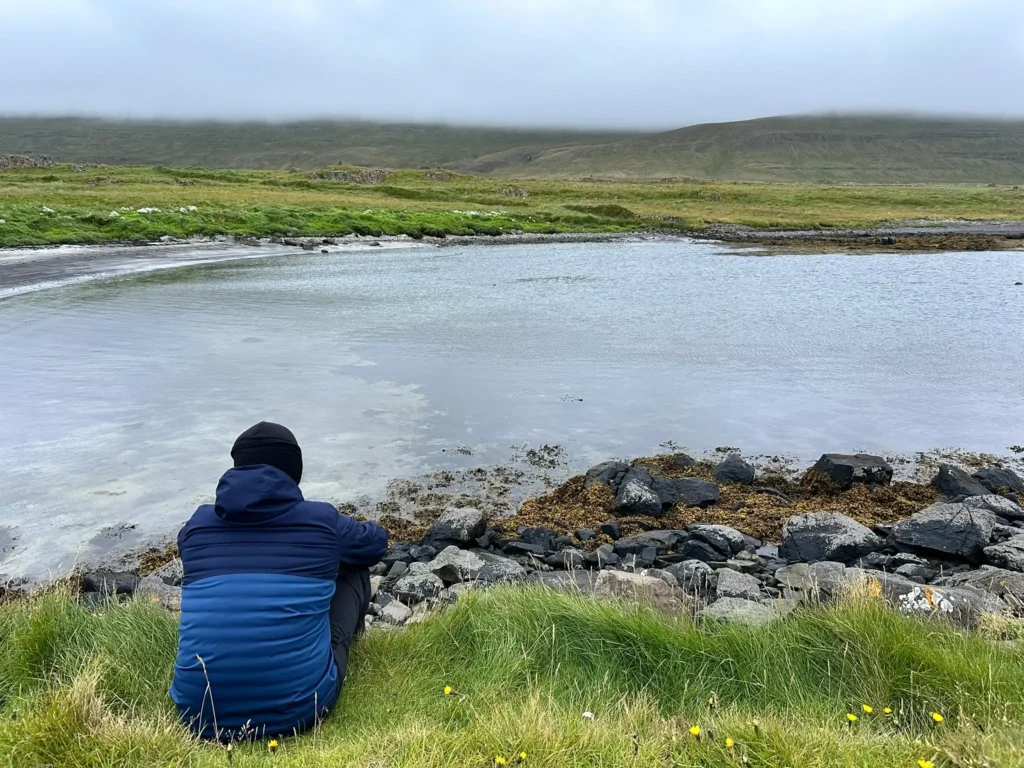
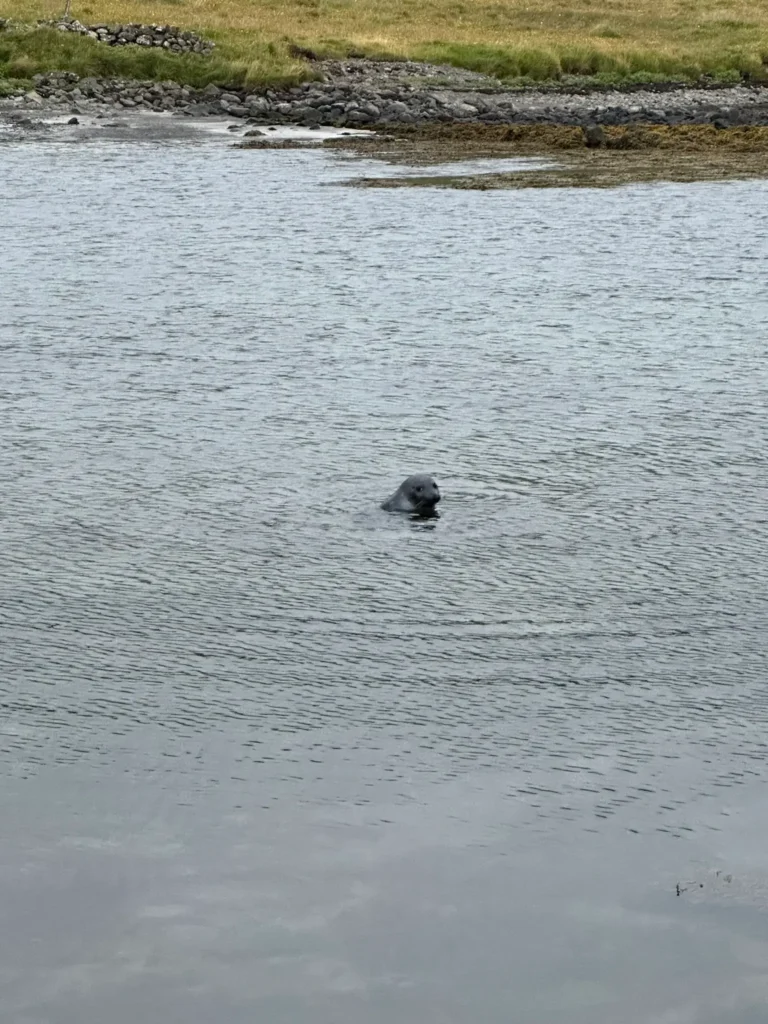
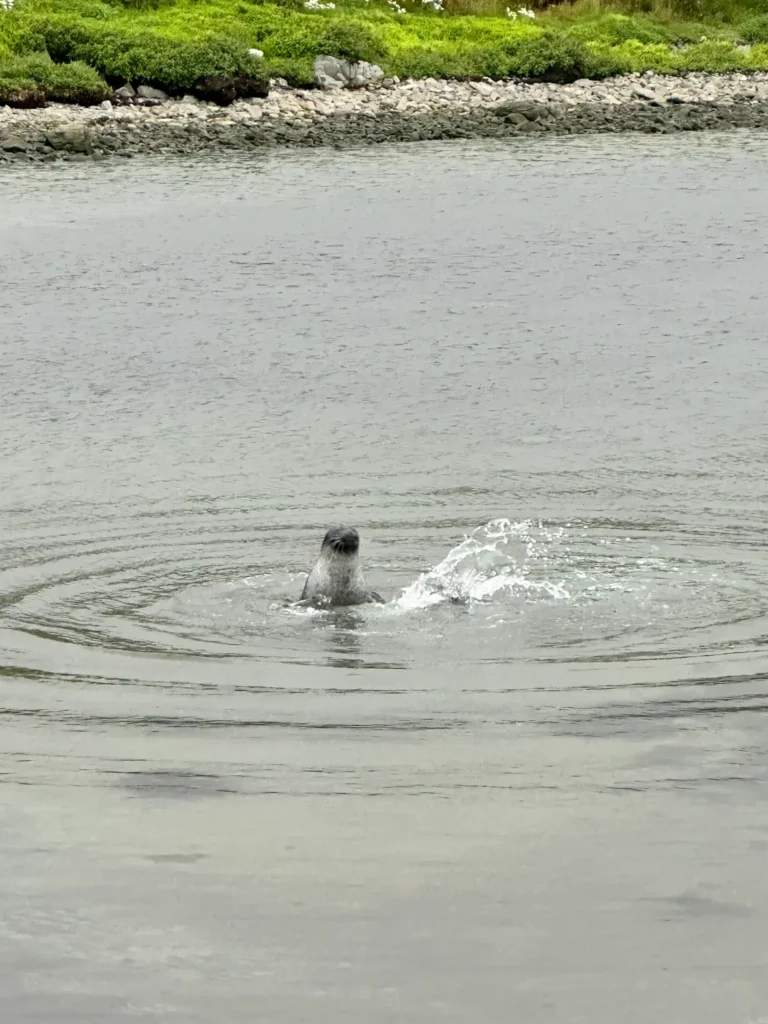
Illugastadir Camping – why did we choose this campsite, which is very difficult to reach, on a road that is more stone than asphalt, in the middle of nowhere? Because this is the best place to see seals! Because it is close (just a 5-minute walk) to the beach where seals come out to relax – Illugastadir
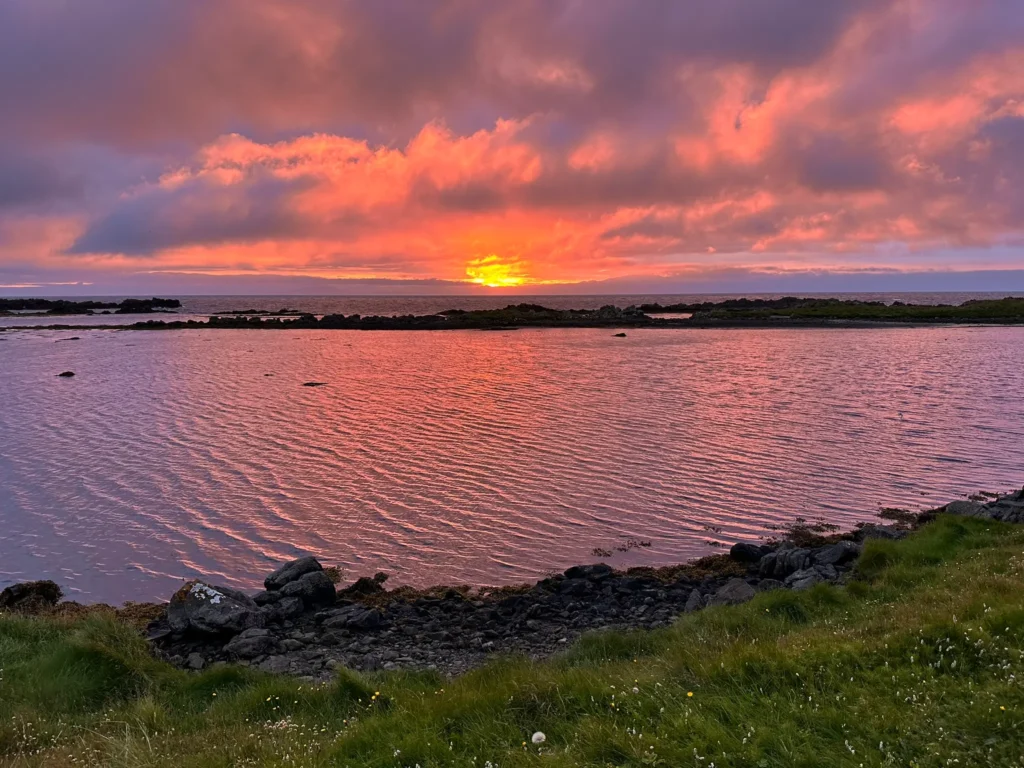
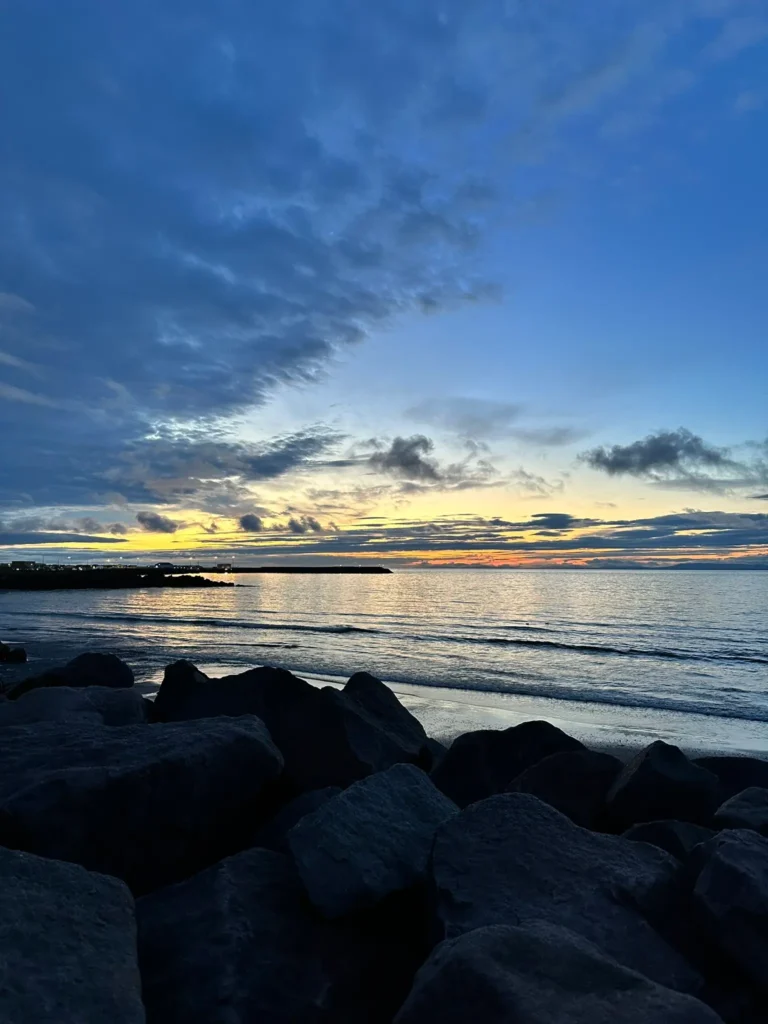
The campsite is small, with two toilets and a sink for washing dishes. You pay through the Parka app, and it's in the yard of a house. When we were there, there were exactly three cars and one tent. We stayed on the beach until midnight, when it got really dark, and watched the seals. We saw a lot of them, they were very curious, they followed us with their eyes, they put on a show, they were so funny! We were very quiet, we watched them carefully (wearing all our clothes because it was terribly cold), but we wanted so much to see them in their natural environment and be alone with them. And the sunset was the icing on the cake (after sunset it rained heavily until noon the next day :)) ).
Day 6
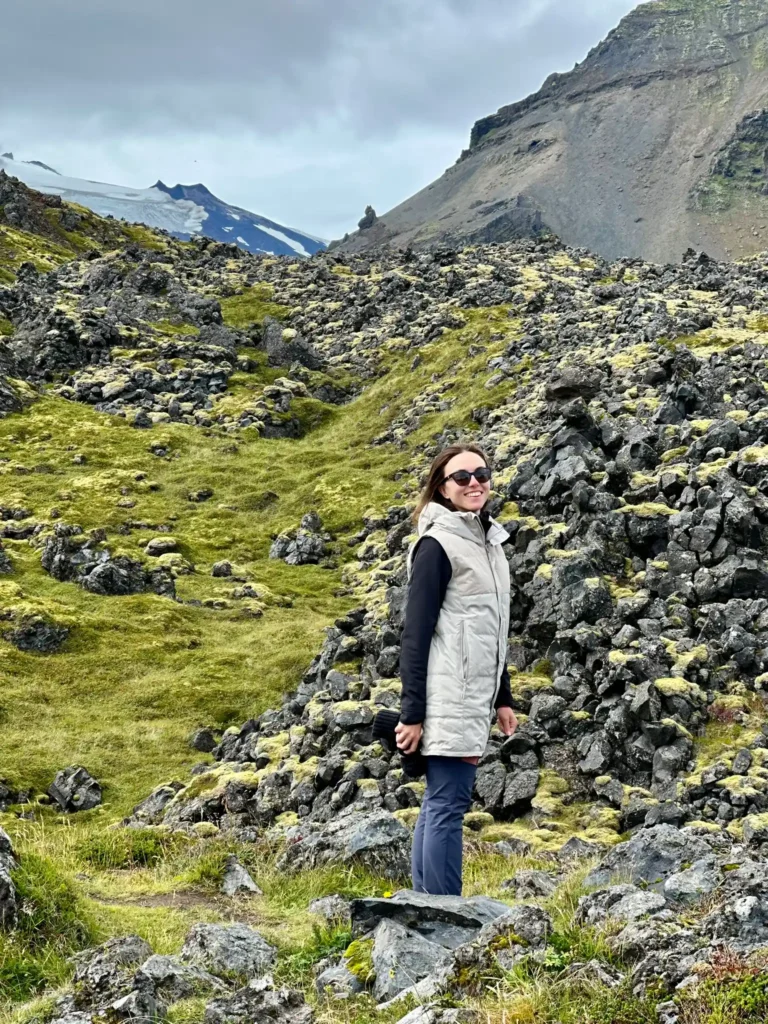
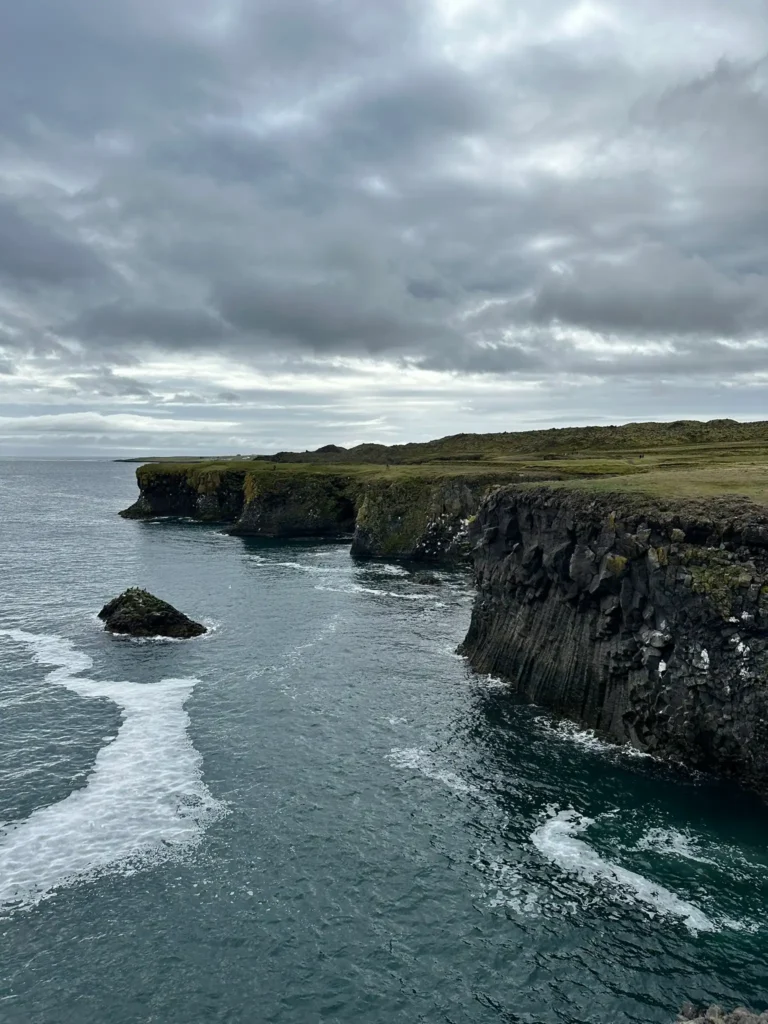
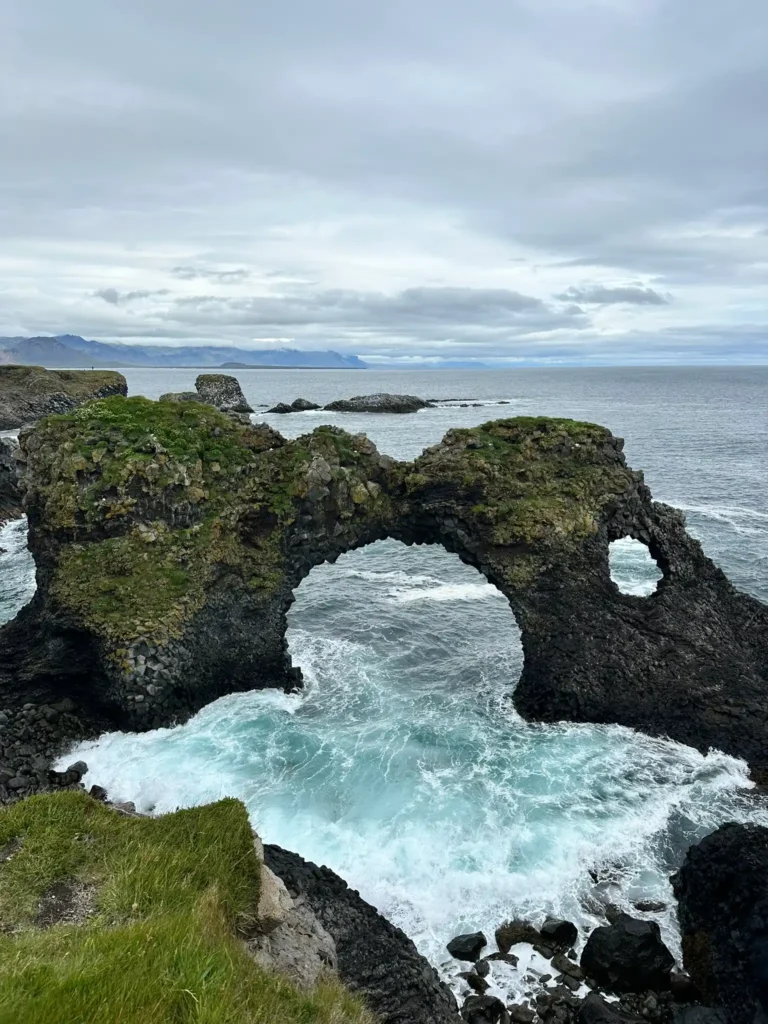
Gatkletturși Lóndrangar View Point – once again, an extremely dramatic landscape of volcanic cliffs rising dramatically out of the ocean. Here and there, you can see the glacier Snæfellsjökull . I recommend spending at least an hour here and walking along the entire coast, not just at the viewpoint. I liked the whole route along the coast better, with the glacier nearby and the different shapes of the cliffs, than the viewpoint itself, which is far too popular.
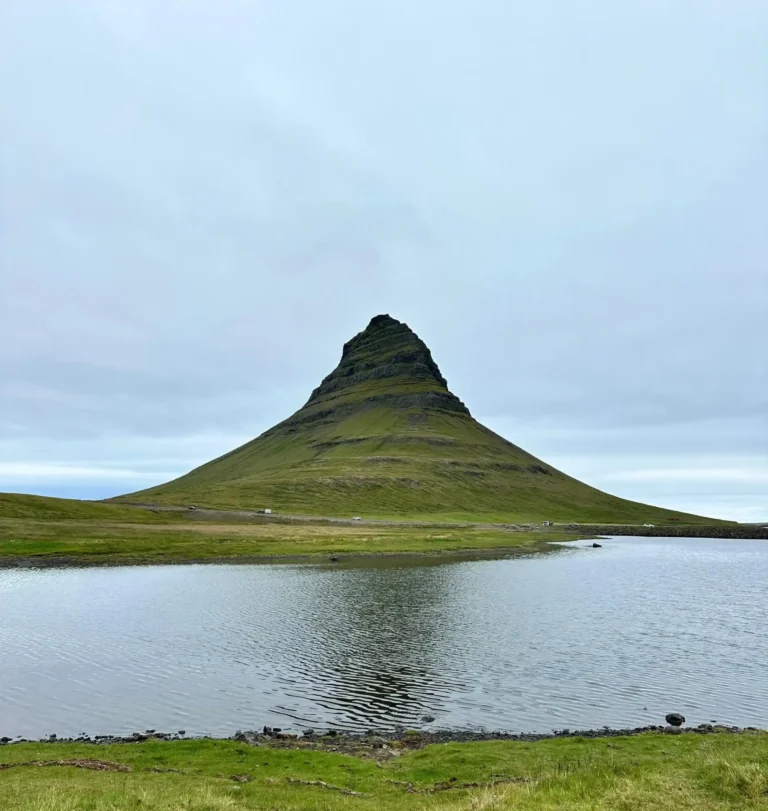
Kirkjufellsfoss – you probably know this iconic Icelandic mountain, as it sometimes appears in searches about this country. Initially, as we were driving there, it didn't seem like anything special, but wow, when we got to the specific spot where you can see it and the waterfall! I said that this is definitely a place to come back to in winter, especially in the evening to see the Northern Lights. I know this place also appears in the Game of Thrones series.
Campsite Ólafsvík – 20 minutes from the town of the same name, where we took an evening stroll at sunset at 11 p.m. The campsite is quite large, but it can get crowded quickly. It has a common area where it is warm and you can eat, 2 showers, and 3 toilets. We liked its location and we really liked the small town where there were many people outside, even though it was past 11 p.m. and 4 degrees Celsius.
Day 7
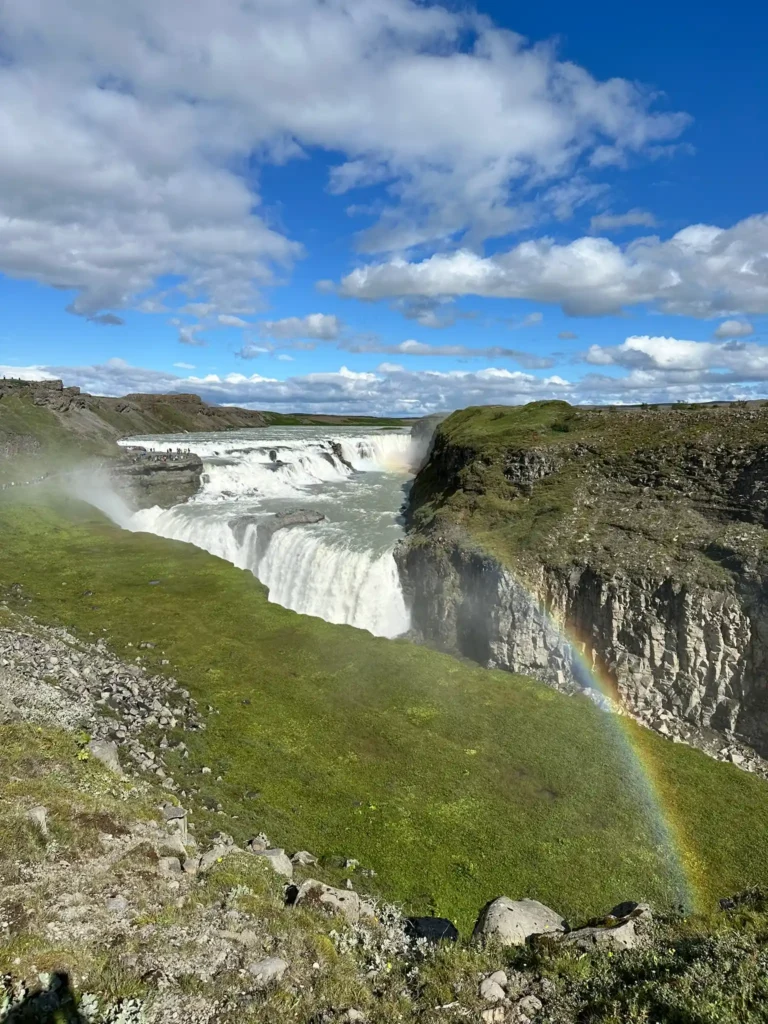
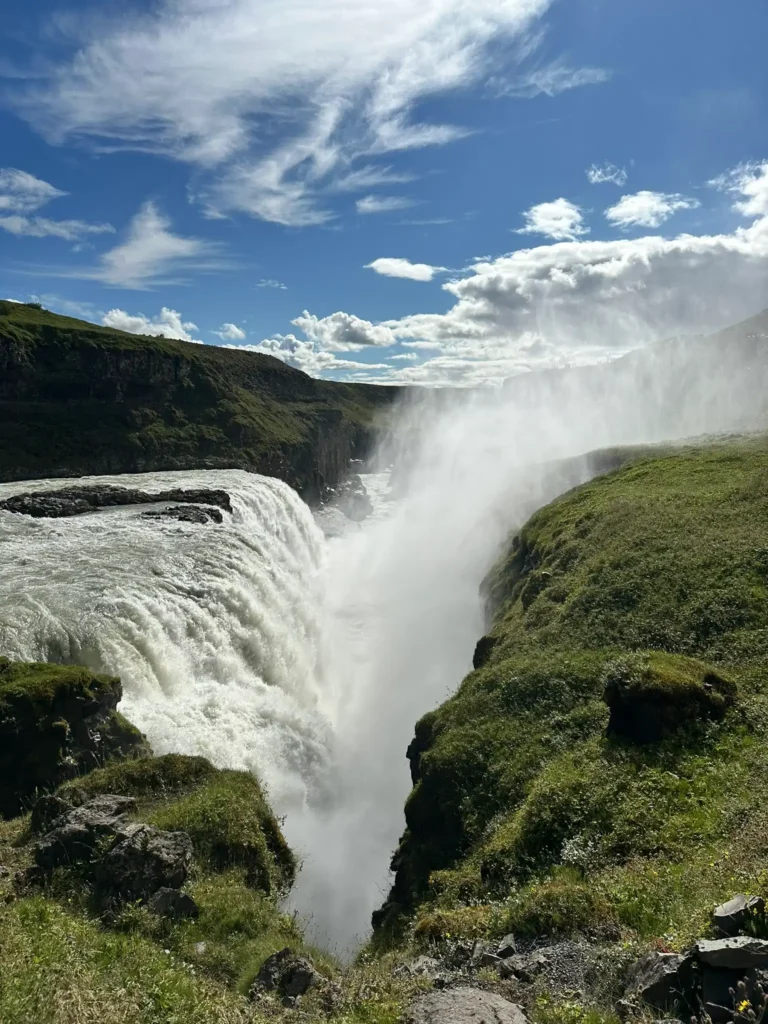
Gulfoss - this waterfall is from Golden Circle, extremely popular among tourists who don't have many days to spend in Iceland. Being so touristy, there were many more tourists here, the entrance fee is higher, and we found a restaurant and souvenir shop. The waterfall itself is just as beautiful as the others, and of course we caught a rainbow here too!
Geysir – a geothermal area with very intense geyser activity, including one of the most famous geysers, which erupts every 5-7 minutes. It is also part of the Golden Circle. The entire park is very impressive and it is worth climbing the trail to the top for the view. Be aware that the smell here is similar to that of rotten eggs!
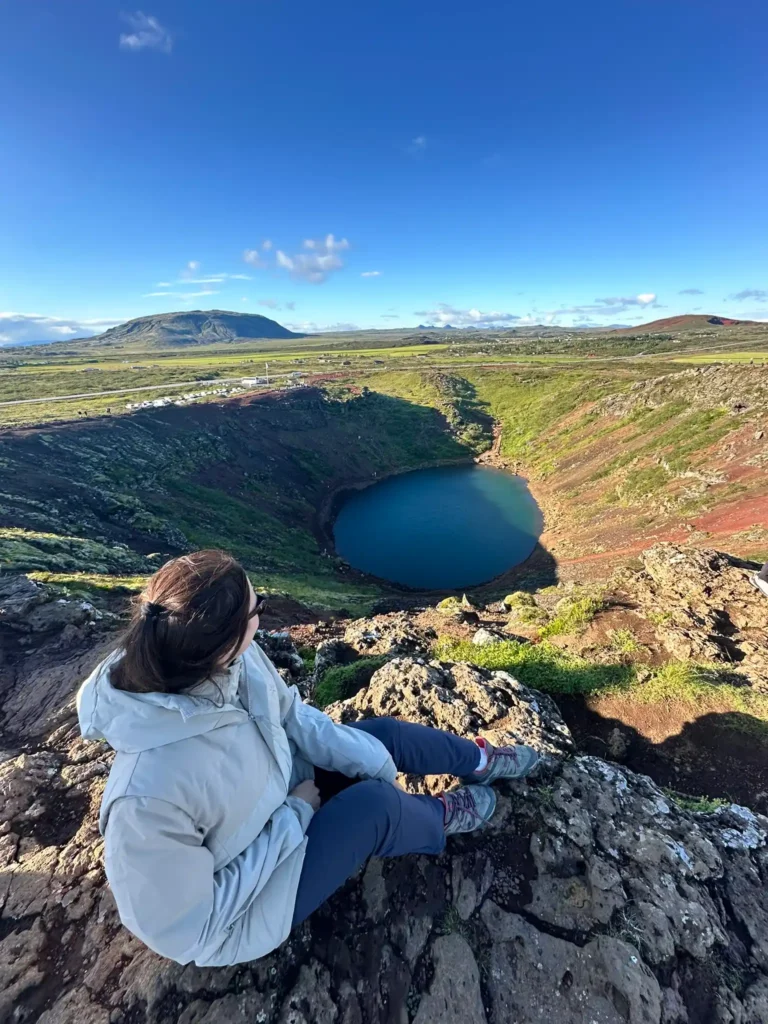
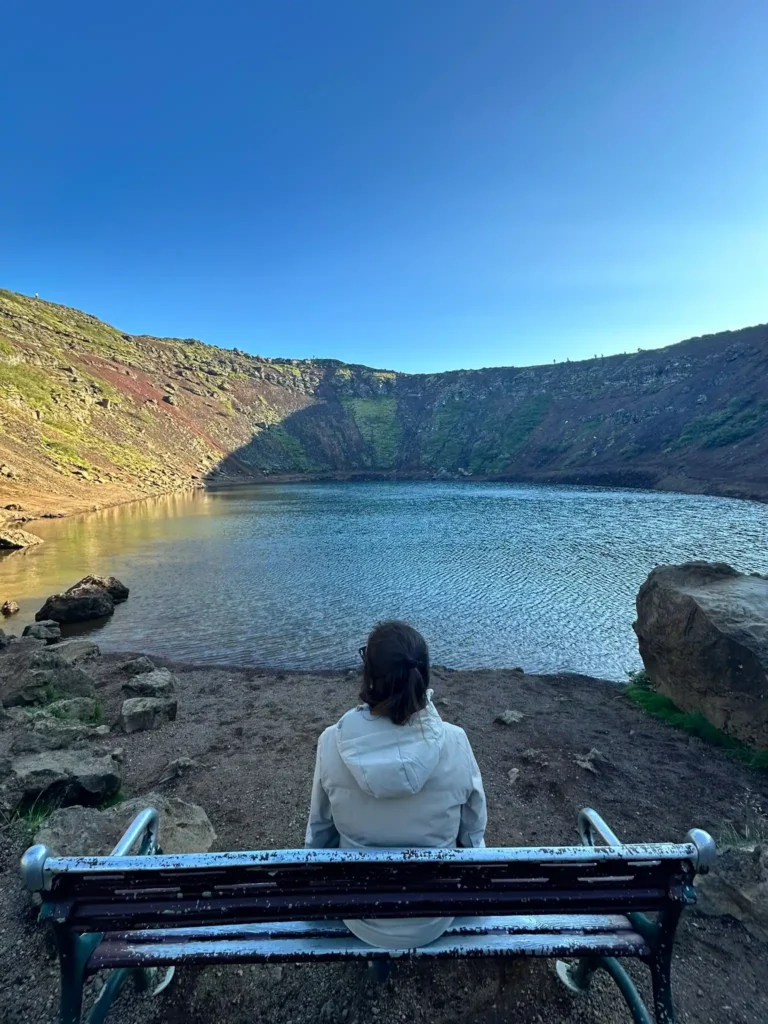
Kerið Crater – I loved this crater formed in 4000 BC, which has a lake covering it! And the fact that we could go down to the lake and walk around it made it even more fascinating! I think it's worth it, although I've heard mixed opinions.
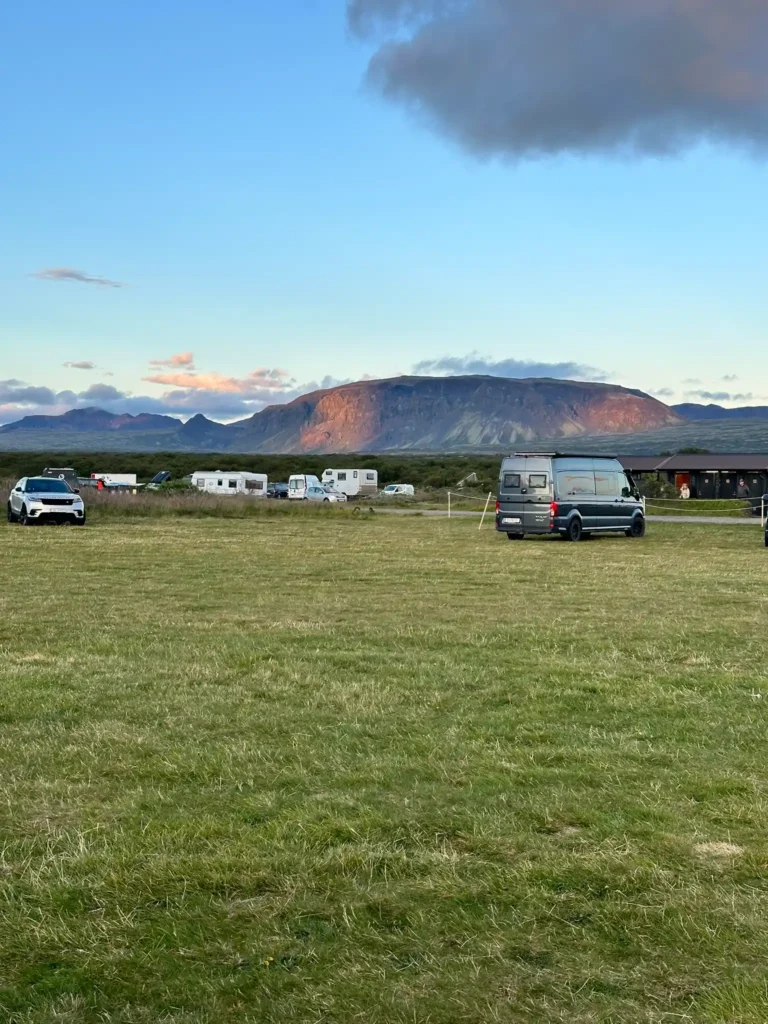
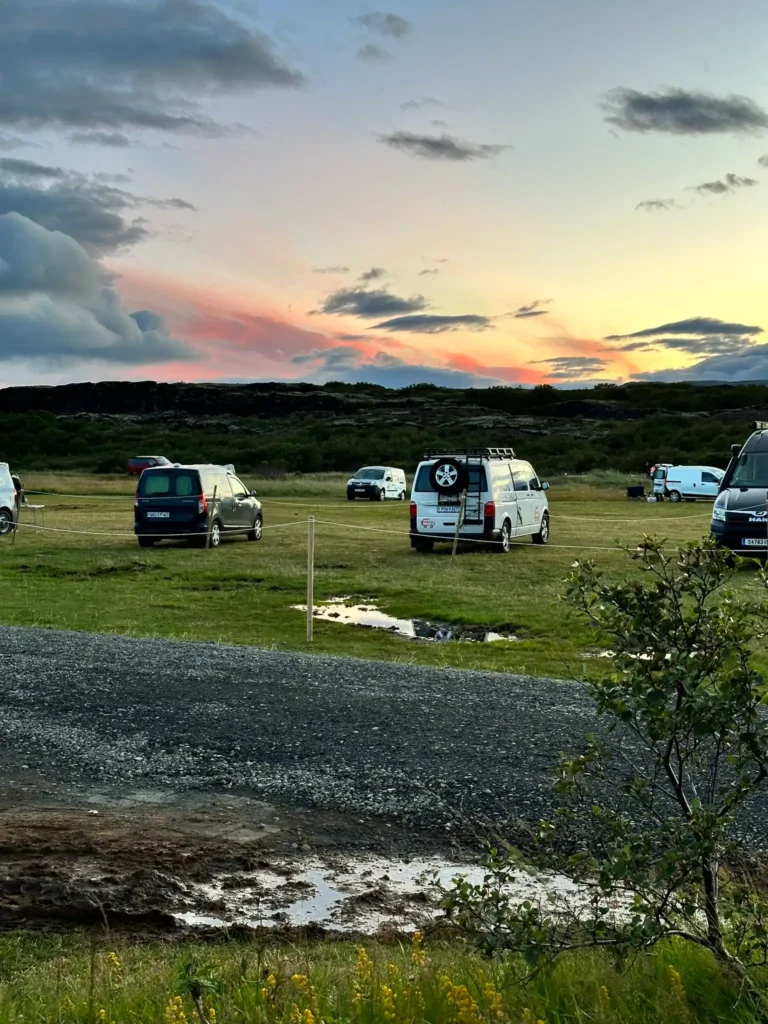
Nyrðri Leirar camping – the last campsite we stayed at was very large and spacious, but there was a serious lack of toilets and showers. It was the only morning we had to queue for 10 minutes to use the toilet. But I really liked the sunset view in this valley and the fact that there was plenty of space.
Day 8
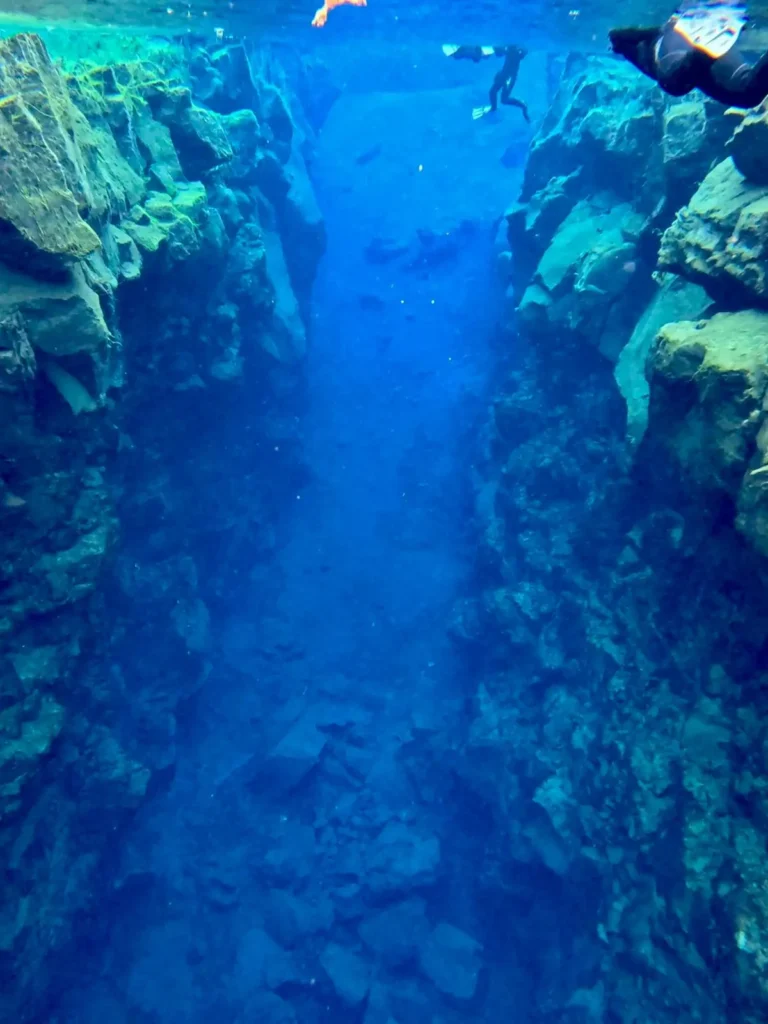
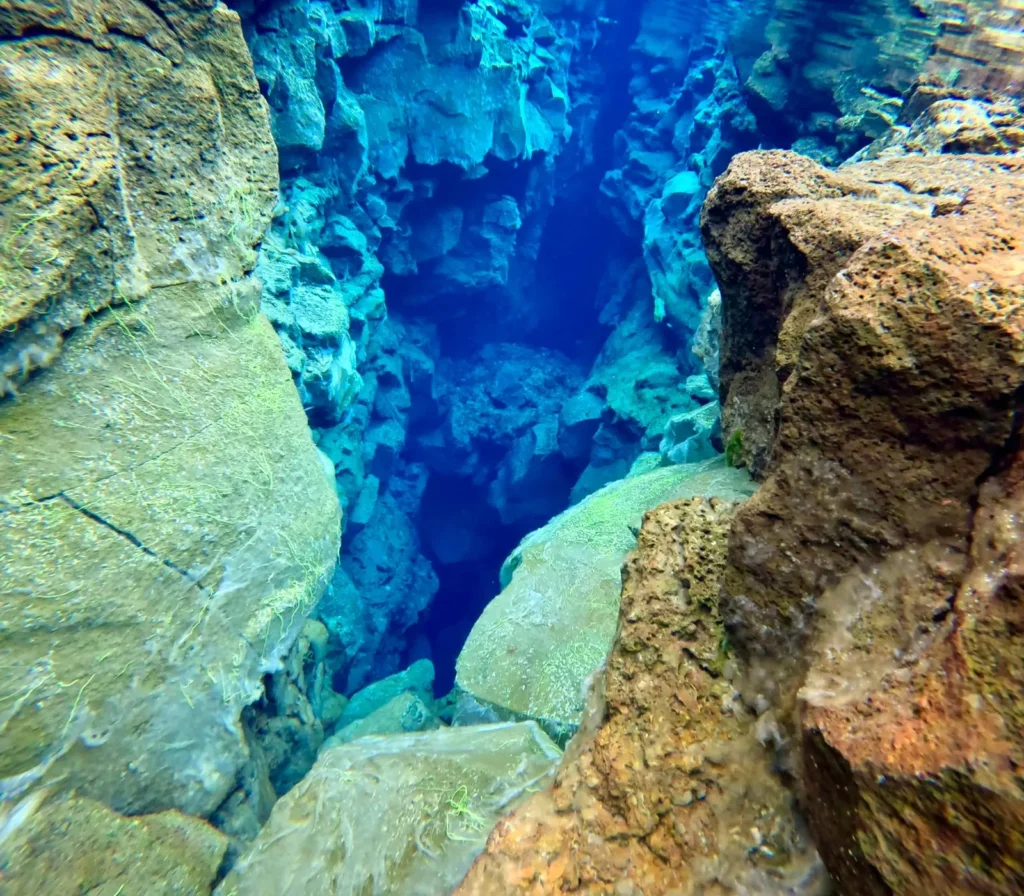
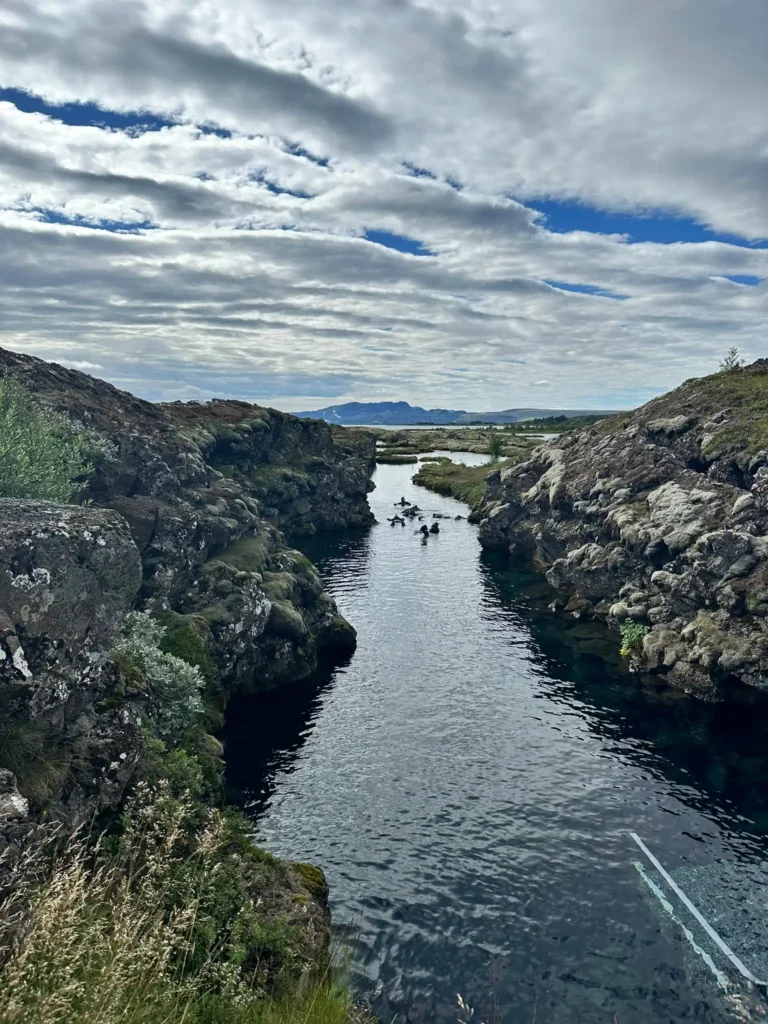
Silfra snorkeling – On his last morning on the island, Vlad had a unique experience that you can only have in Iceland: snorkeling between the tectonic plates of Europe and America. What is this SILFRA? Silfra is a fissure with crystal clear water located in Parcul Național Þingvellir. This is where they meet (and depart annually) North American tectonic plate and Eurasian plate.
The space between them was filled with melted water from nearby glaciers, filtered for decades through volcanic rock. Here, the water is extremely clean and visibility is over 100 meters, with a water temperature of 2-4 degrees Celsius all year round. We took on the activity through those at Arctic Adventures and lasted about 4 hours, including the initial briefing, putting on the dry suit, getting into the water, and hot chocolate at the end. The price is quite high, around 130 euros per person, but it is once in a lifetime experience!
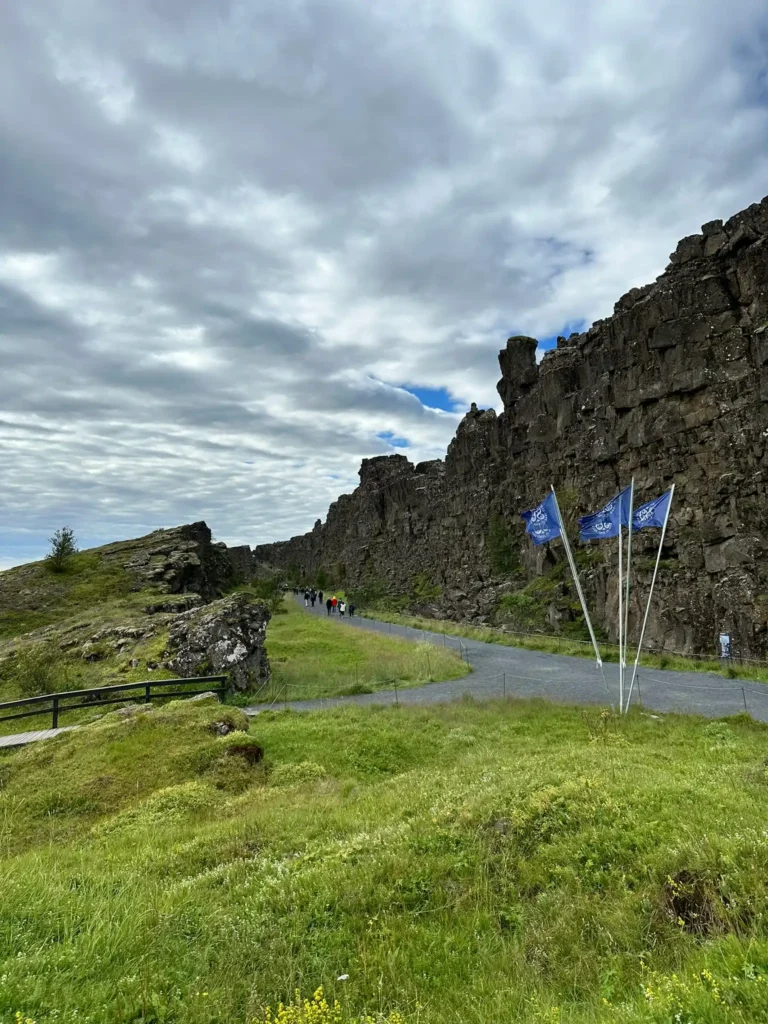
Thingvellir National Park – Of course, you can also walk along this rift between the tectonic plates, which is what we did after our snorkeling session. It is one of the few places in the world where you can walk between two continents, and the tectonic plates are moving apart by 2 cm every year, creating various canyons and lagoons with clear waters such as Silfra.
Þingvellir is considered the birthplace of Icelandic democracy. In 930 AD, Icelandic Vikings formed here Althing, a legislative and judicial assembly. For nearly 900 years, community leaders met here to create laws, settle disputes, and make national decisions. The place is sacred to Icelanders and a symbol of national identity.
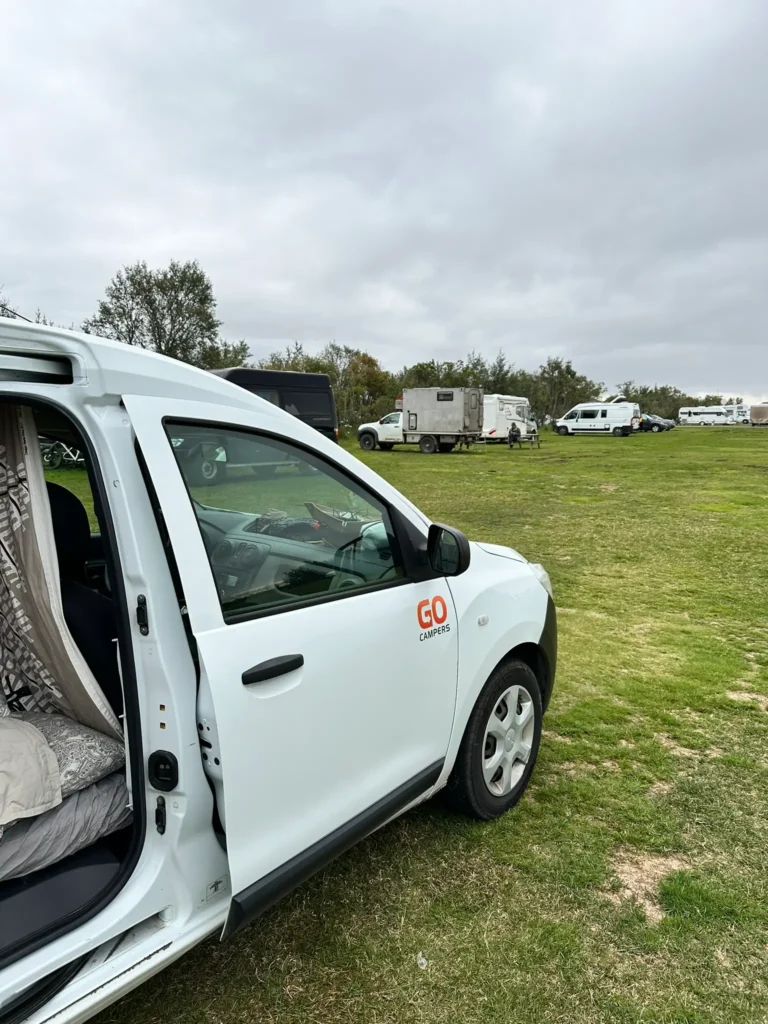
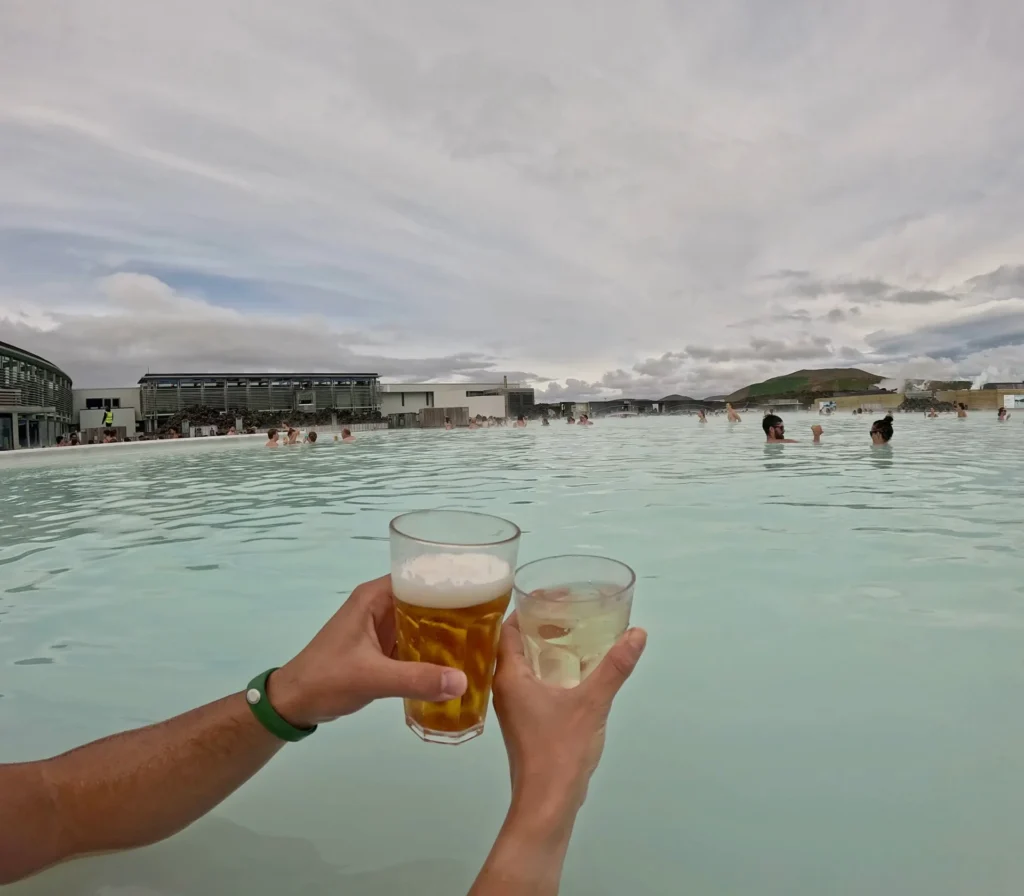
Blue Lagoon – how could we end our epic journey through Iceland without stopping at Blue Lagoon? It was the perfect way to relax after such a week. We bought our ticket to be Premium which included two drinks, three masks, and a bathrobe, and the ticket price varies between €100-140 per person, depending on the time you want to enter.
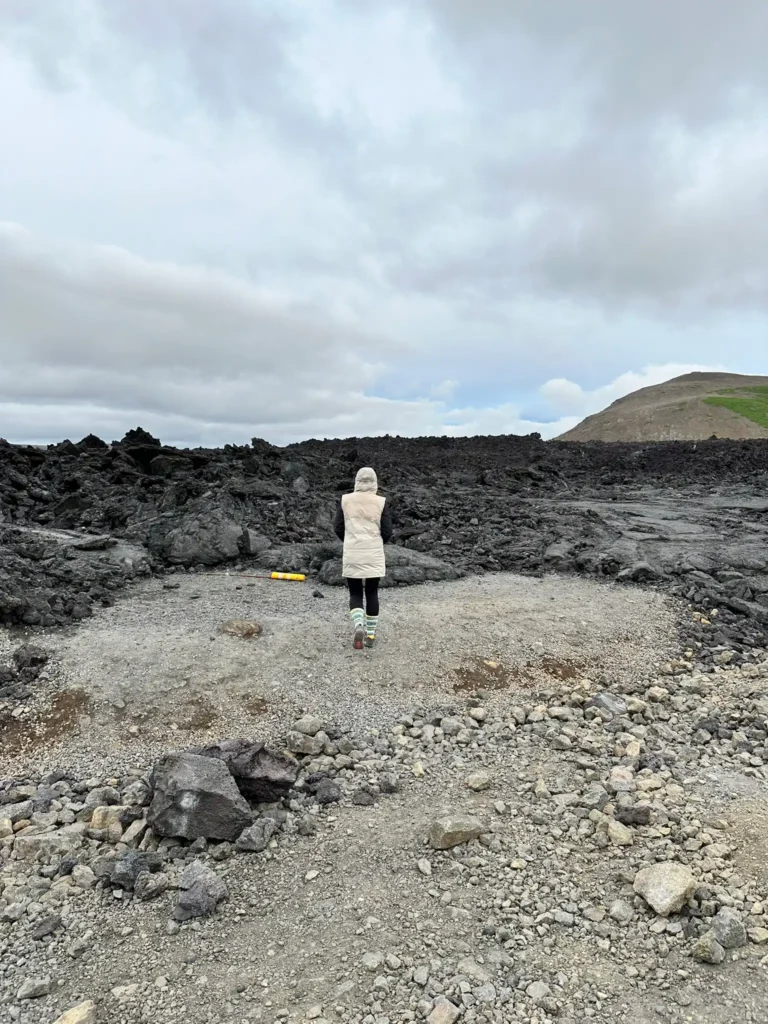
Before returning to the GoCampers center to drop off the van, we stopped near the fresh lava of the Fagradalsfjall volcano, which began erupting in 2021, but not continuously. (When we approached the lava, which was a month old, it began erupting again that night.)
Conclusion
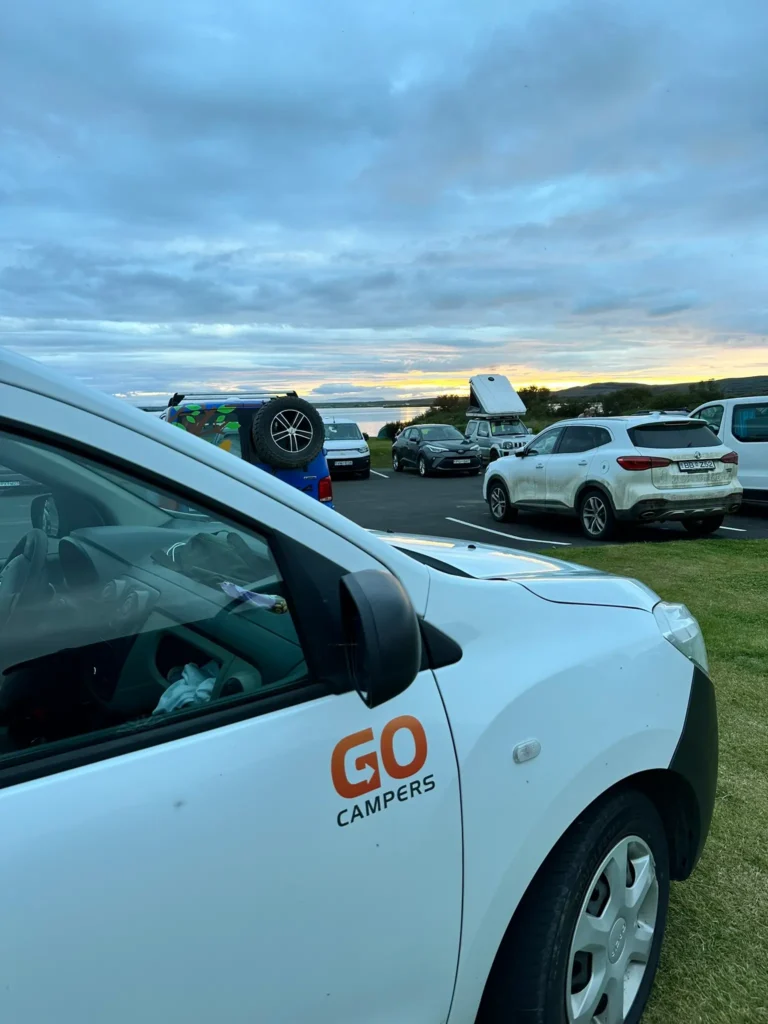
Phew... what can I say to conclude this article about Iceland? That I could have made it even longer, but I think this is enough :)) That I could have gone into even more detail, but I don't want to spoil your curiosity to discover the places I've presented here. And that I sincerely hope this guide will help you have a trip as epic (maybe even more so) as ours. As an idea: the average cost of the campsites we paid for was 35 euros/night, we drove about 4.5-5 hours daily, totaling 2,270 km driven across the island.
We were fascinated, and we knew it would be that way because we really wanted to experience Iceland in a campervan. It's one of the places in the world where we really wanted to go. We know for sure that we'll be back because there's so much left to see. We managed to circle the island, but I think we only saw 10% of what Iceland has to offer. Plus, we want to camp under the Northern Lights in winter! It's a dream that will come true, and I wish the same for you, to fulfill your dream of visiting Iceland.
Let me know in the comments what you thought of the article, and don't forget to keep following me because I have so many stories to share! 🙂
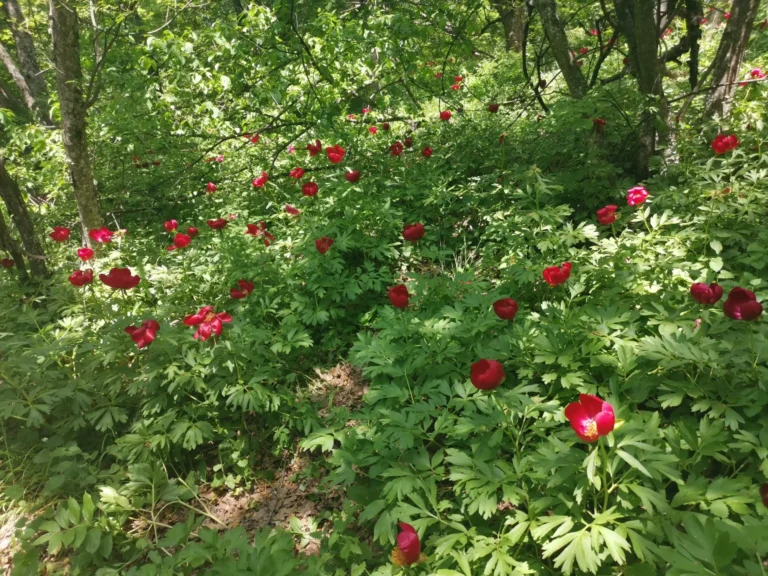
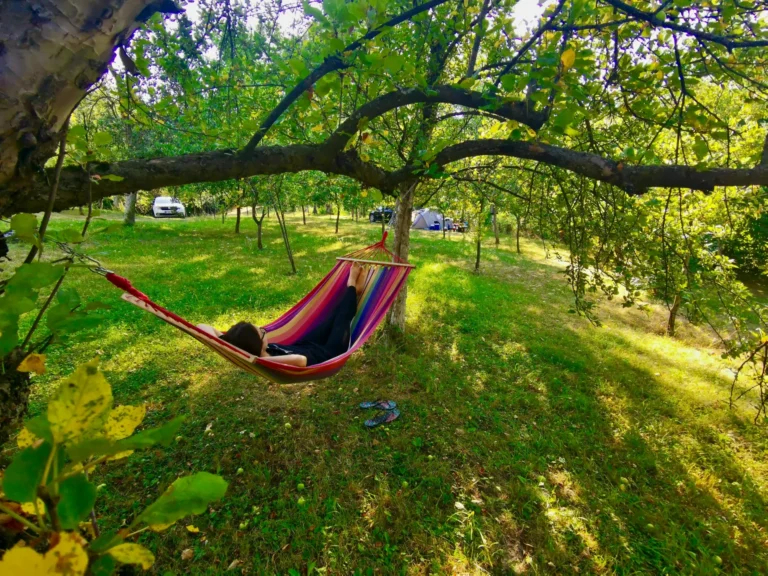
An unforgettable camping week in Romania: discover spectacular landscapes, mountains, lakes and camping in nature. The complete guide for those who love adventure and outdoor relaxation!
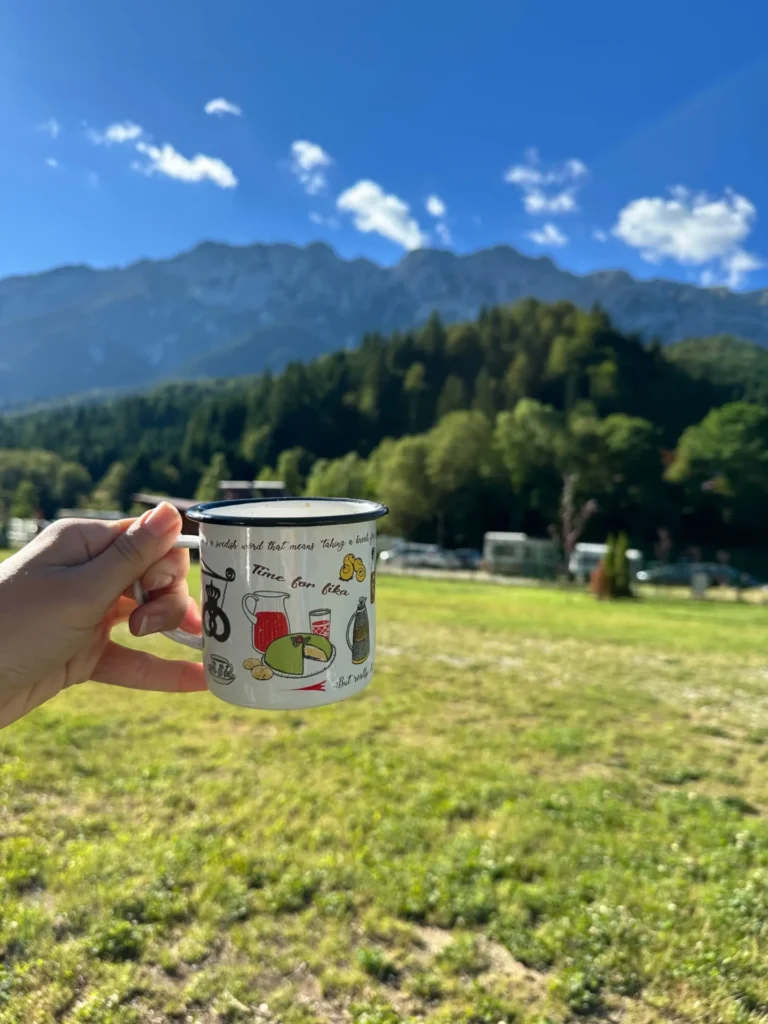
To make your search easier, we've put together an interactive map of campsites in Romania, where you can see the exact locations and descriptions for each one so you know what to expect. Maybe I can convince you to try this style of discovering Romania, because there's nothing quite like sipping coffee outside and star-filled skies.
Find out what clothes I wore for 8 days in Iceland during the summer while traveling in a campervan. Complete list, with personal recommendations and a few bonus items.








 EN
EN  RO
RO